
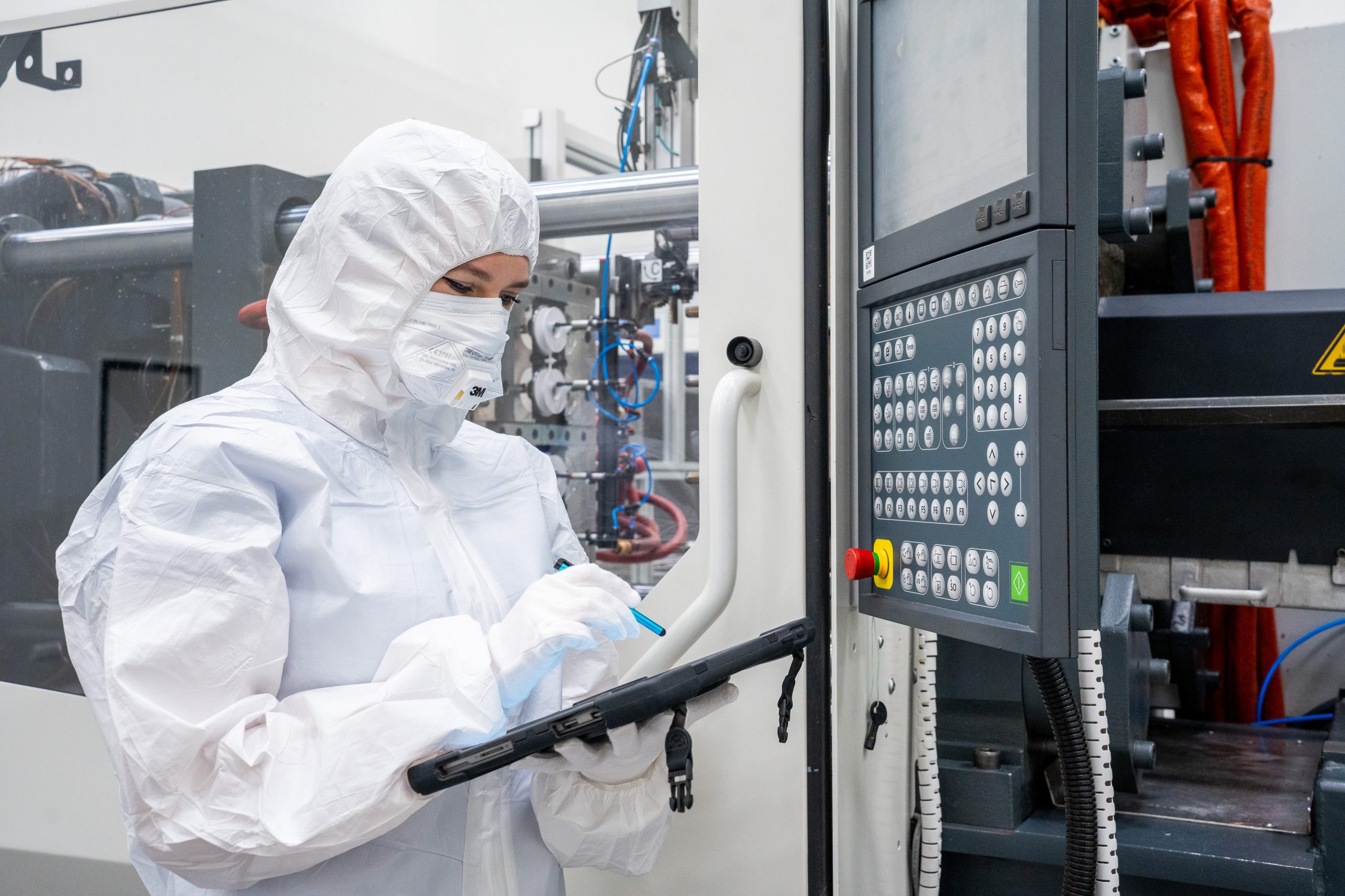

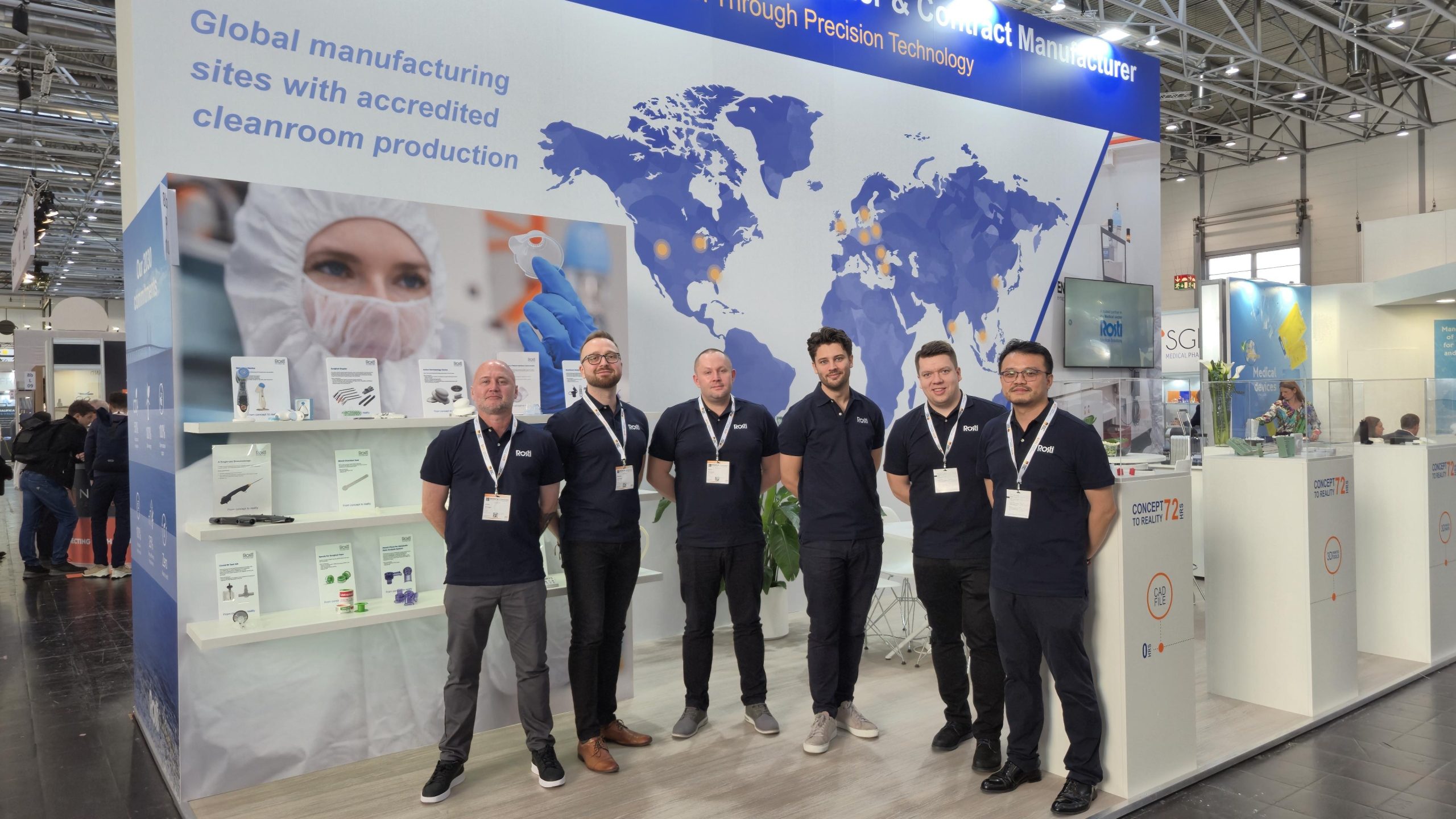


From driving efficiency and improving quality to accelerating innovation across our global facilities, Scott explores the practical ways AI is shaping the future of manufacturing.

What new technologies are we likely to see in 2025?
In response to valuable customer feedback, we are actively advancing several new development initiatives focused on AI and sustainability. By the end of 2025, we aim to complete a proof of concept for our internal AI system, which will undergo large-scale testing at one of our sites ahead of a global rollout. This is focused on using our internal knowledge more effectively to further reduce the time to market for new projects.
Additionally, our new AI-driven product carbon footprint analysis tool will be implemented across our innovation centers, empowering our teams to assess and reduce the environmental impact of the products that we manufacture. This will enable us to accurately track progress towards achieving our Sustainability goals, as well as potentially identifying additional areas to reduce our environmental impact.
How is AI having a real impact on plastic injection moulding?
AI is transforming plastic injection moulding across several key areas—from virtual assistants that streamline knowledge management and accelerate time-to-market, to rapid production data analysis that enhances yield and quality control.
Advanced AI-powered inspection methods proactively detect and predict defects before they occur. By integrating the latest machine technology from our partners, we leverage AI-driven process control to optimize manufacturing parameters for each component, ensuring precision and efficiency.
Where do you envisage AI and injection moulding being in 3 -5 years?
Over the next 3–5 years, we expect AI to play an increasingly transformative role in factory operations. It will enable comprehensive predictive maintenance systems to maximize equipment uptime, autonomous real-time adjustments to moulding processes to prevent defects, and more energy-efficient production overall.
These advancements will not only optimize performance but also drive greater sustainability across the entire manufacturing process through smarter resource utilization.
How do you support and influence customers to adopt new technologies in partnership with Rosti?
Our structured Technovation process provides a governed and systematic approach to testing new technologies, ensuring they reach the appropriate technical readiness level for production. The success of this process hinges on a deep understanding of customer needs and pain points.
Leveraging these insights, our global Innovation Centres develop cutting-edge solutions that enhance the value, quality and performance of the end product, not to mention the sustainability properties.


Environmental Sustainability in Plastic Injection Molding
At Rosti, sustainability is more than a policy—it is the foundation of how we design, manufacture, and deliver solutions. As a global injection molder with over 80 years of expertise,…
Read More
Plastic Injection Moulding 101
This guide will walk you through a comprehensive overview of the plastic injection moulding process from design through production – including essential elements of moulding.
Read More
Advancements in Producing Production Quality Plastic Prototypes
Advancements in production quality prototypes have evolved significantly in recent years.
Read More
E-mobility Guide
Rosti works with some of the world’s leading producers to face up to the manufacturing challenges in e-mobility. This is a sector with rapid growth – driven by environmental pressures…
Read More
Scientific Molding
It’s not hard to understand how computing and innovation have positively impacted industries of all types over the past 35 plus years. The injection molding industry is no exception. Plastic…
Read More
Metal to Plastic Conversion Guide
This guide will help you understand the metal to plastic conversion process, its benefits, and how to partner with your injection molder to collaborate on all design for manufacturability elements.
Read More