Rosti
Supply Chain Management
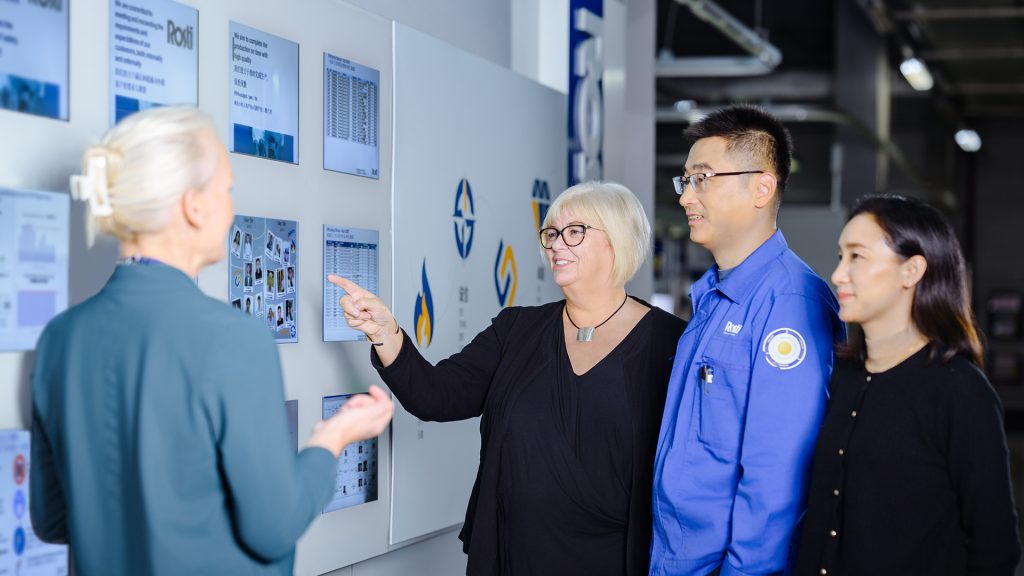
Rosti provides end-to-end supply chain management to ensure reliable, cost-effective, and resilient delivery of components and finished products worldwide.
Our integrated approach covers strategic sourcing, supplier qualification, logistics planning, inventory optimization, and full traceability, enabling customers to reduce risk and maintain consistent quality at every stage of production. With global networks, strong partnerships, and advanced digital tools, we support agile, transparent, and scalable supply chains tailored to each customer’s needs.

Joseph Yang
Sourcing Director

What is Supply Chain Management?
Supply chain management is the management of supply chain goods and financial transactions related to a specific product or service. At Rosti, supply chain management involves managing global supply chains, customer demand, supply chain partners, demand management, and much more!

Global reach. Local focus.
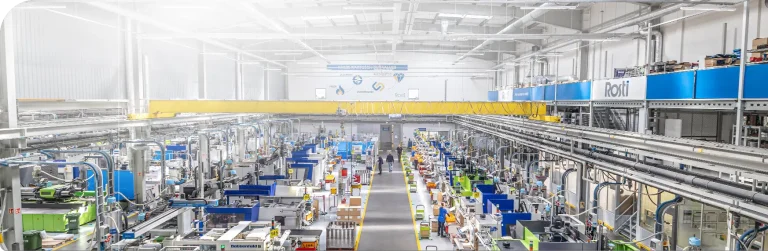
Whether producing individual components, pre-assembled parts, or ready-to-sell products, a reliable, flexible, and cost-effective supply chain is essential. Rosti provides this through our global supplier network, built over decades and continuously evaluated for quality and efficiency. This ensures a dependable and affordable supply chain for your manufacturing needs.
Our global presence allows us to shorten lead times by sourcing locally, giving us a strategic advantage in acquiring essential components like resin, electronics, metal parts, and packaging. We provide complete support across every area of supply chain management, including quotations, logistics, warehousing, and more. We’re dedicated to finding solutions that deliver value and reliability for the end customer.

Rosti’s global reach

27 Suppliers worldwide

76 Countries served

12 Manufacturing sites worldwide
Why is Supply Chain Management important?
Supply chain management is important for many businesses because of its potential benefits. For example, controlling the manufacturing process helps improve product quality and reduces the risk of recalls. Managing shipping procedures can play a major role in customer service by preventing costly inventory shortages and delays. Overall, supply chain management gives businesses many ways to increase their profit margins—a key challenge, especially for large and internationally focused companies.
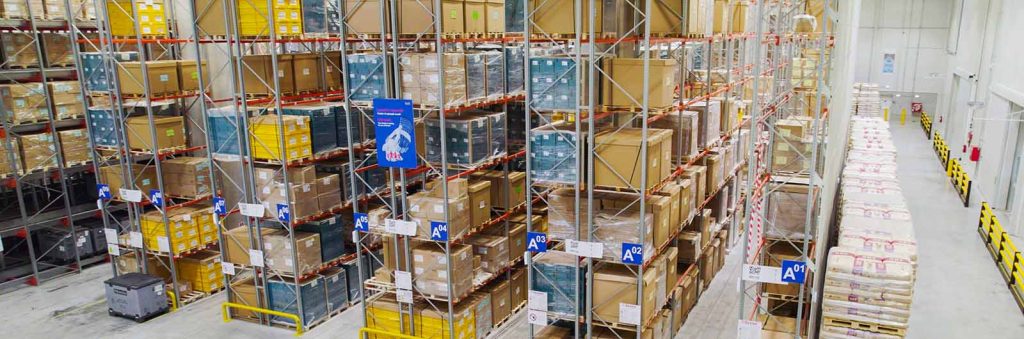
5 Parts of Supply Chain Management
Applying a supply chain management approach to a project can be a vital part of achieving high-quality results. Sourcing means working with vendors to procure the supplies required for the entire production process. Supply planning is a key step in the supply chain management process. When sourcing goods within a supply chain, it’s essential to understand the timeline for each product to keep the chain intact.
The supply chain management process concludes by supporting product and customer return processes to the supplier. Returns management—sometimes called reverse logistics—is when companies make sure they’re able to accept returned goods and properly process those returns. The company must resolve the situation if a customer is not satisfied with the products they purchase from the manufacturer.
After production and finalization, the company must get the product directly into the customer’s hands. The distribution process is typically seen as a way to build up brand image, since customers haven’t yet interacted with the products. With strong supply chain management procedures, companies have reliable logistics capabilities and supply channels for fast, safe deliveries. Ideally, backup systems or alternative transportation options should be available if a transport method becomes temporarily unavailable. Making sure goods can be delivered safely and on time is a critical step in the chain.
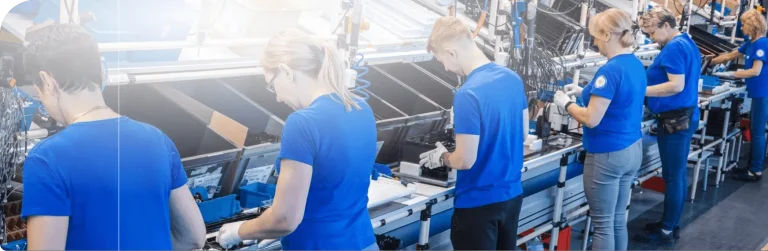
Effective manufacturing processes are critical in supply chain management, but this isn’t the final step. Well-made products are the goal of manufacturing, but they’re not the last phase. Once a product is made, several steps are needed to ensure it meets customer expectations. Suppliers perform multiple subtasks—like assembly, testing, inspection, and packaging, for example.
Supply chain management usually begins with planning to meet customer demand. It’s important to anticipate future demand and plan accordingly. This planning includes identifying the raw materials needed for each production stage, understanding equipment capacity and limitations, and staffing needs throughout the supply chain. Advanced planning like this helps make sure the supply chain runs efficiently.
Invaluable supply chain expertise in the injection molding industry
We offer end-to-end project and supply chain management for injection molding, ensuring quality, efficiency, and sustainability at every stage of the production lifecycle. By providing structured oversight, clear communication, and global sourcing expertise, we help customers deliver complex projects on time, within budget, and to exact specifications.
1. Big-picture vision with attention to detail
We regularly implement the newest production technologies and resources to achieve measurable efficiency gains throughout all operations.
2. Strong communication skills
Effective supply chain communication ensures key information reaches the right people at the right time. By keeping dialogue clear and consistent across sites, suppliers, and teams, issues are resolved quickly, errors are reduced, and clients stay informed throughout every stage of the process.
3. Accurate and disciplined coordination of external parties
All third-party suppliers are carefully vetted, approved, and regularly audited to ensure ongoing quality, design consistency, and compliance with project standards. Standardized procedures and controlled collaboration help maintain reliability and customer service throughout the entire injection molding supply chain.
4. Complete workflow management
We manage projects as a full process—from order and production to logistics and evaluation—adapting to changing needs while maintaining total control. Tight deadlines and complex logistics are managed with disciplined planning to ensure deadlines are reliably met.
5. Thorough assessment and evaluation
Professional supply chain management covers all aspects of a project, including evaluation of processes and logistics. Clear performance metrics track progress toward defined goals, giving clients full insight into results and standards.
A value-added partner throughout your entire production
It’s essential to choose an outstanding plastic injection molding manufacturer with supply chain management experience to provide this broad skill set. Choose Rosti for our focus on performance standards, decades of expertise, and dedication to detail.
To truly unlock the benefits of our global supply network, it’s best to consult with us as early in the production process as possible. By working with Rosti from the design stage, you gain an experienced partner able to identify challenges and opportunities ahead. With project managers who understand the full scope of your business, we help plan and ensure you have the right parts and components when you need them.
Quality-assured materials and services
Rosti’s supplier quality assurance teams ensure that all materials, tools, electronics, and services meet the needs of your product. We select and qualify each new supplier using standardized procedures to make sure every component and service is dependable and high quality. Regular measurement and testing guarantee that suppliers continue to deliver optimal materials and services. Managing supplier relationships is a top priority for us.