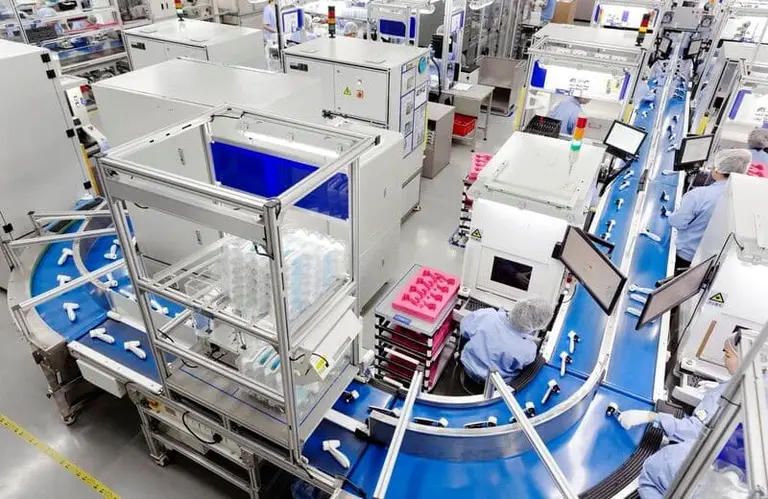
How RJG eDart Transformed PCI’s Injection Molding Operation
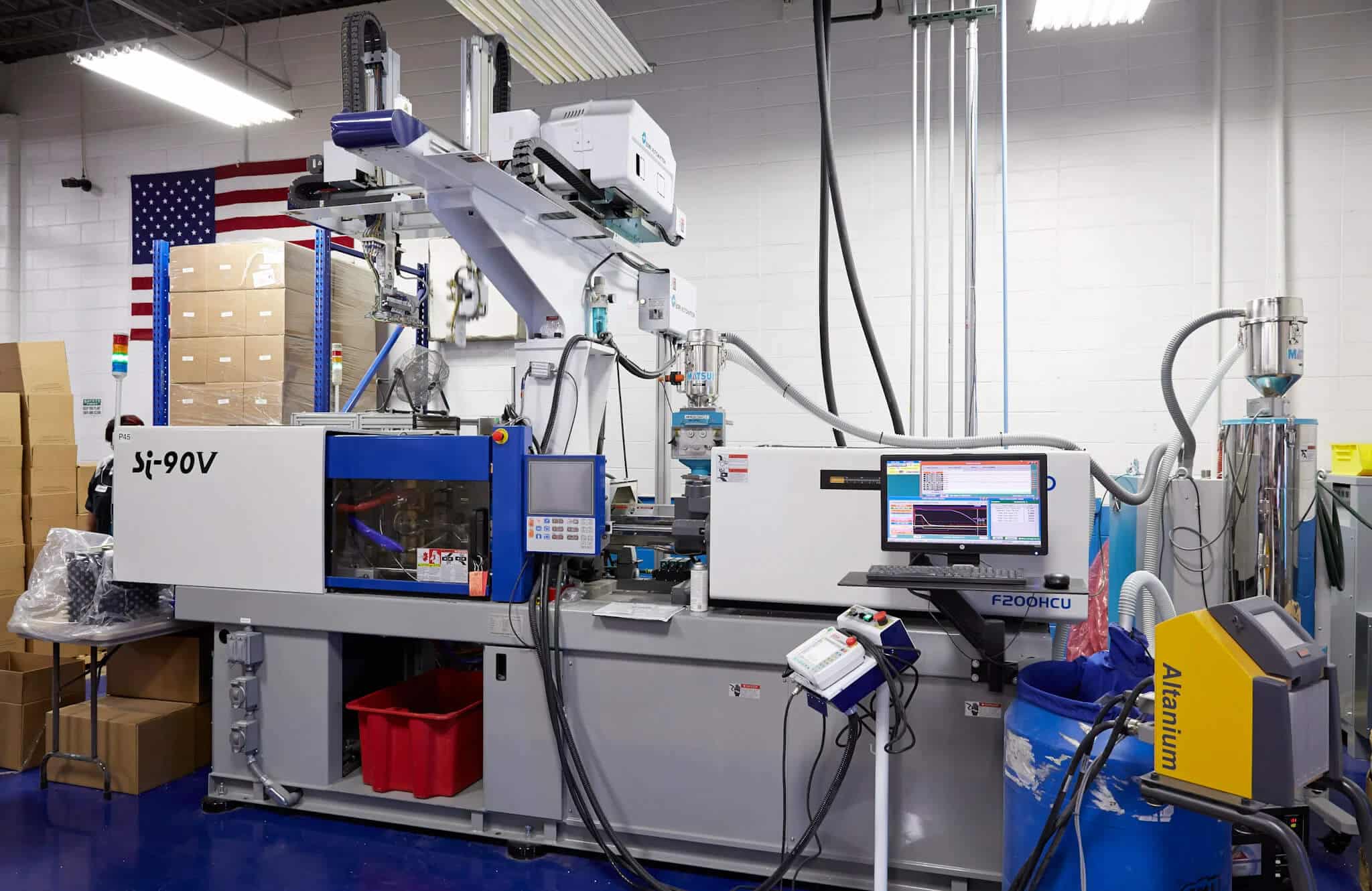
Injection molding technology has significantly advanced since the Hyatt brothers patented the first injection molding machine in 1872. Their original plunger design was enhanced in 1946 when James Hendry developed the first auger injection molding machine.
However, it wasn’t until the computer era that advancements in the injection molding process truly began to emerge. Today’s plastic injection molders must stay ahead with scientific molding principles and processes to meet the requirements for quality, consistency, efficiency, productivity, and cost savings.
One way PCI has stayed competitive with its large OEMs is by adopting the RJG eDart® system for advanced process control. In short, the eDart system helps plastic injection molders stabilize their processes to ensure top quality while lowering costs.
Throughout this Q&A with PCI’s director of engineering, Kurt Behrendt, we’ll discuss more specifics of the eDart apex system for advanced process control and its impact on PCI’s injection molding operations.
When did PCI first realize the need for RJG eDart advanced process control systems in its injection molding operation?
It started when we faced a two-part challenge in adding the RJG eDart system to our injection molding presses, both of which were customer-driven. First, a customer required large amounts of SPC data and CPK studies for some of their critical components. Second, we had a high-volume, critical part that would occasionally start to blister, and we couldn’t identify the cause.
In response to these challenges, in September 2009, we purchased our first two RJG eDart systems. Within two years, we quickly added more, along with the sensors, to our tooling standards.
When did PCI convert all presses to include RJG?
In 2010, PCI began a 2-year initiative to add RJG eDart compatibility to all presses. Then in 2011, PCI updated requirements for all new presses to come equipped with E-Dart systems hardwired and directly mounted on the machine.
Why was incorporating the process control system on all presses a vital initiative for PCI?
PCI aims for very high press utilization rates. Achieving high utilization needs a flexible, agile fleet of presses and a strong foundation in scientific molding. E-Dart systems provided added control and flexibility to map and manage finely-tuned processes using in-mold pressure sensors. As PCI kept outfitting presses with eDart systems and molds with pressure sensors, we soon reached a tipping point where converting the entire plant was inevitable. Closed-loop process control became a core part of our operating culture.
How have the RJG eDart systems changed PCI’s injection molding processes?
PCI has always specialized in scientific molding process development. RJG took that approach further by adding another level of process control through decoupled molding. Traditionally, our process optimization focused on creating press parameters that generated a robust processing window. RJG’s eDart systems enabled machine control based on the plastic pressure inside the mold. As a closed-loop system, our machines can now compensate for plastic pressure changes caused by fluctuations in resin viscosity. Maintaining and controlling plastic pressure is key to molding consistent products. Producing consistent products adds significant value for quality control and flexibility since the process is mapped to the mold rather than any one molding machine. Our engineers and technicians can now monitor, control, and maintain the same process across multiple runs using different machines and lots of material.
What are the main benefits to customers?
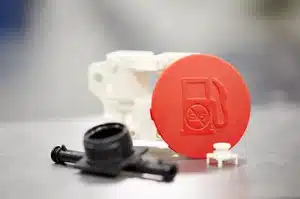
The main benefit for PCI customers is quality—or in other words, exceptionally consistent products. By integrating press and eDart control, we can run a robust, closed-loop molding process that maintains steady plastic pressure and minimizes variance in parts. This level of control also lets us reject products based on press and eDart alarm limits. The result is exceptionally uniform, high-quality parts ready to ship, with less scrap material generated for recycling.
PCI customers also benefit from reliable on-time delivery. RJG’s eDart systems let us map processes to the mold instead of the press. As a result, PCI can apply these processes over a wider selection of presses while keeping the same high level of process control. This consistency means more presses are available to meet our customers’ constantly changing production needs.
Why does PCI produce better parts with the RJG eDart systems in place?
Implementing the RJG eDart system has brought significant improvements in managing part consistency across different resin lots, while also reducing scrap and processing time. PCI molds products using well over 100 different types of resin, most of which are engineering resins with varying filler contents. These resins naturally have a wide range of viscosity, depending on both resin formulation and filler content. Scientific molding already reduces some effects of viscosity variation, but the RJG eDart system allows PCI to monitor and control in-mold plastic pressure changes within the molding cycle itself. This advanced process control ensures plastic pressure is maintained for every cycle. Keeping plastic pressure consistent is a critical factor in delivering a uniform product.
How Does RJG support the needs and work of PCI engineers?
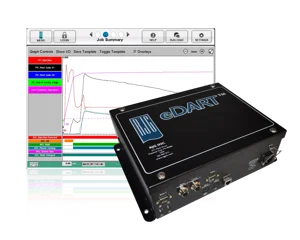
Innovation and technology leadership across all PCI areas is core to our DNA. As a result, process control lies at the center of our engineers’ mission, and they rely on RJG in many ways. For example, RJG eDart process mapping is required for all new mold qualifications at PCI. An RJG trainer visits PCI quarterly to provide refresher training and to audit our operators. Our engineers use these sessions to further develop their skills in in-mold pressure sensing and control. They are able to specify where to place pressure sensors in new mold designs independently, but RJG offers support for challenging situations. Finally, our engineers can also access a shot-to-shot history saved in the eDart system for troubleshooting and root cause analysis.
Does the RJG eDart technology have greater or less impact on different types or sizes of parts?
We’ve found the RJG eDart technology applies to all part sizes. The system is especially useful for large parts made from commodity resins that have high shrink rates. It’s equally beneficial for small, critical parts molded in highly-filled engineering resins. As a best practice, PCI designs every mold for in-mold pressure sensing. Our customers need a consistent product, and closed-loop processing with eDart control delivers that solution.
What are some of the training protocols for PCI team members who utilize the technology?
RJG has a robust training infrastructure, which is essential for a molder’s success with their systems. The RJG systems are not just a simple flip of a switch that solves all your problems—they are advanced tools that can deliver dramatic results when used to their fullest potential.
To get the most out of RJG, it’s essential for our production floor staff to understand its capabilities. We offer online, in-house, and remote in-person training from RJG. Online options provide a solid introduction for our entry-level molding technicians. The remote in-person training is designed for advanced Master Molder candidates and takes place hands-on at RJG training centers. The in-house option is one we helped develop with our RJG trainer to allow step-by-step advancement through stages of RJG mastery.
The trainer spends 3-4 days on-site at our facility several times a year, helping teach and train our technicians on RJG and scientific molding principles. This is a very valuable opportunity for our production staff, and it’s something everyone looks forward to.
Are there any other technological advancements or enhancements planned for PCI in the coming months?
We’re interested in combining AI (artificial intelligence) and machine learning with RJG to improve our real-time process control. We have full confidence that the RJG systems will control the manufacturing variables. Still, we want to take it to the next level by being proactive in reducing the variables altogether. This effort will require advanced capabilities to analyze the RJG outputs and create action plans to address the variables present in the molding processes.