Advantages of Scientific Molding Practices
Scientific molding practices are key to achieving results that deliver faster cycles, higher output, and a more efficient injection molding process overall. Applying solid scientific principles can help determine the best molding conditions.
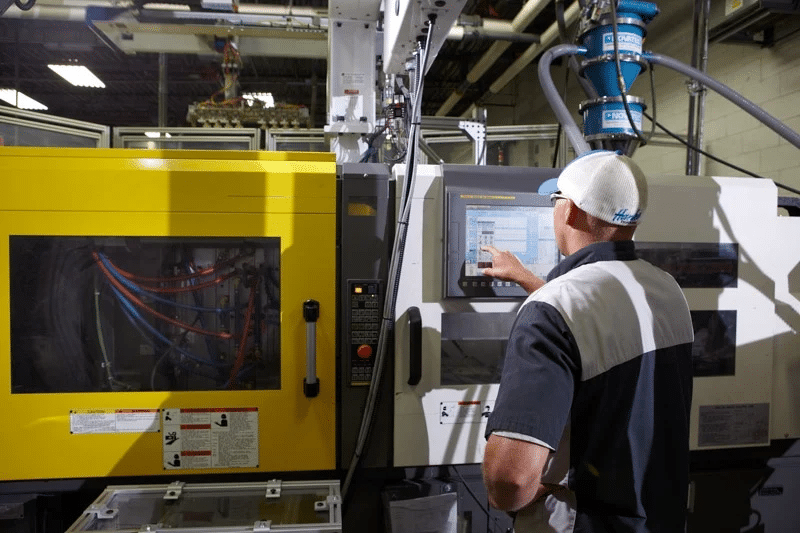
Equipment and software that allow real-time monitoring of production processes guide the scientific molding stages and offer a significant advantage. Additionally, quality control issues can be prevented by incorporating automated containment control and traceability for specific applications. From data collection to machine maintenance, process development to resin characteristics, and much more—scientific molding helps identify efficiencies, resulting in more value and better parts for customers.
How does scientific molding benefit product manufacturers and OEMs? When implemented systematically by an injection molder, scientific molding delivers better parts and reduces rejects.
Here are the top benefits of working with an injection molder that follows scientific molding practices:
1. Data-Driven Approach:
Scientific molding uses data to develop a process that produces repeatable results with minimal variation. Through resin expertise and testing, the dimensional or mechanical characteristics of a molded part can be optimized. This is often achieved using SOLIDWORKS® Plastics Premium software (mold flow simulation) and RJG eDart® process control systems. Predictive insights, process validation, and thorough process documentation are key to manufacturing demanding parts.
Advantages of SolidWorks (Mold Flow Simulation)
- Provides insight into plastic part geometry that would be difficult, expensive, or impossible to predict by conventional means
- Offers the ability to check for draft, thickness, undercuts, and geometry — allowing for identification of potential problem areas upfront to decrease the risk of production issues or part failure
Advantages of RJG eDart
- Records historical processing data for every shot
- Monitors critical data
- Enables real-time production monitoring
- Improves quality assurance
- Identifies which parameters are critical to product quality
- Reduces scrap and processing time
2. Smart Material Selection
According to Kip Doyle, author of an article on the Top 10 Reasons Why Molders Fail at Scientific Molding, many molders are stuck in a “machine-focused” mindset and don’t mold from the plastic’s perspective. He points out that there are many articles on the four main plastic variables (plastic temperature, plastic flow, plastic pressure, and plastic cooling rate and time), and that a scientific molder must understand and optimize the process from the plastic’s point of view.
Plastic variables require understanding the nature of the material being molded and its ideal molding conditions. When the material’s key properties, behavior, and responses to processing are understood, scientific molders can optimize the molding process to achieve the most consistent parts possible.
3. Part Design Optimization
Design engineers should leverage past experience and expertise to optimize part design for unique applications. Scientific molding elements involving part design may include using the latest software and technology like computer-aided engineering, mold flow, and prototype development to validate the part’s end use.
Design considerations may include:
- Radius, draft angle, sink marks, wall thickness, etc.
- Gate location
- Weld line locations
- Environmental / end use factors
- Part appearance
Injection molders should know how to avoid designing a part, building the tooling, and starting the molding process, only to discover that the design doesn’t work in production. Scientific molding helps manufacturers prevent this scenario.
4. Tool Design Optimization
Scientific molding practices can also be used to optimize tool design or improve poorly designed tools. It’s essential for injection molds to be evaluated for how well they produce consistent, defect-free parts. Engineers should look at every aspect of a mold’s mechanical functionality, using the right material settings.
Testing can then be used to check for any imbalances between cavities. Once this analysis is complete, a gate seal study can be performed to gather data on where the gates fully seal, and at which points in the mold cavities. Recording findings and making recommendations for process or tooling adjustments is essential to correcting potential defects.
5. Production and Quality Control
Recorded data can be used to evaluate quality control and make any needed tweaks to tooling—improving overall part quality. Once all quality standards have been met, implementing scientific injection molding practices can greatly streamline the production process. These actions can be so effective that machines and operators need less direct involvement. In fact, leading injection molders have started implementing groundbreaking lights-out manufacturing practices. This is when factories and production facilities use innovative, automated machinery to perform tasks that would normally require a human presence.
As it continues to evolve, scientific molding has helped optimize injection molding production processes in ways that now allow manufacturers to rely on technology for an even greater global competitive advantage.
Are you interested in learning more about scientific molding and how it could benefit your custom part? Discover how Plastic Components, Inc. works to be your top supplier and a team you can depend on.