Design Tips for Injection Molding with High-Heat or Exotic Resins


Throughout the injection molding process, several factors impact the efficiency and viability of a plastic part. Before production starts, it’s important to consider certain design elements—especially when the part needs high heat or specialty resins.
Taking these design considerations into account improves part moldability and can ultimately reduce the chance of defects and other issues. At the early design stages of a plastic part, engineers should collaborate with a trusted injection molder who can suggest ways to optimize the design and make critical material recommendations.
Interested in a thorough review of the injection molding process from design to production?
Certain characteristics of high heat and specialty resins are unique and might behave differently across different applications. To get the most out of both the design and material, experienced design engineers and injection molders have several factors to consider. This post outlines a few basic and advanced tips to keep in mind when designing parts for injection molding with high-heat or specialty resins.
1. Material Shrink Rate:
Shrinkage is the contraction of a molded part as it cools after being injected. Every material has a different shrink rate depending on resin type (amorphous vs. crystalline), mold design, and processing conditions. The resin may also shrink differently depending on the flow direction. As a general rule, a 10% change in mold temperature can result in a 5% change in original shrinkage. Injection pressure directly affects shrinkage rates as well—the higher the injection pressure, the lower the shrinkage rate. Below are typical mold shrink rates, along with tonnage recommendations and vent depth values, for several commonly used materials and high heat resins:
| Material | Recommended Tonnage (per in²) |
Shrink Values | Vent Depth (in.) |
| Acrylonitrile Butadiene Styrene (ABS) | 2.5 – 3.5 | .004 – .008 | .0010 – .0020 |
| ABS/Polycarbonate Blend (PC/ABS) | 3.0 – 4.0 | .004 – .007 | .0015 – .0030 |
| Acetal (POM) | 3.0 – 4.0 | .020 – .035 | .0005 – .0015 |
| Acrylic (PMMA) | 3.0 – 4.0 | .002 – .010 | .0015 – .0020 |
| Ethylene Vinyl Acetate (EVA) | 2.0 – 3.0 | .010 – .030 | .0005 – .0007 |
| Ionomer | 2.5 – 3.5 | .003 – .020 | .0005 – .0007 |
| High Density Polyethylene (HDPE) | 2.5 – 3.5 | .015 – .030 | .0008 – .0010 |
| Low Density Polyethylene (LDPE) | 2.0 – 3.0 | .015 – .035 | .0005 – .0007 |
| Polyamide – Nylon (PA) Filled | 4.0 – 5.0 | .005 – .010 | .0003 – .0010 |
| Polyamide – Nylon (PA) Unfilled | 3.0 – 4.0 | .007 – .025 | .0005 – .0020 |
| Polybutylene Terephthalate (PBT) | 3.0 – 4.0 | .008 – .010 | .0005 – .0015 |
| Polycarbonate (PC) | 4.0 – 5.0 | .005 – .007 | .0010 – .0030 |
| Polyester | 2.5 – 3.5 | .006 – .022 | .0005 – .0010 |
| Polyetheretherketone (PEEK) | 4.0 – 5.0 | .010 – .020 | .0005 – .0007 |
| Polyetherimide (PEI) | 3.0 – 4.0 | .005 – .007 | .0010 – .0015 |
| Polyethylene (PE) | 2.5 – 3.5 | .015 – .035 | .0005 – .0020 |
| Polyethersulfone (PES) | 3.0 – 4.0 | .002 – .007 | .0005 – .0007 |
| Polyphenylene Oxide (PPO) | 3.0 – 4.0 | .005 – .007 | .0010 – .0020 |
| Polyphenylene Sulfide (PPS) | 3.5 – 4.5 | .002 – .005 | .0005 – .0010 |
| Polyphthalamide (PPA) | 3.5 – 4.5 | .005 – .007 | .0005 – .0020 |
| Polypropylene (PP) | 2.5 – 3.5 | .010 – .030 | .0005 – .0020 |
| Polystyrene (PS) | 2.0 – 2.5 | .002 – .008 | .0015 – .0020 |
| Polysulphone (PSU) | 4.0 – 5.0 | .006 – .008 | .0010 – .0015 |
| Polyurethane (PUR) | 2.5 – 3.5 | .010 – .020 | .0004 – .0010 |
| Polyvinyl Chloride (PVC) | 2.5 – 3.5 | .002 – .030 | .0005 – .0020 |
| Thermoplastic Elastomer (TPE) | 2.5 – 3.5 | .005 – .020 | .0008 – .0010 |
2. Uniform Wall Thickness:

Uniform wall thickness throughout a part (when possible) is essential to prevent thick sections. Designing parts with non-uniform walls can cause warping as the molten material cools.
If you need areas of different thicknesses, transition them as smoothly as possible so the material flows evenly inside the mold cavity. This helps ensure the entire mold fills completely and reduces the risk of defects. Rounding or tapering thickness transitions minimizes molded-in stresses and stress concentrations from abrupt thickness changes.
Selecting the optimal wall thickness for your part can have a major impact on manufacturing costs and production speed. The minimum wall thickness depends on the part’s size, geometry, structural needs, and resin flow behavior. The wall thicknesses of injection molded parts generally range from 2mm – 4mm (0.080″ – 0.160″). Thin wall injection molding can create walls as thin as 0.5mm (0.020″). Work with an experienced injection molder and design engineer to make sure your part’s design and material selection use the correct wall thicknesses.
3. Radii to Edges:
Besides the main areas of a part, keeping wall thickness uniform is crucial in edge and corner design. Adding generous radii to rounded corners brings many benefits to a plastic part’s design, including lower stress concentration and improved material flow. Parts with sufficient radii also tend to be easier and more cost-effective to manufacture while offering better strength and appearance.
4. Use of Ribs:
Most high-temperature and specialty materials naturally have high strength and can withstand demanding environments. However, one way to further strengthen a part is by adding “ribs” to the design. Ribs are thin projections that rise at a right angle from a wall or surface to add strength.
Many designers believe that making a part’s walls thicker increases strength. In reality, overly thick walls can cause warpage, sink marks, and other defects. Ribs offer added strength without increasing wall thickness, saving on material costs while still reinforcing the part.
When designing with high-temperature and specialty materials, ribs should be 50-60 percent of the base wall thickness. Rib height should not exceed three times the base wall thickness. For extra stiffness, increase the number of ribs rather than their height, and space them at least twice the base wall thickness apart.
5. Draft Angle:
How a part’s features form inside a mold determines the type of draft needed. Features made by blind holes or pockets (like most bosses, ribs, and posts) should taper and get thinner as they extend into the mold. Surfaces formed by slides may not need draft if the steel pulls away before ejection. Consider adding angles or tapers to product features such as walls, ribs, posts, and bosses that run parallel to the direction the part is removed from the mold, which helps with ejection.
Other design guidelines include:
- For most materials, a draft angle of at least half a degree is acceptable. High-heat and specialty resins may need one to two degrees of draft. Add another degree for every 0.001 inch of texture depth.
- Draft all surfaces parallel to the direction the mold separates.
- Angle walls and other part features made in both halves of the mold to help with ejection and maintain even wall thickness.
6. Finishing:
Surface finish options for plastic injection molded parts depend on part design and the chemical makeup of the chosen material. Finishing options should be discussed early in the design process, since the selected material may significantly affect the type of finish used. Especially in cases where a glossy finish is wanted, material choice can be critical.
Products made from crystalline resins require higher melt temperatures, which increases gloss and reduces roughness to create a smoother surface. When thinking about adding compounds to achieve a certain surface finish and boost part quality, it’s essential to work with an injection molder who has access to skilled material science professionals.
7. Characteristics of the Material:
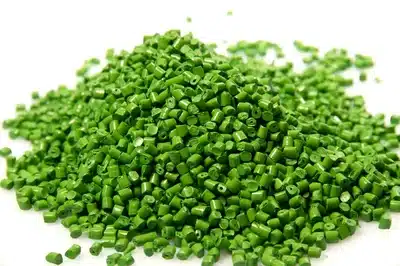
Keep your plastic part’s end use in mind throughout the design process, and remember that the material’s characteristics are key factors that can boost performance in demanding conditions. High heat or specialty materials naturally have, or can be engineered to have, the following features:
- Low or high thermal conductivity
- Long-term thermal stability
- Excellent wear properties
- Creep resistance
- Abrasion resistance
- Chemical resistance
- Dimensional stability
- Flame resistance
- Low permeability
- And many more
Design is critical in the injection molding process—especially when high-temperature materials are used to enhance a part’s strength, stability, and other vital features for its unique purpose. Standard molding techniques aren’t always effective with high-temperature and specialty resins. Work closely with your injection molder to understand how the material reacts to certain conditions and what parameters should be followed during the design and production process to ensure your part’s success.