How to Implement an Efficient Injection Molding Tool Transfer
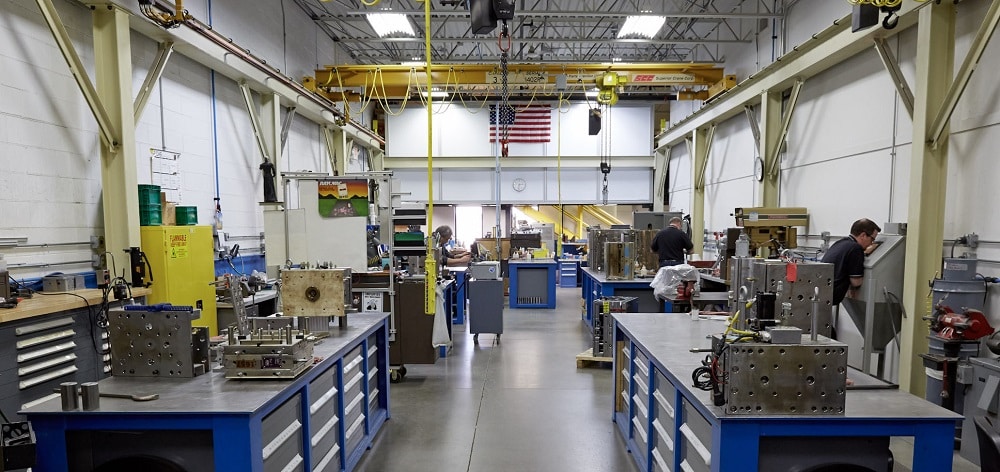
Transferring an injection mold tool doesn’t have to be stressful or overly expensive. There are several important questions to consider during the injection molding tool transfer process.
What are the benefits of transferring an injection mold tool?
It’s important to evaluate manufacturing capabilities and quality requirements as early as possible to make sure the partnership is a good match for both sides. Moving a tooling asset is also a chance to re-align capabilities and requirements. The transfer is an opportunity for a third party to perform a thorough evaluation of the mold’s condition.
What are the drawbacks of transferring an injection mold tool?
In many cases, it can be tough to get accurate and detailed tooling records for older tools. However, in today’s digital world, records for tooling (both build and ECN) are much easier to get.
What are some best practices for transferring injection molding tools?
- Build a reasonable time buffer when possible to guarantee adequate supply throughout the transfer, evaluation, conversion, and re-qualification stages of the process.
- Share the reason for the transfer.
- Create a checklist for the transfer to make sure you provide or get current information. This checklist may be long, but it should always include part drawings, 3D files, last shots, dimensional records, quality gages, maintenance and quality history, tooling drawings, any auxiliary or robot requirements, etc. Download a helpful checklist to get started here.
- Give the new injection molder at least a week to carry out their own tooling evaluation, and to replace fittings, couplings, and connectors to match their procedures. For example, PCI’s team often needs time to route channels in the ejector plates for pressure sensor wiring.
- Complete a full dimensional layout after the transfer. Note: This is a great time to re-evaluate the plastic component conditions and dimensional results.
What should a manufacturer look for in a new injection molder?
- Financial stability.
- A proven track record of following a clean procedure plan that will be evaluated step-by-step and documented. The plan should train all personnel, from sales and engineering to production, on what to expect before the tool arrives at the facility.
- A strong design for manufacturing (DFM) process that demonstrates the value lost if design, prototyping, and production are treated as separate steps instead of part of a single, integrated manufacturing chain.
- Mold simulation software (e.g., SolidWorks). Injection molders who use mold simulation like SolidWorks Plastics Premium software provide up-front design validation that gives insight into plastic part geometry that would be hard, expensive, or impossible to predict with conventional methods.
- Manufacturing – it’s crucial that the injection molder has both production capacity and existing machines that fit the requirements (tonnage, barrel size, platens, etc.).
- Quality – the new injection molder should have quality systems in place to maintain and control the best part quality.
- Materials – the injection molder should have experience and logistics skills in the right resin categories.
- Value-Add Requirements – the injection molder should have the right equipment and labor resources to make sure the part can be shipped as required.
What should you expect from program management team roles?
Your team will include an account manager, account engineer, program launch manager, and tooling and quality representatives. This team is responsible for every aspect of the transfer process, from managing timelines, tool review and assessment to sampling and PPAP submission. Their job is to move your transfer program through the process efficiently and on schedule.
What are the stages of the injection mold tool transfer process?
- Partnership: Key to the success of the project in establishing and maintaining defined communication channels.
- Assessment: During this time, the team works with the customer to thoroughly understand production functions from order entry to shipment.
- Schedule: Based on the on-site assessment, a transfer schedule will be developed.
- Safety stock: Six weeks is a typical time frame for safety stock allotment.
- Validation: The goal of validation is to obtain customer approval on each part that will be produced in the new injection molding facility.
- Production molding: Once part validation is complete, the new injection molder’s production team will begin to produce the plastic components.
All phases of the plastic injection tool transfer process are critical – particularly the validation phase. Working with an experienced injection molding team that uses the latest technology and innovative manufacturing processes will mitigate associated risks and get your part to the production molding phase faster. Working with a team that has depth in their technical backgrounds will be an integral asset to the commitment and investment made to the transfer process.
Are you looking for the right partner to help facilitate an injection mold tool transfer? Plastic Components, Inc. is here to help. Download our tool transfer checklist here – or contact one of our experienced engineers to discuss your immediate needs.