Plastics and Their Positive Impact on Environmental Sustainability? Yes.
The plastics industry has played a key role in making modern life sustainable through affordable and accessible healthcare, food for all, and other conveniences. Now, it needs to act decisively by investing in innovation and technology to increase the life cycle of its products for a more sustainable future.
By Patrick Williams, SVP, Asia, Rosti Group
Discussing plastics and their positive effects on the environment is surprising; it definitely isn’t easy. What makes this conversation challenging is the scale of the climate crisis we’re facing, much of which has come about due to human industrial activity over the past century.
As one of the major inventions of our era, plastic is a key contributor to the modern life we now take for granted. I would even say that the development of plastics represents a major leap in human and intellectual achievement, enabling the mass production of conveniences essential to our lives today. And the plastics industry is doing so sustainably.

A look back
The creation and development of plastics are rooted in sustainability. Humanity’s search for alternatives to natural materials led to the invention of Bakelite in the early 1900s, a precursor to plastics. By the start of World War II, as society was poised for advances in technology, medicine, food science, defense, and industry, people were seeking man-made substitutes for natural resources.
The plastics industry responded with major innovations to create a wide array of plastics for various applications. These synthetic materials offered a much more practical and cost-effective alternative to natural resources, helping conserve vital materials.
This enabled largescale human progress, increasing life expectancy and significantly reducing the price of healthcare, food, appliances, and industrial equipment. The result was unprecedented job creation, reductions in poverty, and widespread improvements to welfare.
The scope of the impact
Some of the most commonly used healthcare and medical infrastructure products rely heavily on plastics. Plastics make quality healthcare solutions accessible and affordable at scale. A recent example is the rapid and massive production of PPE kits, masks, syringes, and other items that helped control the global impact of COVID-19.
Plastics are widely used in packaging, helping safely transport and distribute goods. These applications reduce both the environmental footprint and the cost of moving products. Using plastics in food packaging has significantly cut down on food waste, thus conserving natural resources.
Plastics have also enabled modern conveniences and technology to reach every part of the world, improving lifestyles. Today, it’s impossible to imagine a functioning home without plastics – from appliances to clothing to electronics.
The path forward for the plastics industry
As a responsible partner in large-scale human progress, the plastics industry must boost its research and innovation capabilities to effectively respond to climate change challenges. The Rosti Group has consistently demonstrated how to combine innovation and business responsibility to drive business growth.
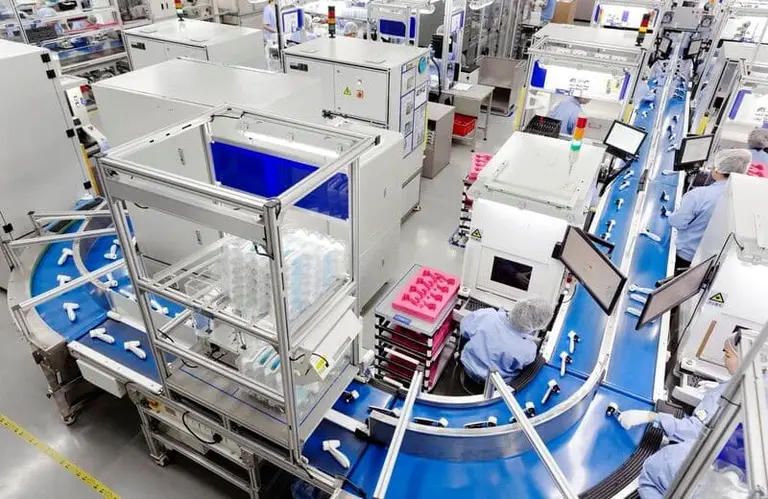
During our 78-year history at Rosti Group, we’ve relied on innovation to make contract manufacturing more efficient and sustainable from an operational perspective. Most of the time, our innovative capabilities have helped our clients design and create products that further reduce their carbon footprint.
As a result, our clients can track the products we manufacture and maintain complete control over quality, ensuring zero material loss. They can report their environmental sustainability performance with confidence and transparency, while illustrating their business responsibility. Throughout my 35 years at the group, our dedication to our core values of passion, integrity, partnership, and excellence has consistently driven us to help our clients adopt more environmentally friendly materials and manufacturing processes.
Therefore, when it comes to our role in advancing environmental sustainability, we must approach it by managing our entire value chain across regions and markets worldwide. This should focus on increasing circularity and extended producer responsibility. The main driver here is innovation—a long-standing hallmark of the plastics industry. We’re able to develop products that increase customer lifecycle value while reducing our reliance on virgin materials, and minimize waste by acting responsibly in collecting, sorting, and recycling it.
The importance of choosing the right partners
In a marketplace dominated by contract manufacturers focused solely on cost cutting to drive growth, companies like Rosti Group set themselves apart through major value additions such as a strong commitment to sustainability through innovation and technology. We keep growing by giving our clients a clear competitive edge: their brands are recognized for their responsibility while providing state-of-the-art products, helping make their value chain profitable. They rely on Rosti’s mission to ‘Leave no trace’. We ensure this by achieving independent certifications. For example, we comply with three international sustainability standards: ‘RBA’, ‘SEDEX’, and ‘ecovadis’.
The future calls for clients and industry partners who are mindful of their duties to people and the planet, and who act responsibly as they pursue profits.
At Rosti Group, we see every partnership with our clients as a chance to support environmental sustainability. For example, we worked with a multinational electronics company to design the exterior of an innovative LED lamp with adjustable colors and shades. We successfully substituted glass with plastic, resulting in substantial energy savings and a product with a longer lifespan—leading to even more savings. Over 6 million of these bulbs have now been sold globally.
Plastics undeniably have a smaller carbon footprint than comparable products made from steel or aluminum. The real challenge is effectively managing the disposal of these products at the end of their life.
They must be reused and recycled, ideally to the same quality as the original material. This is possible with an extended producer responsibility strategy, working with partners like Rosti Group for technology support and implementation.
We believe that industry-wide adoption of this Rosti Way is the key to further increasing our global contribution to mitigating climate change.