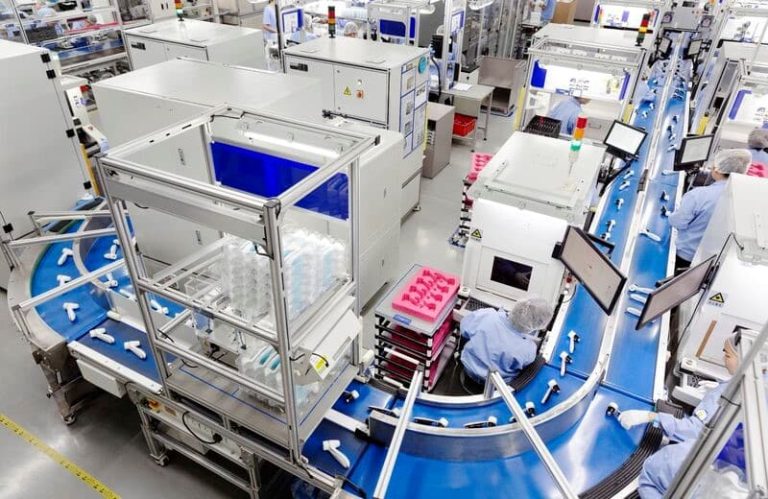
Rosti North America helps customers transition to sustainable optical lens production
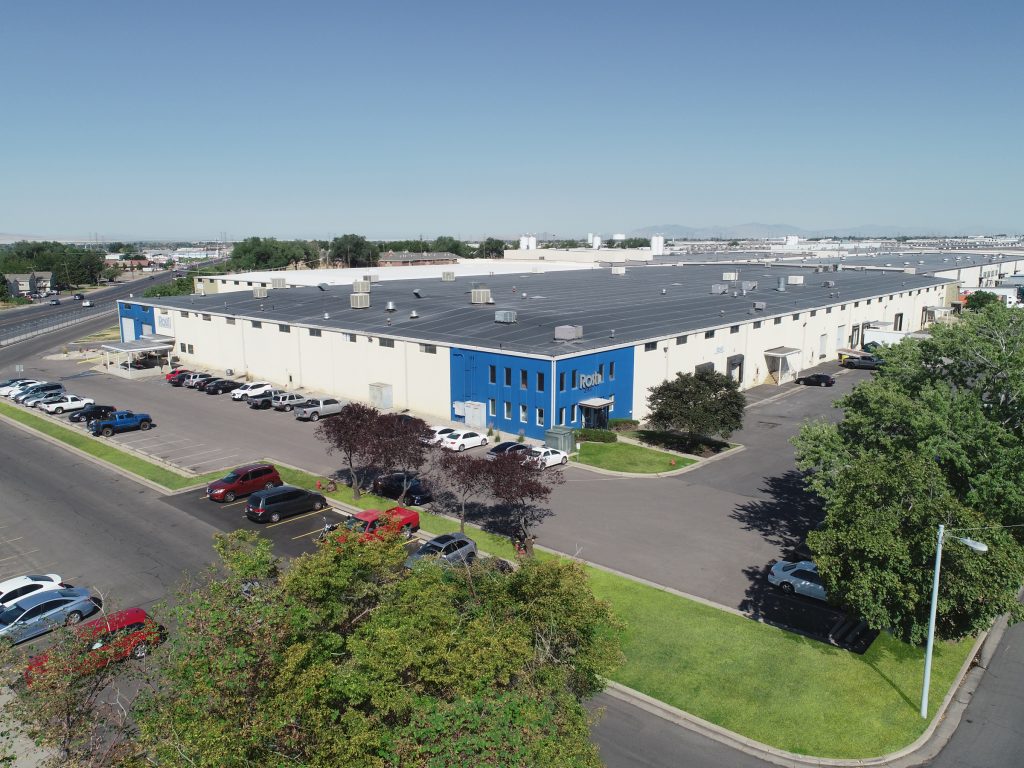
Rosti’s collaboration with a leading Tier Supplier began in 2017 when they looked to broaden and diversify their supplier base.
We’ve recently worked with them again to explore new molding capabilities for their optical lens components and identified Rosti as a partner with proven experience in hot runner injection molding.
The project focused on developing a more sustainable and cost-effective production method for a precision optical lens.
Our customer wanted to eliminate the significant runner waste produced by traditional molding methods and achieve cost savings, while maintaining the high optical quality needed for their components. After 24 months of development, the project is now in full production.
Project Timeline
The journey started two years ago when Rosti North America was approached to explore alternative production methods for an optical lens.
Rosti’s engineering team first reverse-engineered the existing component, analyzing the current production methods to identify opportunities for improvement and the quality requirements of the part. With these insights, the team developed an optimized approach using hot runner injection molding as a more sustainable alternative to traditional cold runner techniques.
Throughout the development phase, Rosti’s cross-functional team—including Account Management, Engineering, Business Development, and Quality specialists—worked closely with Tooling Engineers, Supplier Quality Engineers, and the Procurement team from our customer.
This strong collaboration ensured that every design decision and process change was aligned with the Tier Supplier’s requirements.
The component underwent qualification testing to confirm its performance and manufacturing reliability before moving into full-scale production.

What are the challenges of injection molding Optical Lens?
Historically, the optical lens was produced using traditional molding methods that relied on a large plastic runner. This created a significant volume of scrap that needed to be disposed of and, ultimately, wasn’t good for the environment. Our customer was committed to reducing the environmental impact of production, so a more sustainable approach was essential.
Introducing hot runner technology into optical molding was an ambitious move. Hot runner systems are rarely used for optical parts because of the extreme precision and clarity required.
To address this, Rosti leveraged our global expertise and knowledge, consulting with internal specialists to confirm the design’s feasibility and ensure the final solution would achieve the required accuracy, optical quality, and structural integrity.
Custom Hot Runner Injection Molding
Our solution involved developing a custom hot runner injection molding process specifically for the optical lens. The project started with a detailed design feasibility review, in which the team adapted the molding process to meet strict optical and structural requirements.
This led to the creation of a dedicated tooling and molding solution that completely eliminated the need for runners.
We worked hand-in-hand with our customer to validate every stage of the process, from tooling design to prototype development. Extensive testing was carried out to ensure the lenses produced with this new method met the same, if not higher, performance and quality standards as those made using traditional methods.
This approach allowed us to address challenges in real time and refine the solution into a production-ready process.
Sustainable Injection Molding for Optical Lens
The outcome of this collaboration marks a significant step forward in sustainable manufacturing for optical components in the automotive industry. The change in production methods has resulted in considerable material and cost savings.
The method has completely eliminated runner waste, which not only cuts plastic scrap but also reduces the associated disposal costs. By using less material overall, our customer benefits from both cost efficiency and environmental advantages.