News,
How can Rosti help speed up time to market in the consumer electronics industry?
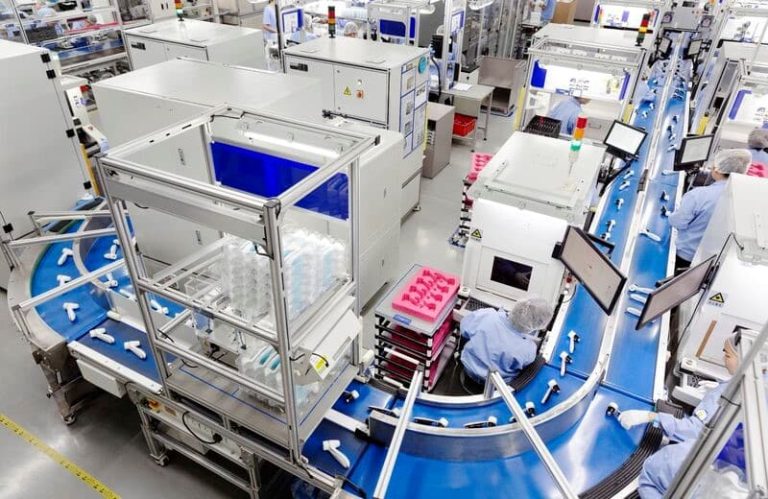
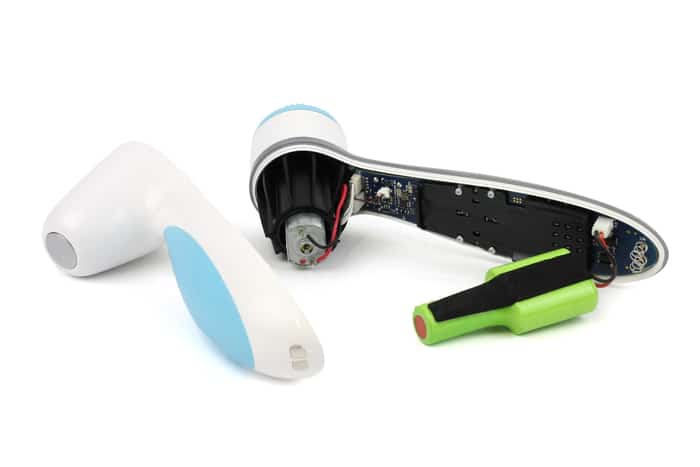
Do you think facial cleansers only need to clean? Nowadays, consumer electronic devices also connect to mobile apps via wireless networks, helping users keep track of how often and how thoroughly they clean, and even enabling social features to share their experiences.
Of course, similar features have become common in consumer appliances like sous vide machines and smart rice cookers. Thanks to the integration of new technologies such as 5G and artificial intelligence, smart, interconnected IOT appliances are accelerating the pace at which traditional products are being improved.
What is RFID insert injection molding technology?
When talking about IOT consumer appliances that bring a human touch to cold electronics, RFID insert injection molding technology is a must-mention. This process actually brings together two specialized technologies: RFID technology and embedded injection molding technology.
RFID (Radio Frequency Identification), also known as wireless radio frequency identification, is a communications technology that allows you to identify specific targets and read/write related data via wireless signals, without needing mechanical or optical contact between the reader and the target. This technology provides advantages like anti-counterfeiting, product information tracking, and intelligent product life reminders. It’s widely used in fields such as smart manufacturing, smart logistics, smart warehousing, new retail, smart transportation, and asset management.
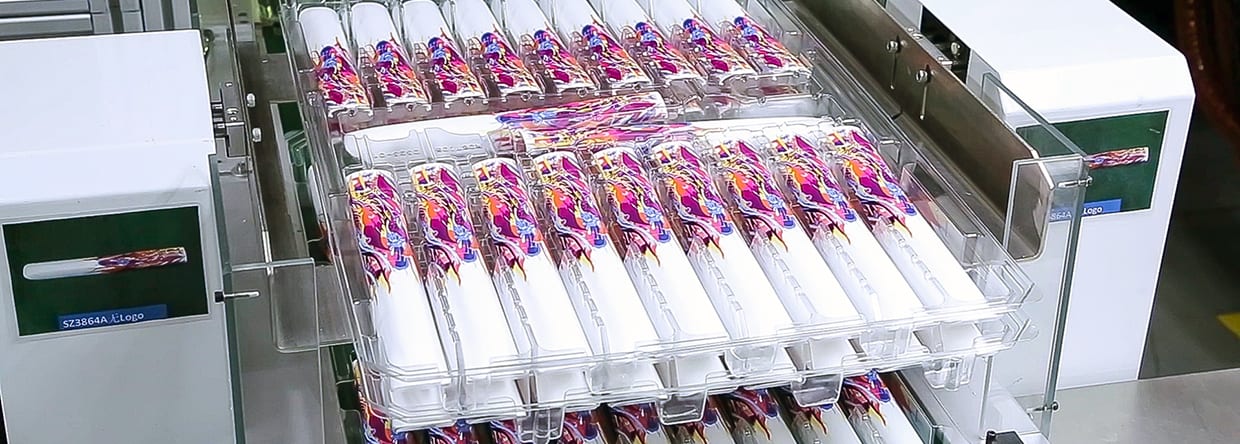
Insert molding is a process where an insert is placed precisely in the mold tool, and then plastic is injected to form the final product. After the mold opens, the insert is encased in the cooled and hardened plastic, resulting in products with embedded components such as threads or electrodes. In RFID insert injection molding, RFID tags can be encased into the plastic as inserts.
However, in actual manufacturing, embedded injection molding is much more difficult than standard injection molding. For one, the position of the insert often makes the tool design more complex and slows down production cycles. For another, the different thermal expansion rates between the insert and the plastic can cause internal stresses during production, resulting in risks such as cracking or deformation, which greatly increases the difficulty of automated production and drives up manufacturing costs.
From concept to reality in 72 hours
The consumer electronics market is evolving rapidly, and brands have to move quickly. What if your product could go from concept to prototype in just 72 hours?
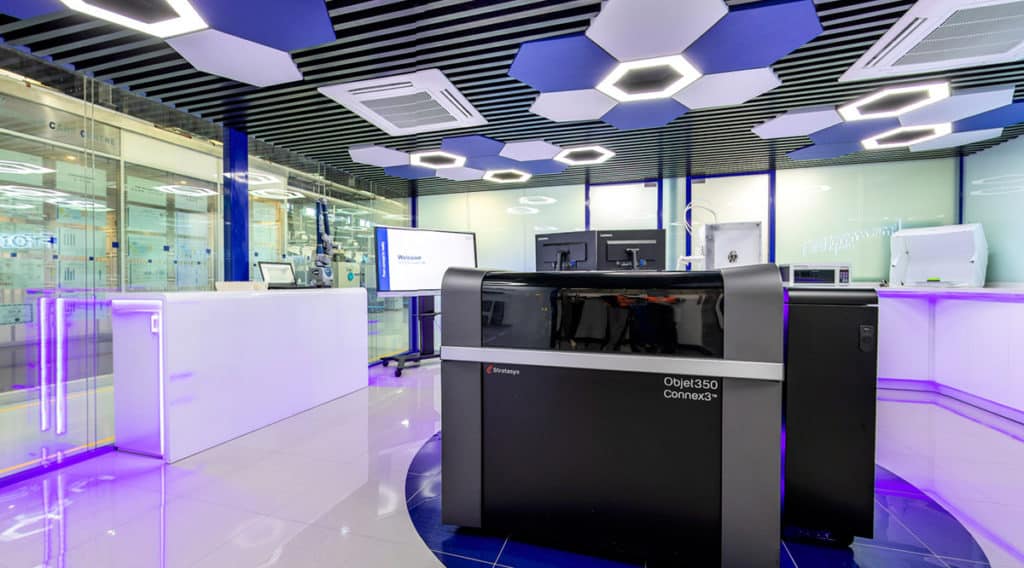
To strengthen the company’s overall design and manufacturing capability in electronics, Rosti China invested in an electronics lab to boost its ability to test electronic parts, evaluate performance, and ensure components meet a range of design requirements in 2022. This move will make Rosti a true provider of integrated solutions.
Take, for example, a well-known brand’s smart beauty device. This product needs intelligent connectivity features—including Bluetooth, wireless charging, RFID radio-frequency testing, customized solutions, and real-time data collection and analysis. Rosti is responsible for the overall design and contract manufacturing, covering everything from functional tests of all mechanical and electronic parts to regulatory compliance and large-scale production. Ultimately, after the testing phase, these products are delivered to the end consumer—going far beyond traditional “make according to the drawing” contract manufacturing.
Additionally, for more and more consumer electronics brands, practicing sustainable development has become essential. Rosti actively partners with suppliers to integrate sustainability into all products produced and developed.
For example, products are designed to be lightweight from the start, and sustainable alternatives are created to replace single-use plastics.
During production, discarded resin is recycled whenever possible; advanced, energy-efficient equipment is used to lower power consumption, and full-process reusable packaging is adopted.
Stronger technical capabilities for the consumer electronics market
According to iMedia Consulting, the global consumer electronics market was fairly stable between 2013 and 2022. In 2022, the market dipped slightly to $1,056.69 billion compared to 2021, but it is projected to reach $1,135.72 billion by 2026, showing a clear recovery trend.
To ensure the successful development of new projects, advanced and efficient plastic processing technology is crucial. Rosti has strong R&D and production capabilities, as well as expertise in leading-edge injection molding technologies like IMD (in-mold decoration/film technology), IML (in-mold label injection), RHCM (high-speed, high-temperature molding), LSR injection, in-mold holographic anti-counterfeiting, microfluidics, Dye Penetration (thermal sublimation), and more.
In addition, Rosti has successfully implemented the M3 printer from American 3D printing company Carbon and has become the first injection molding manufacturer in Asia to use Carbon’s latest innovative manufacturing technology, helping partners expand their market reach.