News,
PCI Focuses on Culture through Ownership and Leadership Transitions

“Company culture is a key factor in determining how successful a company can be in so many different areas. And, whether there is a shared company culture or not will affect everything from customer satisfaction to employee engagement.” – Derrill Rice, President & CEO, Plastic Components, Inc.
In this story from Plastics Business, Derrill and PCI’s Human Resources Manager, Wendi Jay, share how PCI emphasizes company culture through a few key areas—including evaluating new job candidates to make sure people are matched with work that fits their strengths.
When Derrill Rice was chosen as president and chief executive officer at Plastic Components, Inc., he and the leadership team agreed that company culture was a crucial part of the hiring decision.
Rice, who started his career as a front-line supervisor in a textile plant, had led six organizations across five industries in North America, Europe, and Asia. “Company culture,” he said, “is a key factor in determining how successful a business can be in many ways. Whether there’s a shared company culture or not will impact everything from customer satisfaction to employee engagement.”
PCI went through a recapitalization process with Morgenthaler Private Equity (MPE) Partners in 2017 and, after 28 years in business, needed a new leader for the Germantown, Wisconsin-based company.
During the transition in management and corporate structure, Wendi Jay, PCI’s human resources manager, said maintaining the culture was seen as essential. “I’ve been with PCI for 21 years and have seen it grow in every way. Some periods of growth are harder than others, but we’ve always had a really dedicated team, and we’ve protected our culture at all costs. We take each new team member very seriously.”
“The key for the PCI team, and for me,” Rice said, “was making sure I was the right fit for the company’s culture. The PCI team decided the best way to get to know me outside a formal interview was to have dinner together and go to the PCI softball league game … which included an informal interview with Wendi’s two daughters. We had a fantastic evening with lots of laughs and cheering. I left excited about the potential fit.”
Jay explained that PCI uses a personality profile questionnaire when evaluating new candidates and works to match people with roles that fit their strengths. “If we set them up for success, everyone benefits. Because we run lean, everyone has to pull their own weight. You won’t be able to slack off in the corner at PCI because your teammates will hold you accountable.”
PCI develops a profile for every position, Jay explained. “I created the profile for the CEO—and Derrill met every single point perfectly.”
Rice said he saw value in the transparency and can-do attitude of the PCI leadership team. “There’s a high level of engagement, commitment, and passion for the work we do here. There’s mutual respect and appreciation. Our core values sum up what matters most: integrity, innovation, teamwork, and accountability. And—at the same time—having fun while we get the job done!”
Valuing the culture from sale to new CEO

Jay and three other leadership team members—Gene Mussel, operations manager; Rick Riesterer, business development manager; and Kurt Behrendt, engineering manager—were involved in the sale process, she explained. “We took the opportunity to be part of it very seriously. It was important for us to choose a partner who would appreciate the culture we have and how important it is to our success. The whole team picked MPE unanimously because they valued our culture, not just our bottom line.”
From Rice’s perspective, the entire leadership team needed to be involved in maintaining and shaping the company’s culture moving forward, he said, “but the tone and character of a company starts at the top. I have a few options: I can lead with humility, dedication, and appreciation—or I can lead by dictating, demanding, and controlling. Each method creates a different company culture. I can focus on strategy and trust the team to handle daily challenges, or I can micromanage every detail. Again, each path creates a different company culture. It was important for all of us to be team members moving forward.”
After just one week on the job, Rice led the management team in an all-day, offsite brainstorming session/SWOT analysis. He said the goal was to review and refine PCI’s vision and core values and start developing a strategy for a future that keeps the culture engaged and inclusive.
Despite the uncertainty that comes with change, employment remained stable, Jay said. “I’m proud to say we didn’t lose a single employee due to the transition. We communicated to all employees that the management team was involved in choosing our new owner and that we would all be staying. We emphasized that it was a new partnership, and we were excited about it. When the first new molding press arrived after the sale, I think everyone breathed a collective sigh of relief. That continued investment in capital equipment at PCI gave our employees a lot of comfort: They could visibly see MPE’s commitment to helping us grow.”
When Rice came on board, he established a theme of transparency, communication, and appreciation, he said. “We started by putting in place the basics of employee engagement: town hall meetings, newsletters, service awards, and a company-wide incentive compensation program based on key performance indicators approved by management and the board. And I personally take part in plant cookouts as head chef across all shifts. We hold lunch-and-learns, meetings, and similar activities. Then we make sure to follow through on our commitments.
“We set company, department, and individual goals as part of our annual review process,” Rice continued. “Tools like these ensure that employees and supervisors communicate regularly, which helps with employee retention. Along with supervisor training, spot bonuses, and financial support for continuing education, it creates an environment that shows we care about our people’s work.”
Fine-tuning for greater success

Since the acquisition, Jay said, some things have changed, like putting more emphasis on sticking to internal budgets and developing quarterly board reports. “We also are much more open about financials,” she said, “and we have included every employee in the incentive compensation plan. We all win – or lose – together, and that really strengthens our culture. It’s rewarding to see employees across the company checking the financial metrics board in the plant and knowing each of them plays a part in their own success.”
For most employees, Jay explained, the transition was smooth. “In many ways, for the average employee, there was no disruption. Everyone kept doing their jobs and didn’t notice many changes. The leadership team gained more autonomy and learned to support each other—and even have healthy conflict—to talk through and resolve issues.”
Rice noted that expectations for the leadership team have gone up. In sales, for example, he said it used to be that the expectation was to “go out and sell.” Now, the sales and marketing leader has to put together a forecast, explain how he sells, what he’s going to sell, and when; and be held accountable for those forecasts. It was a big change for the leadership team, shifting from an individual owner to more institutional ownership. I think everyone on the team saw it as an opportunity to learn and grow.”
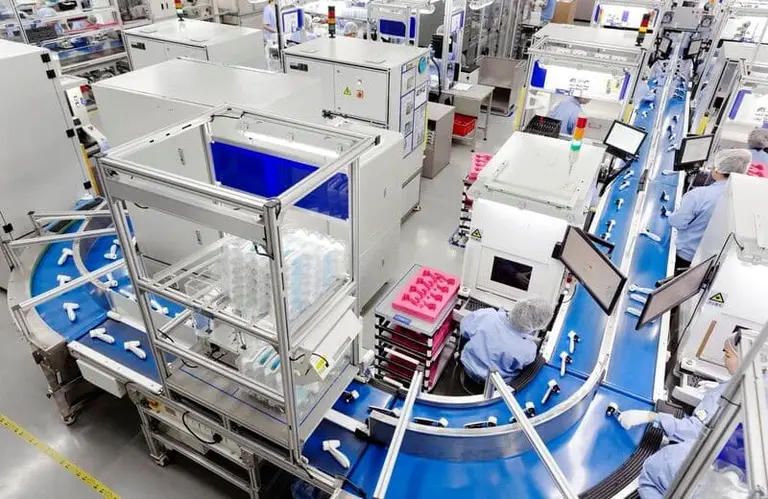
Over almost three decades, PCI has invested in expansion, automation, and new facilities. Process control capabilities have been added, patents for lights-out manufacturing have been awarded, and a fully automated facility has been operating in Germantown since 2011.
“We definitely need a more skilled workforce than we did 10 years ago,” Jay said. “It’s not as simple to bring someone in off the street and train them. The relationships we’ve built with both Ferris State and the University of Wisconsin-Stout have really helped us find skilled engineers and interns. Students are always excited to hear about—and possibly get to see—our lights-out facility.”
Jay continued by saying that using PCI’s position profiles makes sure new hires understand and fit into the company culture, with personality profile questionnaires designed to highlight each candidate’s strengths for the job requirements. She mentioned that new graduates come prepared to learn and become part of the team. “They want to contribute,” she said, “and it’s important to welcome their ideas, listen, and consider their challenges to more traditional approaches. Also, PCI is working on an onboarding video to help new hires prepare for their first day at work.”
“We’ve also made significant investments to continually educate and develop our technical staff,” she explained. “Ten years ago, we didn’t have a master molder; now, we have six. We’re still looking for employees who would be a good fit for the local apprenticeship program as well. We always believe there’s a better way to do things, and we keep the checkbook open for technology, encouraging employees to look for new ways and methods.”
PCI’s early 2019 acquisition of Syracuse Plastics of North Carolina (SPNC) in Cary continued its growth and changes. Rice said ensuring a cultural fit was a key part of the acquisition. “After the deal closed, we rolled out the same ‘communication, transparency, and appreciation’ initiatives,” he explained. “But I was most impressed with the level of engagement and collaboration between the leadership teams at both PCI and SPNC in every function. We really are learning from and supporting each other. Transitions don’t happen overnight, but we’re working toward having not a ‘north’ and ‘south’ company culture, but one PCI company culture.”
Jay continued, “From the first day, we told the team at SPNC: We don’t have all the answers. In many cases, they might have a better process or philosophy. I think that made them more open to our collaboration and more comfortable knowing we wouldn’t force the ‘PCI way’ on them. The key is having teams that want to learn and grow. The PCI team has grown tremendously under Derrill’s leadership because we were willing to learn, change, and grow.”
Rice concluded, “Corporate culture itself can enable, support, and encourage diversity and inclusion. It encourages people to speak up. It’s not limiting. It doesn’t stifle opinions. It moves a company forward, brings a wide range of ideas to the table, and drives innovation.”