Make the impossible possible – The full story behind a next-generation self-service banking terminal
Forensic engineering, a factory built mid-program and 250 components delivered across two countries
Some programs look difficult from the outside. This cassette program was genuinely difficult from the inside and the people who delivered it deserve to have the full story told.
When this program is summarised, it tends to focus on the headline numbers: 250 production-ready components, two manufacturing sites, six months to production. Those numbers are impressive. But they do not capture what made this program truly extraordinary.
The real story starts earlier, goes deeper and involves a level of engineering complexity that most contract manufacturers would never have agreed to take on. This is that story.
The program at a glance
- Phase 1 January 2025 – Program kick-off, The client brings cassette parts to Rosti. No original design data available. Improved design phase begins.
- Phase 2 June 2025 – Tool kick-off, Reverse engineering phase begins. Third-party CT scanning, managed by Rosti, used to validate improved design against unknown original
specification. - Phase 3 Ongoing – Dual-site production ramp, Rosti China (Suzhou) and Rosti India (Chennai) qualify simultaneously. Chennai facility under active construction throughout.
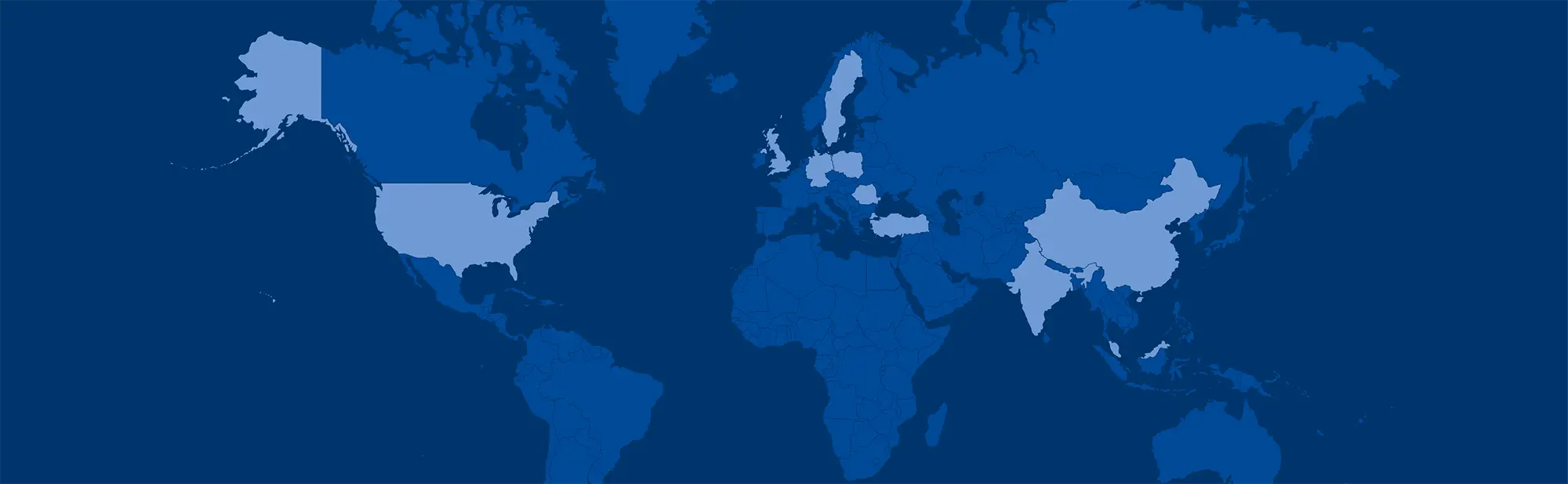
- China SOP December 2025 – Start of Production achieved at Rosti China (Suzhou). 120 plastic tools manufactured and qualified. 250 components delivered on time, to specification.
- India SOP February 2026 – Start of Production achieved at Rosti India (Chennai). Site fully qualified, built and ramped during the program itself.
The challenge nobody saw coming
The customer came to Rosti with a clear requirement and a physical product, the cassette parts that needed to be manufactured at volume. The global team – David Orr, Global Program Director; Roseann Wilson, Global Account Director the customer, brought genuine leadership and commitment to this program from day one, creating the conditions for a true partnership rather than a transactional supplier relationship. What they could not provide, through no fault of their own, was the original design data behind those parts.
The cassette had originally been designed by another company. That design history, the drawings, the tolerances, the engineering rationale behind every geometric decision was not available. It existed nowhere in a form that could be handed to a manufacturer and used as a production baseline.
This created a problem that went far beyond a standard tooling and production challenge. Before Rosti could improve the design, tool the component, or qualify a production process, we first had to understand exactly what the part was, at a level of precision that matched the original specification, even though that specification was unknown.
In practical terms: we had physical parts and no drawings. We had a customer requirement and no design baseline. We had to reverse engineer the specification from the object itself.
‘We had physical parts and no drawings. The original design data did not exist in a form that could be shared. We had to find the specification inside the component itself.’
Phase 1: Improved design (January)
The program kicked off in January with Rosti receiving physical cassette parts. The first phase was not tooling, it was understanding.
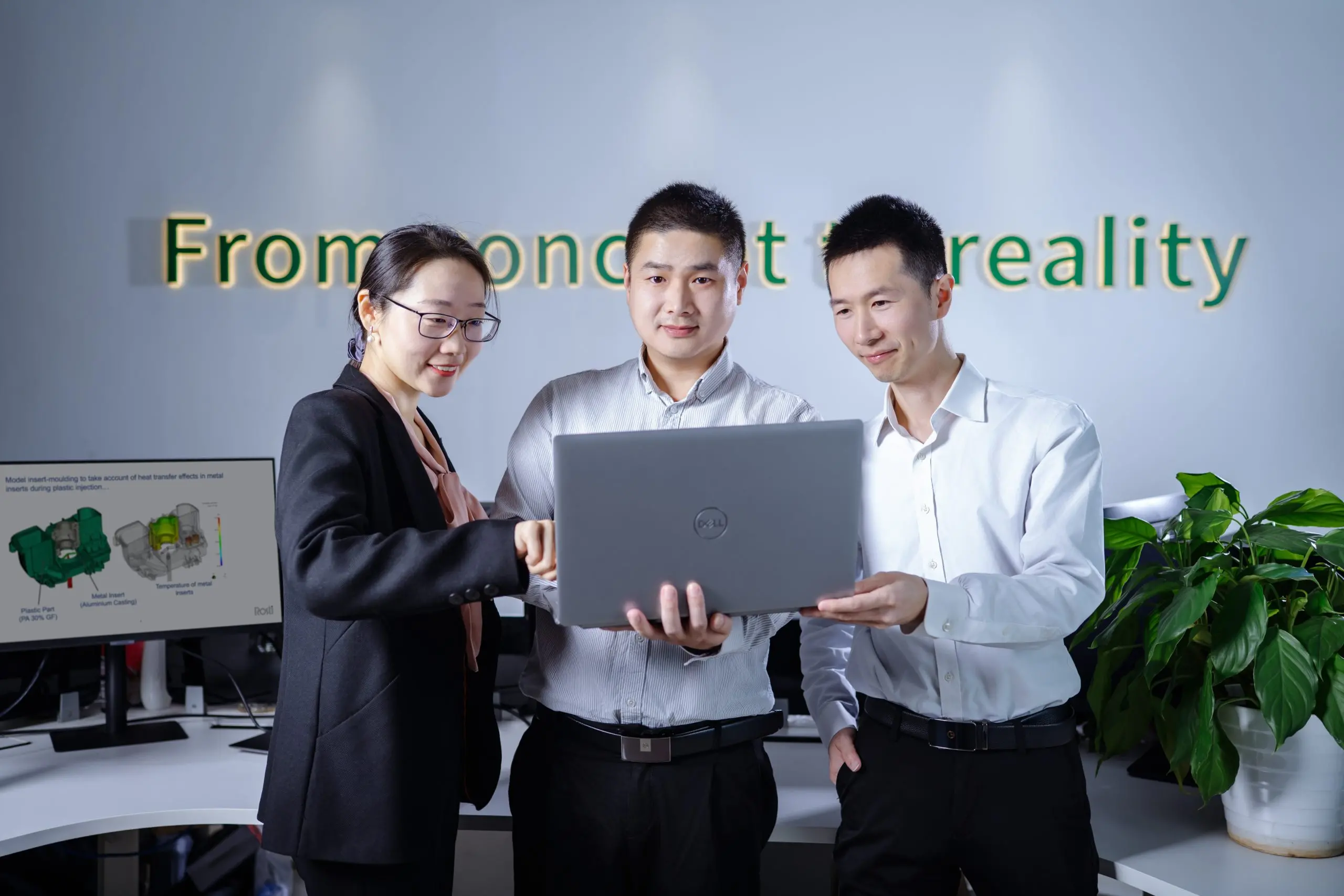
Tony Shen, Rosti’s Project Manager led the Suzhou engineering team through a detailed analysis of the physical parts to establish a working design baseline. From that baseline, the team developed an improved design, addressing producibility, tolerance stack, and long-term manufacturing consistency. While maintaining strict fidelity to the functional requirements of the original component.
The collaboration between Tony’s team, David Orr, Roseann Wilson, the customer and the local project team in China during this phase was critical. All parties brought deep commitment to getting the design right before a single tool was cut. Which was an investment of time at the front end that paid dividends throughout the rest of the program.
Improving a design without access to the original design intent is a precise and demanding discipline. Every decision had to be grounded in what the physical part told us, not what a drawing specified. The Rosti engineering team treated the parts themselves as the primary source of truth.
This phase established the foundation on which the rest of the program was built. It also set the tone: rigorous, evidence-led and unwilling to make assumptions where the data could provide answers.
Phase 2: CT scanning and reverse engineering (June)
With the improved design established, the program reached a critical decision point in June: how do you validate a new design against an original specification that does not formally exist?
The answer was CT scanning, an industrial computed tomography, the same technology used in medical imaging, applied to precision manufactured components. Tony Shen coordinated the commissioning of a specialist third-party CT scanning process, generating detailed three-dimensional internal and external geometry data from the original cassette parts.
The resulting scan data allowed the Rosti engineering team to:
- Map the precise geometry of the original designed parts at a level of detail no manual measurement could achieve
- Compare the improved Rosti design directly against the original part geometry, wall by wall, feature by feature
- Identify and validate critical dimensions that would never have been accessible through conventional inspection
- Build a reverse-engineered design record that gave a documented specification baseline for their own component for the first time
This was not a standard quality step. It was forensic engineering, applied to a production program, running under significant time pressure. The CT scanning phase added rigor and confidence to a program that could not afford assumptions. It also delivered something that outlasted the program itself: A documented design baseline for the cassette that did not exist before Rosti created it.
‘CT scanning did not just validate our design. It gave a documented specification for their own component that had never existed before.’
The man who made it happen
Every program of this complexity has a center of gravity, one person around whom trust, decisions, and momentum collect. On the cassette program, that person was Tony Shen.
Tony did not simply manage the program. He led it in the fullest sense of that word. He drove the engineering rigor in Suzhou during the improved design phase. He coordinated the CT scanning and reverse engineering process that unlocked the original design mystery. He transferred process knowledge and quality standards from China to India in real time, simultaneously standing up a new team in Chennai while keeping the China program on track.
But what set Tony apart on this program, what made him genuinely irreplaceable, was something that does not appear on a GANTT chart.
Before a single tool was cut, before the program was formally launched, Tony Shen built the trust with the global leadership team that made the entire program possible. David Orr, Roseann Wilson, and the customer needed to believe that Rosti could deliver something that had never been done, a dual-site qualification, a new factory, a reverse-engineered specification, all within a timeline that left no margin for doubt. Tony gave them that belief. Through technical credibility, transparent communication and a personal commitment to the program that the customer could see and feel, he created the conditions under which they were enabled to say yes.
‘Without Tony Shen’s ability to build trust with the
leadership team, this program would never have been launched. He did not just deliver it, he made it possible.’
That is a rare quality in any program manager. To be technically exceptional and commercially trusted, to be the reason a customer commits to the impossible, is something that defines a career. On this cassette program, it defined the outcome.
With the design validated and tools released, the program moved into production qualification across two sites. This is where the manufacturing complexity of the program became fully visible.
Rosti China (Suzhou) carried the primary engineering knowledge base and provided the production stability anchor for the program. The Suzhou team’s experience with precision components and complex tooling meant that the China qualification, while demanding, was within the range of what the site does routinely.
Rosti India (Chennai) was a different proposition entirely.
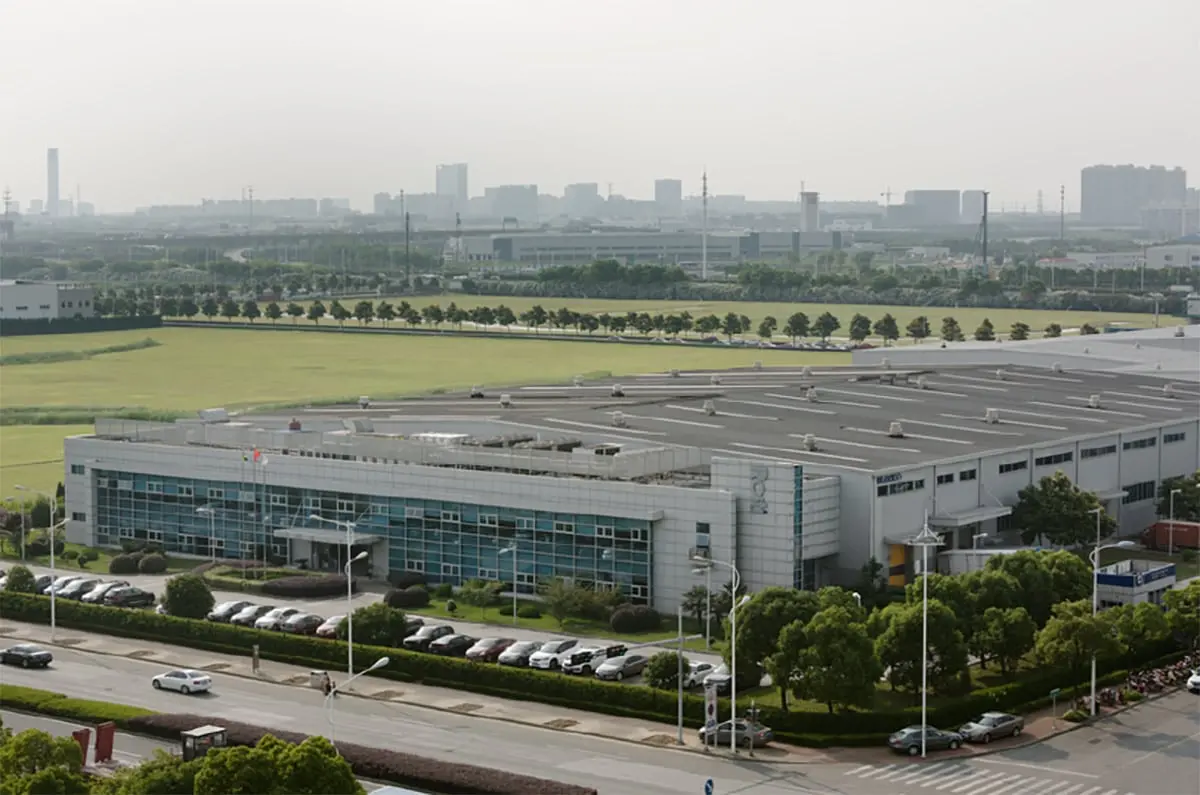
Chennai was not a running factory receiving a new program. It was a factory under active construction, infrastructure being installed, equipment being commissioned, at the same time as the program was being executed. And the team delivering it was brand new.
At the helm of this remarkable undertaking was T.K. Purushothaman, Managing Director of Rosti India. Brownfield factory from the ground up is a formidable challenge in itself. Doing so while simultaneously qualifying and delivering a live customer program of this complexity, in a new country, with a new team, against an unforgiving timeline, is something else entirely. T.K.P leadership in establishing Rosti India as a credible, capable, and qualified manufacturing site was foundational to everything the program achieved in Chennai.
The Rosti India team had been recruited specifically to fit out and run this facility. They arrived into a factory that was still taking shape, with no legacy processes to rely on, no established routines and a live customer program on the clock from day one. What they had was the support of the Suzhou team, Tony Shen’s program leadership, the active engagement of David Orr, Roseann Wilson, the partnership of the local customer project team in India, and the determination to prove that Rosti India could deliver.
They did. The knowledge transfer from Suzhou to Chennai was a real-time capability build with Tony’s team providing process knowledge, quality framework and technical support to a site and a team that were simultaneously standing themselves up from the ground. The customers global team’s engagement throughout this phase maintaining confidence in the program and working collaboratively through every challenge, was a material factor in the outcome.
That the new India team qualified a complex precision component, in a factory under construction, on their first live customer program and delivered on time, is one of the most impressive things the Rosti Asia business has achieved.
What made delivery possible
Three things stood out across this program as genuinely decisive.
Engineering depth
The CT scanning and reverse engineering phase required a level of engineering capability that goes beyond standard contract manufacturing. Rosti’s ability to manage a complex forensic engineering process, commissioning third-party CT scanning, interpreting scan data, comparing against improved design geometry, and building a validated design record. This reflects an engineering culture that treats technical problems as problems to be solved, not reasons to decline a program.
Technovation
Rosti’s Technovation platform, built around 72-hour concept-to-prototype capability was most valuable in the design improvement phase and at tool release. The ability to iterate quickly, test assumptions fast and move from design decision to physical validation without the delays that characterise conventional manufacturing cycles was critical to keeping a complex program on schedule.
The Rosti Asia network
The integrated nature of the Rosti Asia operation, shared quality frameworks, shared process knowledge, and a culture of cross-site support which was what made the Chennai qualification possible. Without the depth of transfer from Suzhou, standing up a new site on a live program of this complexity within this timeline would not have been achievable.
The result
250 production-ready cassette components. Delivered to specification. To support that delivery, 120 plastic tools were manufactured and qualified across the program, a tooling investment that reflects the complexity and precision demand of the cassette design. Rosti China (Suzhou) achieved Start of Production in December 2025, with Rosti India (Chennai) following in February 2026, a site that was under construction for the duration of the program.
- Beyond the headline delivery, the program produced outcomes that will outlast the initial order:
- 120 plastic tools manufactured and qualified across the program to support the 250-component delivery, reflecting the engineering depth and complexity of the cassette design.
- The customer has, for the first time, a documented design specification for the cassette, created by Rosti through CT scanning and reverse engineering of the original designed parts.
- Rosti India (Chennai) is now a fully qualified production site for the customer, accelerating the site’s commercial capability development by years.
- The Suzhou-to-Chennai knowledge transfer model used on this program is being embedded into Rosti Asia’s standard multi-site launch framework.
- The CT scanning and reverse engineering methodology is now part of Rosti’s documented engineering toolkit for programs where original design data is unavailable.
‘The program did not just deliver 250 components. It delivered a design baseline, a qualified new site, and a methodology that will benefit future programs.’
In their own words
A senior procurement leader reflected on the significance of the programme:
“This was the most significant programme we have undertaken, delivered within timescales that were critical to ensuring continuity of supply. Our manufacturing partner stepped up well beyond expectations, working collaboratively with our internal team to put this in place. This is the most complex module we have ever outsourced, and the way it was approached as a true partnership, not just a supplier relationship, made the difference.”
Senior Procurement Leader, Global Technology Company
That recognition from the CPO of a globally recognised technology company, speaks to what the Rosti Asia team built over the course of this program. Not just a manufacturing capability, but a relationship and a reputation.
Closing thoughts
The cassette program started in January 2025 with physical parts, no design data, and a requirement that most manufacturers would have declined. It ended with Rosti China achieving Start of Production in December 2025 and Rosti India following in February 2026, along with two qualified production sites and a design record that the customer did not have before.
The team that delivered this deserves to be named. Tony Shen, who led the program from Suzhou with the precision and composure the complexity demanded. T.K. Purushothaman, Managing Director of Rosti India, whose leadership in establishing the Chennai facility created the platform on which the India qualification was built and who brought a new factory and a new team to life under conditions that would have tested the most experienced operation. The new Rosti India team in Chennai, who qualified a live customer program in a factory they were simultaneously building on their first program, from a standing start. The local customer project teams in China and India, who worked side by side with Rosti at every stage and never let the difficulty of the program become a reason to slow down. And from the global team – David Orr, Global Program Director; Roseann Wilson, Global Account Director, whose leadership and genuine partnership throughout made the impossible achievable.
At Rosti, we say that if we are not improving your design, we are not adding value. On this next-generation self-service banking terminal, we improved the design, reverse engineered the original specification, stood up a new factory mid-program, and delivered on time across two countries.