Production-Quality Plastic Prototypes: A Complete Guide
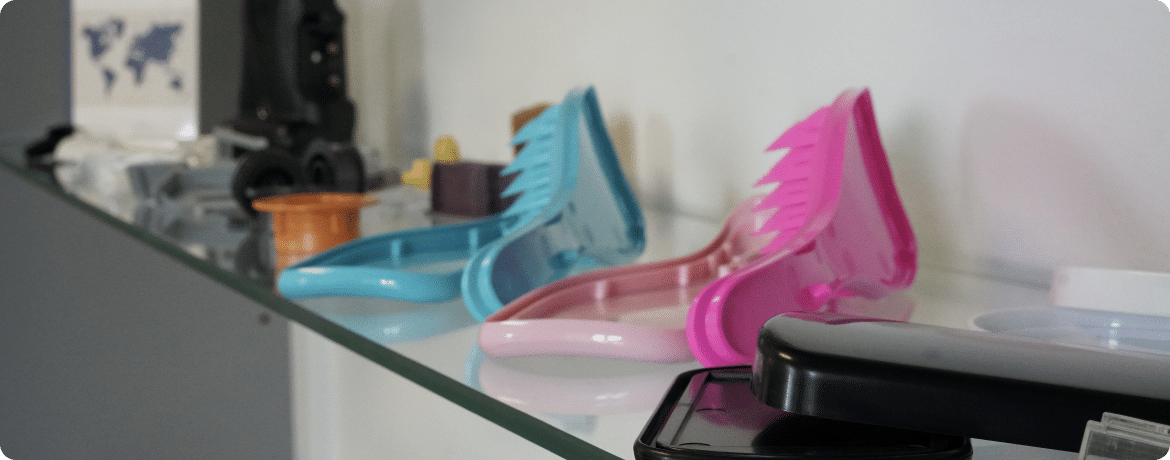
Production-quality prototypes have advanced a lot in recent years.
Driven by technological progress in 3D printing, improved tooling for lower volume production runs, and advancements in material science, precision parts can now be designed, produced, and delivered in even shorter time frames. This faster process helps reduce downtime in manufacturing cycles and allows manufacturers to move product development forward and reach the market more quickly.
Prototyping is a key stage in a product’s development, giving companies a chance to perfect their design before releasing products to the market. However, methods for developing prototypes have ranged widely until recent years. From fast 3D printing to traditionally slower techniques with more thorough testing for part function and lifespan, new prototyping technologies have made it easier for original equipment manufacturers (OEMs) to validate a part’s design and manufacturing plan.
New production-quality prototyping technologies are now faster and provide better results in real applications. Before we discuss the most important considerations and process steps, let’s start with the basics.
What is a plastic prototype?
A plastic prototype is a three-dimensional model of a product or object, typically made using rapid prototyping technology. It’s used to test a design’s form, fit, and function before mass production. Plastic prototypes are commonly used in the automotive, aerospace, plumbing, medical, and consumer electronics industries, among many others.
Prototyping is a powerful tool for product manufacturers because it helps evaluate a key component of a physical product before moving to full-scale production. A plastic prototype lets manufacturers use a physical version of a component—or the entire product—as soon as possible to confirm the design works as intended.
This process lets design engineers make needed changes before moving to the next step of production runs for plastic parts and, finally, getting the product ready for the market. Both the manufacturer and the end user benefit from this process.
Other benefits include:
- Tests design features
- Verifies design intent and how a plastic component performs in its actual end-use conditions
- Creates a baseline for testing and developing new features
- Identifies possible defects and issues before mass production
- Enables refinement for further improvement and part efficiency
What are the main differences in plastic prototypes?
Engineers, mechanical designers, model makers, and tooling experts often wonder which prototyping method is best for their plastic parts. With so many developments in prototyping over the years, it can be hard to choose the best way to validate a plastic part.
It’s essential to understand the advantages and disadvantages of each method available when modifying an existing part or designing something new. By weighing the pros and cons of different plastic prototyping approaches and by partnering with an experienced prototype specialist, you’ll be better positioned to make the right decision.
3-D Printed Plastic Prototypes
Additive manufacturing, or 3-D printing, covers several manufacturing technologies. It’s one of the key technologies driving the digital transformation of manufacturing. While 3D printing covers a range of methods, the three most common techniques for making 3-D printed plastic parts are:
Fused Deposition Modeling (FDM)
FDM 3-D printing is the most popular plastic prototyping method, using an extrusion process to add layers of plastic until the object is built. Industrial FDM 3D printers can create high-strength, high-resolution plastic prototypes. The strength and detail of the prototypes depend on the materials used. This method is versatile and works with several materials, including PLA, ABS, Nylon, PETG, Polycarbonate, and others.
Stereolithography (SLA)
SLA 3-D printing uses plastic resin to create prototype parts by solidifying the model with a high-powered laser in a resin vat. An SLA machine cures liquid resin into hard plastic using a laser or projector as the light source. The main physical differences between SLA printers are how the light source, build platform, and resin tank are set up. When SLA resins are exposed to certain light wavelengths, short molecular chains link together, turning monomers and oligomers into solid, rigid, or flexible shapes. This process is widely used for prototyping, especially in medical, dental, and consumer goods industries.
Selective Laser Sintering (SLS)
Like SLA, SLS technology also uses a high-powered laser, but instead, it fuses powdered materials to make a 3-D model. The advantage of this method is a better print quality. Prototype plastic parts made with SLS are often more functional, with higher resolution and greater durability and flexibility. The most commonly used material in SLS is Nylon (PA 11 or PA 12).
What are the pros & cons of traditional methods for 3-D printed plastic prototypes?
Pros:
- Fast production
- Lets you upload CAD files directly to 3-D printer software
- Iterations completed within a compressed timeline
- Cost-effective
Cons:
- Part can’t be used for functional testing
- Limited build size
- Part may be weak and brittle
- Limitations on the types of materials that can be used
- Material shrinkage/contraction can’t be determined with 3D printing
CNC Machining
CNC machining is another relatively quick and cost-effective approach for producing functional plastic prototypes when a larger quantity is needed (small volume is typically too expensive). This technique uses a wide range of different-sized tools to carve a 3-D model from a solid block of material. CNC machining has advantages over 3D printing, such as the ability to create threads and undercuts, tighter tolerances, fewer limitations on size, and more surface finish options. The turnaround times for CNC machined prototypes depend on the complexity of the model and the type of manufacturing service required.
Materials used in CNC machining include, but are not limited to, ABS, PC, PP, POM, PMMA (Acrylic), HDPE, Teflon, and PEEK.
What are the pros & cons of CNC machining plastic prototypes?
Pros:
- Test fit, form, and function of prototype plastic parts without having to make injection mold tooling
- Compared to 3D prototypes, provides greater potential for tight tolerances, undercuts, and threads
- Some surface finishes can be applied to the prototype, such as polishing, painting, powder coating, and more
- Can offer quick turnaround times, depending on the complexity of the plastic model
- The prototype’s mechanical properties will be closer to those of a production-quality injection-molded part
Cons:
- Cost – machining requires large equipment with substantial power and more human oversight than 3D printers
- For parts with complex shapes, CNC machining may be limiting and may require alternative prototyping methods that aren’t restricted by cutting tool angles
- Creates more waste material than other methods. Because CNC machining is a subtractive process, it uses more material than what becomes the part. The excess is cut away, creating chips that end up as metal or plastic scrap that must be disposed of, which isn’t the case with additive prototyping
Aluminum Molding Rapid Prototypes
Using aluminum for tooling can be a cost-effective solution for low-volume injection molding. While it can be made more quickly than steel, there are usually limitations regarding design features, materials, and quality.
Aluminum is easy to machine and has a fast cooling rate, resulting in shorter cycle times and lower costs at the OEM level. Part production for rapid prototyping can start almost immediately once the aluminum mold is ready.
Additionally, compared to 3D printing, rapid injection-molded aluminum prototypes are more accurate and stronger. However, the design and development of these parts don’t always match what’s needed for production. Due to modification limitations, it can be time-consuming and expensive if a different method isn’t chosen. That’s why rapid injection molding works best for early-stage prototypes but may cause problems later if functional parts are required.
What are the pros & cons of aluminum molded plastic prototypes?
Pros:
- Steel is a strong conductor of heat, which means it heats up and cools down quickly—ideal for injection molding
- Quick cooling lets you run more cycles at a time, producing parts faster than additive prototypes
- Lower tooling investment cost compared to steel
- Functional testing is possible, but limited
Cons:
- Limitations on prototypes with unique finishes
- Not as strong as steel and lifespan depends on molding temperature, number of cycles, and part complexity
- Features may be omitted from the part due to process limitations
- Some limits regarding the types of materials that can be used as well as texture
- Minimal engineering support
Production Prototypes
Most product manufacturers want a plastic prototype part that can be validated for performance and matches the performance characteristics of the intended final production part. If the component is being used in product testing before launch, the correct finish of the intended production part should also be incorporated into the prototype.
Production prototypes using steel molds are considered pre-production tools that are dimensionally accurate, include all part details, and do not require de-flashing or other secondary operations. Design modifications can be made to the tool to accommodate changes or optimization. With injection molding, the part should have uniform strength across every angle, and the material structure should be consistent throughout. Also, material finish options are limited in most layered rapid prototyping scenarios (3D printing).
If your part requires a specific finish that helps the functionality of the production part’s end use, finishing options become much more varied and the design is not compromised when you select an injection-molded prototype process.
Once prototyping is complete and the design is finalized, the tool is ready for production, cutting out the time needed to start the production tool-building process and qualification. Historically, lead times for production prototypes have been much longer than other rapid prototyping methods.
Recent advancements in technology and tooling processes have enabled product manufacturers to turn their concepts into reality within a much shorter time. When an advanced injection molding partner leverages the latest advances in 3D printing to gain time-saving advantages over traditional prototype part testing, every facet of the prototype process aligns for the best possible outcomes.
What are the pros & cons of production-quality plastic prototypes?
Pros:
- Enables fast and cost-effective testing of product concepts without compromising quality
- A production-focused approach is used throughout the design and development process
- Material shrinkage/contraction can be planned for during the design process and checked during development
- Widest selection of materials, including abrasive/filled materials
- Best suited for industries requiring extensive testing and certifications, such as the medical products industry
- Intellectual property protection and the ability to gain insights during the design and part development process
Cons:
- Production prototypes use a process and mold that are typically complex and precise—often just one stage before full production
- Tolerance for error is low
- Upfront costs are often higher, but the long-term value is greater when taking into account quality, performance, knowledge gained during the process, and speed to high-volume production runs
Differences in Plastic Prototype Quality
Ultimately, the main difference between a rapid prototype and a production-quality prototype is the mold’s quality. Production-quality prototypes use steel molds, while rapid prototypes are created using alternative methods—most commonly the additive 3D printing process or aluminum.
Using steel in production prototypes and incorporating production mold features into the tooling gives engineers the chance to test the final design and material choice before starting high-volume production. This method results in cost savings and greater efficiency by reducing the risk of discovering design flaws after manufacturing millions of parts.
Few technologies have impacted product development like 3D printing, rapid prototyping, and production-quality prototyping. Around the globe, organizations continue to find innovative ways to use these technologies to validate product components, end-use functionality, and speed up time to market. As these technologies keep advancing, plastic prototyping will become even more efficient and expand into industries that may have previously held back. The emergence of new markets and industries will redefine the role of plastic prototyping and shape the future of product manufacturing.
When Do OEMs Need Production-Quality Prototypes?
There are several reasons why an OEM may need production-quality plastic prototypes. Often, prototypes are used to validate the design intent and proof of concept for a component or product before it moves to mass production. This helps identify any potential design issues and ensures the component or product meets all required safety and performance standards.
Below are several scenarios where an OEM would need a production-quality prototype:
- The product is intended for mass production in large quantities. In this case, it’s essential to make sure both the manufacturing and engineering designs are optimized, so the product performs as intended in its production materials.
- You need to conduct consumer research before mass production. You should create production-quality injection-molded prototypes to closely replicate the final product. Producing several hundred injection-molded prototypes enables you to conduct highly accurate consumer tests and provides an opportunity to make improvements based on their feedback before mass production.
- Your product requires extensive testing before it can hit the market. In this case, you want to test a prototype that’s nearly identical to the final component. The materials and production methods should be the same, and if the product is complex, it’s helpful to reproduce the process and refine all the steps involved.
- The automation and assembly processes for all components should be tested before proceeding to full-scale production. If automation is built to the wrong specifications, feed systems must be reworked. These systems are expensive and may have to be modified to match the final specifications for each component.
- You want to show your resellers/distributors a finished product. Customers may not make buying decisions based only on a sketch or partly developed idea, so a proven prototype helps validate your product and close sales.
Proof of concept/design is a major factor behind any type of prototyping. Historically, rapid prototyping methods like 3-D printing have helped demonstrate what a component or device might look like in terms of size and shape; however, traditional methods often aren’t enough to prove whether a design concept will actually work as intended. Will the intended material withstand all possible environmental elements and conditions? Will the selected design visually match the product’s look? Everything from functionality to appearance should be considered.
What Are the Steps in Creating a Production-Quality Plastic Prototype?
Developing prototypes through trial and error (where you outsource a part for prototyping, analyze it, make adjustments, and repeat) is risky. The process can be tedious, expensive, and will most likely slow down your time to market. When experienced engineers or product design consultants are involved at every stage, they can help reduce material usage, production time, and costs tied to prototyping and development.
Let’s look at the steps in creating a production-quality plastic prototype:
1. Conduct a computer-aided design (CAD) review with an in-depth needs analysis.
Think specifically about how you need the plastic component to function. This step is vitally important, because if a flawed product design is approved for manufacturing and expensive tooling is created, discovering the issues later will guarantee you lose money and delay your product’s time to market. Questions to consider during this process include:
- Will the part be exposed to extreme temperatures? If so, the material will need to be modified.
- What types of chemicals—if any—will the part be exposed to?
- Will the part be a visible feature or an internal component?
- What should the part be like—flexible, tough, lubricated?
- Besides temperature, what other elements might the part face?
- Are there any sealing surfaces on the part?
2. At this stage, design for manufacturing (DFM) protocols should be implemented.
Partnering with an injection molding company with strong DFM expertise is critical to ensure every detail is considered, including gate selection, side actions, cooling requirements, key part characteristics, and much more.
3. The CAD review, needs analysis, and thorough DFM implementation will determine which tooling methods can be used for the prototype.
Manufacturing engineers use advanced CAD software to select the proper mold needed for prototyping, and later, for withstanding the demands of production.
Certain CAD programs, like Solidworks, leverage mold simulation analysis. This technology can explore potential defects, highlight high-stress areas that might lead to failure, and evaluate how the part will behave under expected stressors. Optimizing the component design without physical iterations allows you to move quickly and cost-effectively through the initial design phase.
Rapid tooling processes use CAD data and test findings to create molds and tools for low-volume production runs, product assessments, and full production. Development cycles are much shorter and more affordable.
4. Tooling for a production-quality prototype can be completed quickly if the injection molding partner has a standardized fleet of mold bases and is skilled at using 3-D printing for metal or steel molds.
Many rapid prototype manufacturers focus on, How can we make this really fast?—while injection molders who produce production-quality prototypes often first evaluate, How will it perform best?
New rapid prototyping methods now allow tools to be built from the ground up, even using high-temperature resins that can withstand traditional injection molding environments. We’ll discuss this more below.
How Long Does It Take to Produce a Production-Quality Prototype?
The length of the prototyping process depends on the type of component and how it’s going to be used. For instance, plumbing, appliance, or filtration applications may require 12 – 16 weeks for testing compatibility with water exposure. It’s critical to understand whether plastic degradation will happen when it’s repeatedly exposed to elements such as water. Small engines, lawn and garden equipment, automotive components, and more may need to test for material compatibility with oil and gas exposure. These factors all affect the timeline to produce an injection-molded or production-quality prototype.
Ideally, a prototyping process should take only about one or two months, with some recent advances in the process reducing the timeframe to under 72 hours.
Preparing an initial prototype and CAD drawing for design engineers is an effective way to move through the process as quickly as possible. This gives engineers a clear idea of what you want your component to look like and how you expect it to function.
Here are some estimated timelines for plastic prototype development to keep in mind:
| Your Starting Point In The Process | What Will Get You To The Next Phase | Average Timeline |
|---|---|---|
| No design | DFM phase begins where concepts are designed or reverse engineering design is completed | One week to one month, depending on approvals |
| Design complete, but no validation | Engineers utilize mold flow analysis to make component optimizations and create a physical prototype | A few days to a few weeks, depending on the complexity of design |
| Prototype needs further optimization for production | Engineers recreate the prototype using software to improve functionality for production and intended use. Using rapid prototyping or other prototyping methods, a physical model is tested. | Using software and rapid prototyping creates efficiencies that can be completed in days or a few weeks. Traditional prototyping methods take several weeks or a few months to complete. |
| Final prototype is ready to produce | Product design determines type of mold, material, and tooling used based on quantity. Molds are created and the production process begins. | A few days to a few weeks, depending on the complexity of the design, part quantity, and assembly needs. |
In many scenarios, starting from the initial concept through the production process can take months. However, when you work with an experienced injection molder with innovative resources, the process can be significantly condensed. Below, we’ll talk about Rosti’s Innovation Lab, which helps bring concepts to reality in as few as 72 hours.
All OEMs understand that reducing time to market by any amount of time will result in many ROI benefits.
Why Is Prototyping a Critical Part of the Injection Molding Process?
Before making a single plastic component—much less thousands or millions—it’s essential that both the engineering and design aspects of the part are thoroughly evaluated. The design needs to be technically sound, highly functional, and visually aligned with the intended product.
Today, it’s essential to combine these three key components while achieving efficient and consistent production. From design to function, OEMs committed to superior products should closely evaluate the benefits of using prototypes in their injection molding processes.
Key Functions of Prototyping Include:
Utilizing Scientific Molding Methods Like Mold Simulations
Rebuilding or making changes to molds is expensive and requires significant time and labor. If you start full production with an unproven design, you could face difficult setbacks. Mold simulations can lower risk, as mentioned earlier, and should be completed before going into prototype production.
Shorten Time to Market and Improve ROI
Prototyping is an investment, and getting a plastic part right the first time without going through the entire process is uncommon. Revising and producing another version can be extremely costly.
After making a non-production prototype, you might find small inefficiencies in the design that could cause your final product to be weak, low quality, or not work as expected.
If you’ve manufactured hundreds or thousands of products before seeing mistakes, you know how expensive it can be to scrap a full production batch or even carry out a recall. If problems aren’t identified before production, you lose time and money making changes to tooling.
What Role Does DFM Play in the Plastic Prototype Injection Molding Process?
DFM plays a key role in creating production-quality plastic prototypes by making sure designs are validated before tooling starts.
DFM is about designing a product to optimize manufacturing efficiency for the equipment and/or process used, so you can achieve the lowest possible unit costs at the highest possible quality. The most important reason to integrate DFM into plastic component manufacturing is that up to 70% of product manufacturing costs are determined by design choices.
Discover more about how DFM fits into the full injection molding process in our guide: DFM in Plastic Injection Molding
The Role of Technology in Plastic Prototype Development
Technology plays a significant role in DFM when working with an injection molder focused on scientific molding practices. Using mold simulation software like SOLIDWORKS® Plastics Premium, together with robotics and process control systems like RJG eDart®, provides predictive insight, process validation, and complete process documentation.
Integrating technologies that support the DFM process in plastic injection molding takes teamwork and open communication between OEMs, design engineers, and molders from various fields.
Another reason to choose a molder who uses DFM principles is the increasing complexity of plastic injection-molded parts. Things like tolerance, draft angles, and undercuts all need to be considered at the design stage to meet customer quality and cost requirements. Read more about these design elements below.
What Design Elements Should You Keep Top of Mind During the Plastic Prototype Process?
When starting the DFM process for a production-quality prototype, design standards act as a guide to truly understanding what’s needed for successful molding. They also create efficiencies throughout the development process in many ways. Here are a few design variables to consider, which are major factors in reducing production time and cost.
Consider Complexity
If your plastic part design has many variables, your prototyping partner should advise on what can or cannot be eliminated. Experienced engineers with prototyping and production know-how can help make these decisions and set the most efficient project scope.
Avoid Side Actions
In the concept phase (when deciding what your part geometry should be), you may not always know if a mold needs a side action. If it does, this adds an extra challenge for timing and cost.
Side actions make the mold more complex, and they also take special skill and time to run correctly. If you can design a part that doesn’t need a side action and still performs well, that’s ideal.
Use Rounded Corners
Using a radius to avoid sharp corners in the prototype design process distributes stress and helps molten resin flow. During injection molding, the hot plastic must navigate turns and corners. Rounded corners ease plastic flow, while sharp inside corners create stress in the part. This is especially true during the cooling process, when the top of the part shrinks and material is pulled against the corners. Collaborating with a skilled engineer to identify areas for design improvement leads to a stronger, more dimensionally stable part that resists post-mold warping.
Add Draft to Your CAD Model
Draft refers to the angles built into your part’s design that help with ejection from the mold. How much draft your part needs will depend on material thickness and texture.
Here are some general draft guidelines to follow:
- Use as much draft as possible: 1-5 deg on your part
- Draft your part in the direction of the mold pull
- Consider more draft for texture: 2-3 deg, or 3-5 deg for deep texture
Eliminate Undercuts as Much as Possible
An undercut is any feature that prevents easy ejection from a mold and complicates tooling. Reducing or eliminating undercuts will simplify your mold build. Experienced design engineers can help identify alternative solutions.
Assess the Impact of Material Thickness
Material thickness is one of the most important factors in part design. It affects performance, looks, moldability, cost, and more. Thinner walls reduce material usage and cycle time, but you need to balance material strength and weight for the ideal wall thickness.
| ABS | 0.045 – 0.140 |
| Acetal | 0.030 – 0.120 |
| Acrylic | 0.025 – 0.500 |
| Liquid crystal polymer | 0.030 – 0.120 |
| Long-fiber reinforced plastics | 0.075 – 1.000 |
| Nylon | 0.030 – 0.115 |
| Polycarbonate | 0.040 – 0.150 |
| Polyester | 0.025 – 0.125 |
| Polyethylene | 0.030 – 0.200 |
| Polyphenylene sulfide | 0.020 – 0.180 |
| Polypropylene | 0.025 – 0.150 |
| Polystyrene | 0.035 – 0.150 |
| Polyurethane | 0.080 – 0.750 |
| Rigid PVC | 0.090-0.250 |
| Soft PVC | 0.025-0.150 |
Keep Ribs at 50% of the Adjoining Wall Thickness
Ribs in plastic prototype design add strength, stiffness, and reduce warping without needing more material. Ribs should be about 50% of the wall thickness they’re attached to; this helps prevent sink marks. If strength is key, cross-hatched rib patterns can help increase strength and avoid sink. Thin ribs may be hard to fill, so it’s important for designers to consider material choice in the design stage. We’ll cover material selection further below.
What Are the Best Plastics/Resins for Plastic Prototypes?
Collaborating with your injection molding partner to select the best resin early in the DFM and production-quality prototyping process is vital for a part’s production success.
The material choice impacts the strength and flexibility of your molded part. Addressing specific requirements early can help you avoid expensive changes later on. You can do this by understanding the main differences among some of the most common resins.
ABS (acrylonitrile butadiene styrene)
Characteristics:
- Strong with good impact resistance
- Easy to machine and meets various aesthetic needs
- Not suited for parts exposed to high heat
- Affordable price point
Polycarbonates
Characteristics:
- Easy to mold, often used to increase shatter resistance
- Naturally transparent and ideal for high-strength, glass-like uses (safety goggles, medical lab products, etc.)
- Not ideal where greater flexibility or specific colors are needed
Glass-filled nylon
Characteristics:
- A reinforced thermoplastic: base nylon mixed with glass fibers for added strength and heat resistance
- More electrically non-conductive than many other plastics
- Even with its high melting point, it burns more easily than some other materials
Polypropylene
Characteristics:
- Flexible thermoplastic good for both industrial and consumer uses
- Very pliable and can be shaped in many ways without losing its original form
- Resistant to solvents, chemicals, and UV rays
Acetal
Characteristics:
- Great friction resistance and highly rigid
- Easy to color and dye during molding
- Not highly heat resistant
Rosti has a reputation for expertise in selecting, sourcing, and molding high-temperature and specialty resins.
If you’re interested in learning more about picking the best materials for complex plastic parts, check out Rosti’s High-Temperature Plastic Guide.
How Does Rosti’s Digital Innovation Lab Speed Up Production Prototype Processing?
Throughout this page, you’ve learned about many facets of developing production-quality prototypes and the major advances in technology and part optimization in recent years. With developments in 3D printing, optimized tooling for lower volume runs, and material science, precision components can be designed, manufactured, and delivered faster than ever. Rosti is dedicated to speeding up this process to help reduce downtime in manufacturing cycles and help manufacturers move products to market quicker.
Rosti is so committed to this approach and its customer value that it has invested over $1.3 million in a new innovation lab in Asia within its China location and recently made another $1.3 million investment for an innovation lab in Europe.
Here’s how Rosti’s Digital Innovation Lab 72-hour concept-to-reality process works:
- Rosti’s engineers receive the customer’s 3D product data and specifications, and the countdown starts. The requirements are reviewed and recommendations are made to maximize efficiency and cut production costs. Component prototyping begins.
- Rosti team members tap into best practices and a wide knowledge base of past projects to develop digital simulations. The analysis of these simulations optimizes both component design and molding scenarios—including gating, cooling, distortion, and cycle time.
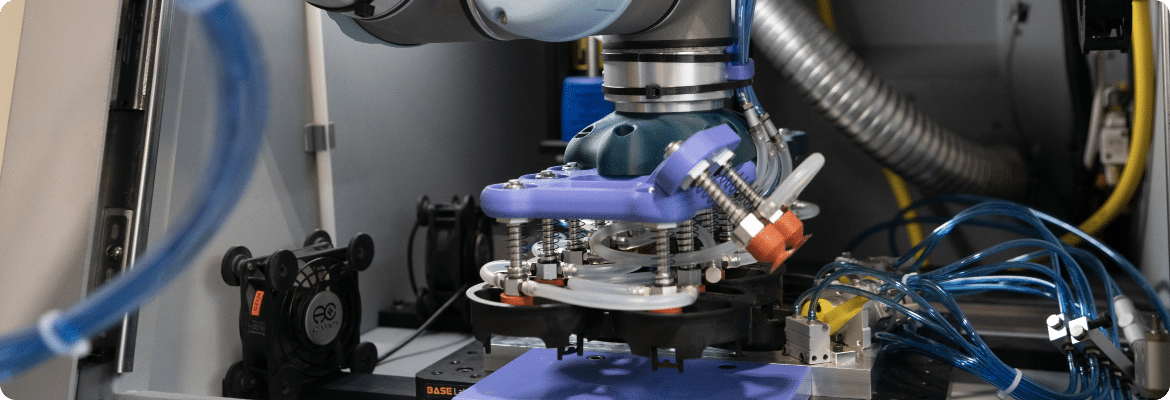
- Tool cavities and cores are 3D-printed. The tools are made from high-temperature resins that can withstand standard molding environments.
- Molded parts are checked with optical laser scanning. Full metrology reports become available within minutes to confirm production intent and support predictive analysis and product measurement.
Within three days of design upload, your design is brought to life just as you intended.
How Will Rosti’s Digital Innovation Lab Benefit North American Customers?
Rosti North America has always been recognized for its excellent DFM processes, state-of-the-art facilities and technology, and engineering expertise. Now, with Rosti’s global reach and local focus philosophy, customers can count on collaborative manufacturing expertise and solutions throughout every step of plastic component development, no matter where they’re located.
Not only do Rosti North America customers have access to digital innovation labs around the world, but a dedicated facility is also currently being developed at the company’s Germantown, Wisconsin location.
With a global network of resources and suppliers, as well as one of the most dedicated, knowledgeable, and connected teams in the world, customers will have an expert partner from design through the entire production cycle.