Kunststoffspritzguss 101
Kunststoffspritzguss 101 – Von der Konstruktion bis zur Produktion
Kunststoffspritzguss spielt eine entscheidende Rolle in der modernen Fertigung. Dabei werden Rohpolymere in präzise, hochwertige Komponenten verwandelt, die in Produkten von Medizinprodukten bis hin zu Autoteilen verwendet werden. Das Verfahren verbindet Geschwindigkeit, Präzision und Vielseitigkeit und ermöglicht die Herstellung komplexer Formen mit gleichbleibend hoher Qualität.
In diesem Leitfaden führen wir Sie durch den gesamten Kunststoffspritzguss-Prozess – von Design und Materialauswahl bis hin zu Produktion, Nachbearbeitung und Qualitätskontrolle. Wir zeigen zudem auf, wie fortschrittliche Techniken und Automatisierung die Zukunft der Branche prägen.
Das lernen Sie in diesem Artikel:
- Wie Kunststoffspritzguss funktioniert
- Unterschiedliche Spritzgussverfahren und Materialien
- Nachbearbeitungs- und Qualitätskontrollmethoden
- Häufige Herausforderungen und wie man sie vermeidet
- Rostis Ansatz für Innovation und Nachhaltigkeit im Spritzguss
Was ist Kunststoffspritzguss?
Kunststoffspritzguss ist eines der am weitesten verbreiteten und vielseitigsten Fertigungsverfahren zur Herstellung von Kunststoffteilen aller Formen und Größen. Es beginnt alles mit einer Spritzgussmaschine, Rohkunststoff und einer maßgefertigten Form. Der Kunststoff wird erhitzt, bis er schmilzt, dann in die Formhöhle injiziert, wo er abkühlt und zu einem fertigen Teil aushärtet – bereit zur Verwendung.
Kunststoffspritzgegossene Bauteile finden Sie nahezu überall – in der Automobilindustrie, der Medizintechnik, Verpackungen, Haushaltsgeräten, industriellen Anwendungen und vielem mehr. Dank modernster Spritzguss-Technologien können Hersteller heute äußerst präzise und hochwertige Teile in hoher Geschwindigkeit produzieren.
In den letzten zwei Jahrzehnten hat sich das Verfahren drastisch weiterentwickelt. Was einst hauptsächlich von Zeit und Druck abhing, wird heute durch Positionskontrolle, Spitzendruck und konstante Prozesswiederholbarkeit bestimmt.
Laut Plastics Today haben Experten wie John Bozzelli und Rosti-Partner RJG das ‚wissenschaftliche Spritzgießen‘ mitentwickelt – einen datengesteuerten Ansatz, der die Kunststoffproduktion bis heute prägt.
The success
“Plastic injection as an “art” gave way to plastics processing as a science of repeatability, standardization, and part success.”
Welche Arten von Kunststoffspritzguss gibt es?
Kunststoffspritzguss ist kein Verfahren nach Schema F – und genau das macht ihn so vielseitig. Je nachdem, welches Teil gefertigt werden soll, können verschiedene Spritzguss-Techniken eingesetzt werden, um spezifische Eigenschaften in Optik, Haptik und Funktionalität zu erzielen.
Standardspritzguss
Dies ist der klassische Ansatz – ein Bauteil wird aus einem einzigen Material und in einer Farbe hergestellt. Es ist das Standardverfahren für die Produktion von Alltagsartikeln wie Getränkebehältern, Flaschendeckeln, Autoteilen und Spielzeugen. Einfach, effizient und äußerst zuverlässig.
Umspritzung
Umspritzung geht einen Schritt weiter. Dabei handelt es sich um einen zweistufigen Prozess, der eingesetzt wird, wenn ein Produkt mehrere Materialien benötigt – zum Beispiel ein Griff mit einer weichen, gummiähnlichen Ummantelung über einem harten Kunststoffkern. Zuerst wird das Hauptteil (oder Substrat) gefertigt. Anschließend wird es in eine weitere Form eingelegt, wo eine zweite Thermoplastschicht darüber gespritzt wird. Die beiden Materialien gehen eine starke mechanische oder chemische Verbindung ein, was das Bauteil langlebiger und ergonomischer macht.
Insert-Spritzguss
Beim Insert-Spritzguss wird ein bereits vorhandenes Bauteil – oft aus einem anderen Werkstoff wie Metall – in die Form eingelegt, bevor Kunststoff darum gespritzt wird. Denken Sie an Knöpfe, Drehregler oder Befestigungsteile mit Metallkern und Kunststoffaußenseite. Diese Technik vereint die Festigkeit von Metall mit der Vielseitigkeit von Kunststoff in einem nahtlosen Bauteil.
Lesen Sie mehr über Umspritzung und Insert-Spritzguss.
Zwei-Komponenten-Spritzguss
Der Zwei-Komponenten-Spritzguss ist ein weiteres Mehrkomponentenverfahren, wird jedoch komplett innerhalb einer einzigen Maschine durchgeführt – ein Umsetzen zwischen Formen ist nicht nötig. Der erste Schuss bildet die Basisschicht, der zweite bringt eine weitere Farbe oder einen anderen Kunststoff hinzu. Diese Methode ist ideal für Produkte wie Gehäuse von Elektrowerkzeugen, bei denen man ein robustes Grundteil und einen Griff in einer kontrastierenden Markenfarbe kombinieren möchte. Die beiden Schichten verbinden sich chemisch oder mechanisch und ergeben ein hochwertiges, vollintegriertes Bauteil.
Lesen Sie mehr über Mehrkomponenten-Spritzguss.
Kurz gesagt, jede dieser Formgebungsmethoden bringt ihre eigenen Stärken mit sich – und die Wahl der richtigen Methode hängt vom Design, der Funktion und den Leistungsanforderungen Ihres Bauteils ab.
Welcher Kunststoff wird für das Spritzgießen verwendet?
Die Wahl der richtigen Formgebungstechnik ist nur ein Teil des Prozesses – ebenso wichtig ist das Material selbst. Beim Spritzgießen gibt es eine Vielzahl von Kunststoffmaterialien, die in Frage kommen. Von gängigen Polymeren bis hin zu speziellen Mischungen stehen Hunderte von Harzen zur Verfügung – jedes mit eigenen Eigenschaften, Verarbeitungsanforderungen und Leistungsprofilen. Selbst innerhalb eines einzelnen Kunststofftyps sind verschiedene Qualitäten für spezifische Anwendungen ausgelegt.
Die 10 häufigsten Kunststofftypen für das Spritzgießen:
- Acryl (PMMA) – bekannt für seine Klarheit und Kratzfestigkeit
- Acrylnitril-Butadien-Styrol (ABS) – robust, langlebig und leicht zu verarbeiten
- Nylon (Polyamid, PA) – stark und verschleißfest, ideal für technische Bauteile
- Polycarbonat (PC) – robust und schlagzäh
- Polyethylen (PE) – flexibel und vielseitig, eingesetzt von Behältern bis zu Schläuchen
- Polyoxymethylen (POM) – auch bekannt als Acetal, ideal für Präzisionsteile und gleichmäßige Bewegungen
- Polypropylen (PP) – leicht, chemikalienbeständig, branchenübergreifend beliebt
- Polystyrol (PS) – kostengünstig und leicht zu verarbeiten, oft in Verpackungen und Einwegartikeln verwendet
- Thermoplastisches Elastomer (TPE) – gummiartige Flexibilität bei einfacher Verarbeitbarkeit wie Kunststoff
- Thermoplastisches Polyurethan (TPU) – elastisch, abriebfest und perfekt für flexible Bauteile
Welcher Kunststoff ist der härteste für das Spritzgießen?
Wenn es um reine Festigkeit und Haltbarkeit geht, Polycarbonat (PC) zählt zu den widerstandsfähigsten Kunststoffen. Es ist schlagzäh, transparent und vielseitig – wird oft in Schutzausrüstung, Elektronik und technischen Komponenten eingesetzt. Dicht dahinter folgen Nylon (Polyamid), bekannt für seine Festigkeit sowie seine Widerstandsfähigkeit gegen Verschleiß und Chemikalien, und Acetal (POM), geschätzt für seine Steifigkeit und die Fähigkeit, Belastungen ohne Verformung standzuhalten. Am Ende hängt der „beste“ Kunststoff ganz vom Verwendungszweck Ihres Bauteils ab – ob er sich biegen, glänzen, stark beansprucht werden oder einfach lange halten soll.
Im Inneren einer Spritzgießmaschine
Eine Spritzgießmaschine besteht aus einem Materialtrichter, Zylinder, Einspritzkolben oder rotierender Schnecke, Heizsystem, beweglichen Formteilen, Auswerfern und der Form selbst, die sich im Formhohlraum befindet. Die meisten Maschinen arbeiten horizontal.
Die Schließeinheit öffnet und schließt das Werkzeug und stößt die fertigen Teile aus. Es gibt zwei Haupttypen: den Kniehebeltyp mit mechanischem Gestänge und den Direkt-Hydrauliktyp, bei dem die Form direkt durch einen Hydraulikzylinder bewegt wird.
Der Kunststoff wird am einen Ende des Zylinders über den Trichter zugeführt, und die Schnecke im Inneren rotiert, angetrieben von einem Elektromotor, um den Kunststoff zu schmelzen. Sobald genügend geschmolzener Kunststoff vorhanden ist, wird er in das an der anderen Seite angebrachte Werkzeug eingespritzt. Während dieses Prozesses steuert die Maschine präzise die Schneckendrehzahl und den Einspritzdruck, damit die Form korrekt gefüllt wird. Die Einstellungen basieren auf spezifischen Positionen der Schnecke und Druckvorgaben, um Teil für Teil konstante Ergebnisse zu gewährleisten.
Im Inneren eines Spritzgießwerkzeugs
Das Werkzeug selbst ist genauso wichtig wie die Maschine. Es besteht aus hochfestem Metall und ist meist zweiteilig: eine Kavitäts- und eine Kernseite. Der geschmolzene Kunststoff gelangt über den Anguss in die Form und verteilt sich über Verteiler und Anschnitte in die Kavitäten. Nach dem Abkühlen öffnet sich die Form, und Auswerferstifte drücken die fertigen Teile heraus.
Auch wenn Werkzeuge von außen oft schlicht wirken, stecken sie voller präziser Details – in der Regel mit Toleranzen von weniger als 0,001 Zoll (0,025 mm), etwa ein Drittel der Dicke eines Blatt Papiers, bearbeitet. Jede Komponente muss perfekt funktionieren, um präzise, hochwertige Teile zu fertigen.
Wie funktioniert das Spritzgießverfahren für Kunststoffe?
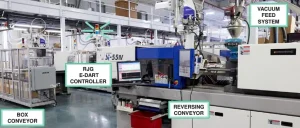
Sobald die Materialien ausgewählt und das Werkzeug vorbereitet ist, kann der Prozess beginnen, bei dem aus Rohkunststoff fertige Teile entstehen. Das Spritzgießen von Kunststoff läuft überraschend schnell ab – die meisten Zyklen dauern zwischen sechs Sekunden und wenigen Minuten. Hier ein genauerer Blick darauf, was während eines typischen Zyklus geschieht:
Schließen (Clamping): Bevor Kunststoff eingespritzt wird, müssen die beiden Hälften des Werkzeugs sicher geschlossen sein. Die Schließeinheit übernimmt das und wendet erhebliche Kraft auf, um das Werkzeug während der Einspritzung geschlossen zu halten. Wie lange das dauert, hängt von der Maschine ab – größere Maschinen mit größeren Werkzeugen benötigen naturgemäß etwas mehr Zeit, um zu schließen.
Einspritzen (Injection): Kunststoff gelangt meist als kleine Granulate in die Maschine. Diese Granulate werden in die Spritzeinheit geführt, wo eine rotierende Schnecke sie durch beheizte Zonen des Zylinders schiebt. Während der Kunststoff schmilzt, wird er in einer exakt dosierten Menge – einem sogenannten Schuss – für das fertige Teil vorbereitet. Sobald das Werkzeug geschlossen ist, spritzt die Maschine diesen geschmolzenen Kunststoff in das Werkzeug. Die Einspritzgeschwindigkeit hängt von Faktoren wie Schussgröße, Druck und dem Design des Teils ab.

Abkühlen (Cooling): Sobald der geschmolzene Kunststoff auf das Innere des Werkzeugs trifft, beginnt er abzukühlen und zu härten und nimmt seine endgültige Form an. Etwas Schrumpfung ist in dieser Phase normal. Das Werkzeug darf erst geöffnet werden, wenn das Teil ausreichend abgekühlt ist – abhängig von den Eigenschaften des Kunststoffs, der Dicke des Teils und den gewünschten Maßen. Sehen Sie sich ROSTIs Leitfaden zu Materialschrumpfungsraten an.
Entformen (Ejection): Sobald das Teil abgekühlt ist, stößt das Auswurfsystem der Maschine es aus dem Werkzeug. Gleichzeitig ist ein neuer Schuss Kunststoff schon vorbereitet, damit der Zyklus ohne Verzögerung von vorne beginnen kann.
Erhalten Sie einen Einblick, wie das Kunststoff-Spritzgießen funktioniert, einschließlich der grundlegenden Schritte vom Aufschmelzen des Kunststoffs bis zur Formgebung im Werkzeug.
Was passiert bei der Nachbearbeitung von Spritzgussteilen?
Nach einem Spritzgießzyklus ist die Arbeit oft noch nicht beendet – viele Teile werden nachbearbeitet, um sie für den Einsatz vorzubereiten. Diese Schritte können funktional sein, etwa zur Erhöhung der Festigkeit, oder dekorativ, zum Beispiel für Markenzeichen oder Farbakzente. Hier sind sechs gängige Nachbearbeitungstechniken für Spritzgussteile:
- Angussabtrennung – Entfernen von überschüssigem Kunststoff an der Stelle, an der das Material in das Werkzeug geflossen ist
- Lackieren – für Farbgebung oder Oberflächenfinish, aus optischen oder schützenden Gründen
- Laserbeschriftung – direkte Gravur von Logos, Seriennummern oder Informationen auf dem Bauteil
- Tampondruck – Übertragung detaillierter Grafiken oder Texte auf die Oberfläche
- Heißschweißen – Verbinden von Teilen, indem Kunststoff durch Hitze erweicht und verbunden wird
- Ultraschallschweißen – Verschweißen von Kunststoffkomponenten mittels Ultraschallvibrationen
Jeder dieser Schritte hilft dabei, ein geformtes Teil in ein fertiges Produkt zu verwandeln, das bereit für seine Verwendung ist.
Wie lange hält ein Spritzgusswerkzeug?
Die Lebensdauer eines Spritzgusswerkzeugs reicht von einigen Hundert bis zu über einer Million Zyklen, je nachdem, wie es gebaut, gewartet und eingesetzt wird. Faktoren wie die Betriebsumgebung, Materialien, Wartungsroutinen, Verarbeitungsbedingungen und das Gesamtdesign des Werkzeugs beeinflussen, wie lange es hält.
Regelmäßige Inspektionen, sorgfältige Wartung, Schutzbeschichtungen und der Betrieb des Werkzeugs unter empfohlenen Bedingungen können die Lebensdauer deutlich verlängern. Die Einhaltung von SPI-Werkzeugklassen trägt ebenfalls zur Haltbarkeit und gleichbleibenden Leistung bei. Es ist wichtig, auf Defekte wie Einfallstellen, Oberflächenablösungen, Fließlinien, Brandspuren oder Gratbildung zu achten – diese können entweder Schäden am Werkzeug verursachen oder anzeigen, dass Verschleiß bereits auftritt.
Fehler beim Kunststoffspritzguss – und wie man sie vermeidet
Das Spritzgießen ist eine hervorragende Methode, um große Mengen identischer Teile schnell herzustellen, aber es ist nicht so einfach, wie es aussieht. Selbst kleine Fehler in der frühen Produktentwicklung können zu schwerwiegenden Defekten führen, die die Qualität, Haltbarkeit und Kosten Ihrer Teile beeinträchtigen. Probleme können durch Konstruktionsfehler, Produktionsfehler oder Lücken in der Qualitätskontrolle entstehen. Daher ist es entscheidend, von Anfang an proaktiv zu handeln und potenzielle Risiken zu adressieren, um den Prozess reibungslos zu halten und sicherzustellen, dass das Endprodukt wie vorgesehen funktioniert.
Nachfolgend finden Sie sieben der häufigsten Defekte beim Kunststoffspritzgießen sowie Strategien zu deren Vermeidung:
1. Fließlinien
Fließlinien sind sichtbare Streifen oder Muster auf der Oberfläche eines Teils, die durch unterschiedlich schnell fließenden und ungleichmäßig erstarrenden Kunststoff entstehen.
Ursachen:
- Niedrige Einspritzgeschwindigkeit oder zu geringer Druck
- Unterschiedliche Wandstärken in der Form
Vorbeugung:
- Konstante Wandstärke beibehalten
- Fasen und Radien in angemessener Länge verwenden
- Das Angusssystem in dünnere Bereiche der Form setzen
2. Einfallstellen
Vertiefungen, Dellen oder Krater, die in dicken Bereichen durch ungleichmäßiges Abkühlen und Schrumpfen entstehen.
Ursachen:
- Dicke Wände kühlen langsamer ab als äußere Bereiche
- Unzureichender Druck in der Form
- Zu hohe Temperaturen am Angusssystem
Vorbeugung:
- Die Dicke von starken Bereichen für ein gleichmäßigeres Abkühlen reduzieren
- Mehr Zeit zum Abkühlen einplanen
- Mit geeigneter Rippen- und Wandstärke konstruieren
3. Oberflächendelamination
Die Oberfläche trennt sich in dünne Schichten, die sich ablösen können.
Ursachen:
- Verunreinigungen im Material
- Übermäßiger Einsatz von Trennmitteln
Vorbeugung:
- Den Kunststoff vor dem Spritzgießen vorgetrocknet
- Erhöhung der Werkzeugtemperatur
- Abhängigkeit von Trennmitteln minimieren
4. Bindenähte (Knit Lines)
Linien, an denen zwei Ströme geschmolzenen Kunststoffs aufeinandertreffen, aber nicht richtig miteinander verschmelzen, wodurch die Festigkeit des Bauteils verringert wird.
Ursachen:
- Fluss um Löcher oder Hindernisse in der Form herum
- Falsche Harztemperatur
Vorbeugung:
- Harztemperatur erhöhen
- Einspritzgeschwindigkeit und -druck erhöhen
- Materialien mit geringerer Viskosität verwenden
- Formen überarbeiten, um unnötige Trennungen zu entfernen
5. Kurze Schüsse (Short Shots)
Unvollständiges Füllen der Form, was zu unbrauchbaren Teilen führt.
Ursachen:
- Eingeschränkter Fluss durch enge Anschnitte, Blockaden oder eingeschlossene Luft
- Unzureichender Einspritzdruck
- Materialviskosität oder niedrige Formtemperatur
Vorbeugung:
- Formtemperatur erhöhen
- Entlüftung verbessern, damit Luft entweichen kann
- Anschnittgestaltung anpassen
6. Verzug
Verdrehungen oder Verbiegungen, verursacht durch ungleichmäßiges Schrumpfen während des Abkühlens.
Ursachen:
- Nicht gleichmäßige Formkühlung
- Ungleichmäßige Wandstärke
- Halb-kristalline Materialien sind anfälliger für Verzug
Vorbeugung:
- Allmähliche, gleichmäßige Abkühlung ermöglichen
- Über die gesamte Bauteillänge gleichmäßige Wandstärken einhalten
- Sicherstellen, dass das Formdesign einen unidirektionalen Fluss fördert
7. Jetting
Gewellte Flussmuster entstehen, wenn geschmolzener Kunststoff zu erstarren beginnt, bevor die Kavität vollständig gefüllt ist.
Ursachen:
- Hoher Einspritzdruck
- Vorzeitiges Erstarren im Werkzeug
Vorbeugung:
- Reduzieren Sie den Einspritzdruck für gleichmäßigere Füllungen
- Werkzeug- und Harztemperatur erhöhen
- Positionieren Sie den Anguss entlang des kürzesten Fließwegs
Welche Risiken bestehen beim Spritzgießen von Kunststoff?
Ebenso wichtig sind die allgemeinen Risiken, die mit dem Kunststoffspritzgießen verbunden sind – vom Arbeitsschutz bis zu den Auswirkungen auf die Umwelt. Diese müssen gemanagt werden, um einen verantwortungsvollen und effizienten Fertigungsprozess sicherzustellen. Das Verständnis dieser Risiken und das Ergreifen geeigneter Vorsichtsmaßnahmen sind entscheidend, um die Sicherheit der Mitarbeitenden zu gewährleisten und Umwelteinflüsse zu minimieren.
Giftige Dämpfe: Beim Erhitzen von Kunststoff im Spritzgießprozess werden Chemikalien wie Styrol, Benzol und Formaldehyd freigesetzt, die Atemprobleme verursachen oder sogar langfristige Gesundheitsschäden hervorrufen können. Eine gute Belüftung und Schutzausrüstung wie Atemmasken sind unerlässlich, um die Belastung so gering wie möglich zu halten.
Verbrennungen und Verletzungen: Die Arbeit mit geschmolzenem Kunststoff und laufenden Spritzgießmaschinen birgt das Risiko von Verbrennungen und weiteren Verletzungen. Eine sachgemäße Schulung und persönliche Schutzausrüstung – Handschuhe, Schutzbrillen und hitzebeständige Kleidung – sind unerlässlich, um die Sicherheit bei der Arbeit zu gewährleisten.
Umweltauswirkungen: Spritzgießen ist nicht ohne ökologischen Fußabdruck. Es kann Kunststoffabfälle erzeugen, zur Umweltverschmutzung beitragen und Ressourcen erschöpfen.
Eine nachhaltige Zukunft mit Rosti gestalten
Als Kunststoffverarbeiter und Auftragsfertiger steht Rosti im Zentrum der Lieferkette und trägt sowohl die Verantwortung als auch die Chance, positive Umweltauswirkungen zu erzielen. Unsere Design-for-Manufacturing-Prozesse beeinflussen Produktdesign, Materialauswahl und Abfallmanagement entlang der gesamten Lieferkette. Deshalb ist Nachhaltigkeit ein zentrales Element unserer Unternehmensstrategie und bestimmt jede unserer Entscheidungen. Durch die enge Zusammenarbeit mit unseren Kunden und Partnern wollen wir nachhaltige Fertigung fördern und dazu beitragen, die Kunststoffindustrie umweltfreundlicher zu gestalten.
Welche Vorteile bietet das Kunststoffspritzgießen?
Das Kunststoffspritzgießen ist äußerst vielseitig und daher die erste Wahl für die Herstellung verschiedenster Teile und Produkte. Seine Vorteile gehen über den bloßen Fertigungsprozess hinaus – sie bieten echte Mehrwerte, die sich auf Kosten, Leistung und Design auswirken können.
Schnelligkeit und Wirtschaftlichkeit: Das Verfahren ist unkompliziert, hochautomatisierbar und effizient. Das bedeutet kürzere Produktionszeiten, geringere Kosten und die Möglichkeit höherer Erträge.
Leichtbau: Kunststoff ist robust und dennoch viel leichter als Metall oder andere traditionelle Werkstoffe. Deshalb erwägen viele Hersteller den Umstieg von Metall- auf Kunststoffteile – dies kann die Leistung verbessern und das Gewicht reduzieren, ohne an Stabilität einzubüßen.
Würde die Umstellung von Metall auf Kunststoff auch Ihrem Produkt Vorteile bringen? Hier finden Sie unseren umfassenden Leitfaden.
Überlegene Qualität: Das Spritzgießen liefert konstant präzise und gleichmäßige Teile. Die Maßgenauigkeit ist kaum zu übertreffen und datenbasierte Hilfsmittel wie Mould Flow zur Designvalidierung, RJG eDart-Prozesskontrollen und Robotik sorgen für erstklassige Qualität.
Gestaltungsfreiheit: Ob Ihr Bauteil einfach oder sehr komplex ist – das Spritzgießen macht es möglich. Es lässt sich problemlos mit CAD- und CAM-Systemen integrieren, sodass exakte Spezifikationen und filigrane Details mühelos umgesetzt werden können.
Individuelle Farben und Eigenschaften: Nahezu jede Farbe oder optische Wirkung ist realisierbar. Mit über 15.000 Kunststofftypen ist es ganz einfach, Bauteile für Anforderungen wie Festigkeit, UV-Beständigkeit oder andere Eigenschaften individuell anzupassen.
Konformität: Falls Ihr Produkt FDA-, NSF-, REACH- oder RoHS-Standards erfüllen muss, gibt es Harze, die diesen Anforderungen entsprechen.
Nachhaltigkeit: Das Verfahren erzeugt nur minimale Abfälle, und übrig gebliebenes Material kann häufig recycelt werden – eine umweltbewusstere Wahl im Vergleich zu anderen Fertigungsmethoden.
Spritzgießen bedeutet nicht nur, Teile herzustellen – es geht darum, Teile effizient, zuverlässig und mit vielen Möglichkeiten zur individuellen Anpassung zu produzieren, die Ihren Anforderungen entsprechen.
Kunststoffspritzguss in verschiedenen Branchen
Für OEMs in verschiedensten Branchen sind Kunststoffteile eine unverzichtbare und kosteneffiziente Option. Das Kunststoffspritzgießen ist ein vielseitiges Verfahren, das das Teilegewicht um bis zu 50 % reduzieren, komplexe Formen ermöglichen und weniger Ausschuss produzieren kann – und das bei geringen Kosten. Es wird für alles genutzt, von Medizinprodukten über Automobilkomponenten und Haushaltsgeräte bis hin zu vielem mehr.
Automobil: Kunststoffteile wie Stoßfänger, Armaturenbretter und Getränkehalter sind leicht, langlebig, hitze- und witterungsbeständig und helfen, Lärm und Vibrationen zu reduzieren.
Medizin: Kunststoffe bieten Präzision und Zuverlässigkeit für Geräte und Komponenten, mit hoher Zugfestigkeit, Hitzebeständigkeit und Flexibilität in Design, Größe und Farbe.
Erfahren Sie mehr über Rostis medizinische Lösungen.
Bauwesen: Spritzgegossene Werkzeuge, Verbindungselemente und Zubehör sind kosteneffizient, langlebig, leicht und auch in rauen Umgebungen stabil.
Sanitär: Kunststoffrohre und -fittings sind korrosionsbeständig, leiten weniger Wärme, sind chemisch stabil und bieten geringere Kosten und Gewicht gegenüber traditionellen Materialien.
Haushaltsgeräte: Teile wie Zahnräder, Regale und Schalen profitieren von der Langlebigkeit, Wärme- und Chemikalienbeständigkeit, dem reduzierten Gewicht und der Designflexibilität von Kunststoffen.
Elektronik: Kunststoffkomponenten verbessern die Isolierung, halten hohe Spannungen und Temperaturen aus, verringern das Gewicht und ermöglichen komplexere Designs.
Wann immer Wiederholgenauigkeit, Konsistenz, Wirtschaftlichkeit und Zuverlässigkeit bei Teilen in mittlerer bis hoher Stückzahl gefragt sind, ist Spritzgießen eine kluge Wahl. Es bietet funktionale und gestalterische Vorteile in zahllosen Branchen.
Wann wurde das Kunststoffspritzgießen erfunden?
Die Geschichte des Kunststoffspritzgießens reicht bis ins Jahr 1868 zurück, als John W. Hyatt eine Methode entwickelte, Zelluloid herzustellen – ursprünglich, um Elfenbein in Billardkugeln zu ersetzen. Nur wenige Jahre später, 1872, bauten Hyatt und sein Bruder Isaiah die erste Spritzgießmaschine. Sie nutzte einen einfachen Kolben, um Zelluloid durch einen beheizten Zylinder in eine Form zu drücken – damit war der Weg für die Massenproduktion von Gegenständen wie Knöpfen, Kämmen und mehr geebnet.
Anfang des 20. Jahrhunderts wurden sicherere, auf Zellulose basierende Kunststoffe entwickelt, und vor dem Zweiten Weltkrieg kamen Materialien wie Polystyrol und PVC weit verbreitet zum Einsatz. Nach dem Krieg trug die steigende Nachfrage nach günstigen, massenproduzierten Teilen dazu bei, dass sich das Spritzgießen als Eckpfeiler der Kunststoffindustrie etablierte.
Ein großer Fortschritt erfolgte 1946, als James Watson Hendry eine Spritzgießmaschine mit Schnecke einführte – das ermöglichte Herstellern eine deutlich bessere Kontrolle und qualitativ hochwertigere Teile.
Die Zukunft des Kunststoffspritzgießens
Wie in vielen anderen Branchen entwickelt und verändert sich auch die Welt der Kunststoffe ständig weiter. Unternehmen investieren kontinuierlich in Automatisierung, um Produktivität, Kapazität und Effizienz zu steigern.
Dienstleistungen im Bereich Kunststoffspritzgießen sind schnell, effizient und präzise, wenn sie von erfahrenen Technikern mit modernsten automatisierten Maschinen durchgeführt werden. Automatisierung sorgt dafür, dass jede hergestellte Komponente dem validierten Design identisch entspricht.
Noch einen Schritt weiter geht die Lights-Out-Fertigung, bei der Prozesse, innovative Maschinen und Technik in die Anlagen integriert werden. Diese Systeme können Aufgaben übernehmen, die normalerweise eine ständige Überwachung durch Techniker vor Ort erfordern würden. Im Grunde kann eine automatisierte Produktionsstätte „lights-out“ betrieben werden – also ohne nennenswerte Unterstützung durch menschliche Arbeitskräfte, Beleuchtung, Heizung und andere kostenintensive Faktoren für das Unternehmen. Dennoch benötigen die meisten hochautomatisierten Anlagen weiterhin die Überwachung durch hochqualifizierte Arbeitskräfte und Techniker. Lights-Out-Prozesse ermöglichen es Unternehmen, ihre Anlagen rund um die Uhr, sieben Tage die Woche mit einer kleineren Belegschaft oder virtueller Technikerüberwachung zu betreiben.
Lights-Out-Fertigung
Die Bunsen-Drive-Anlage von Rosti sorgt für maximale Effizienz auf jedem Quadratmeter Fläche. Seit der Eröffnung der Bunsen-Anlage hat die US-Regierung Rosti ein Patent zur Validierung der dort angewandten Prozesse erteilt. Jedes Detail – von der Beleuchtung bis zum Fördersystem – wurde sorgfältig geplant. Diese Liebe zum Detail hebt diese Anlage von anderen weltweit ab.
Darüber hinaus haben Erweiterungen der Infrastruktur die Voraussetzungen für zusätzliche Produktionspressen geschaffen, von denen bereits einige installiert wurden und weitere in Zukunft folgen werden.
Die Fortschritte in der Automatisierung und bei „Lights-Out“-Fertigungsprozessen haben die Kunststoffindustrie maßgeblich beeinflusst. Sie ermöglichten es Unternehmen, Kosten und Durchlaufzeiten zu verbessern. Zudem konnten Hersteller von Kunststoffteilen die Wahrscheinlichkeit von Fehlern verringern und die Gesamtqualität der produzierten Produkte steigern.
Erfahren Sie mehr über Rostis wissenschaftliche Spritzgussmethoden in unserem vollständigen Leitfaden zum wissenschaftlichen Spritzguss.
Fünf entscheidende Wege, wie die Lights-Out-Fertigung das Spritzgießen transformiert hat, sind:
- Sie hat US-Herstellern geholfen, einen globalen Wettbewerbsvorteil zu erlangen.
- Sie ermöglicht es, große Aufträge schnell abzuschließen, ohne die höheren Kosten für zusätzliche Schichten.
- Sie bietet eine verbesserte Möglichkeit, Anforderungen an Qualitätskontrolle, Lieferung und Kosteneinhaltung einzuhalten.
- Sie erfordert eine hochqualifizierte und engagierte Belegschaft, um moderne Automatisierungstechnik und -prozesse zu betreuen und zu warten.
- Sie schafft ein zusätzliches Schutzniveau für geistiges Eigentum.
Warum Rosti für Ihr nächstes Kunststoffspritzgussprojekt wählen?
Bei Rosti betreiben wir mit Stolz ein Netzwerk fortschrittlicher Standorte weltweit, strategisch positioniert, um hochwertige Kunststoffspritzguss- und Auftragsfertigungslösungen zu liefern. Unsere globale Präsenz ermöglicht es uns, Kunden branchenübergreifend effizient zu bedienen und lokalen Support mit erstklassiger Expertise anzubieten.
Wir nehmen uns die Zeit, die Branche, die Materialien und die individuellen Herausforderungen jedes Kunden zu verstehen, um ein echter Partner für den Erfolg Ihrer Kunststoffspritzgussprojekte zu sein.
Unser erfahrenes Inhouse-Team begleitet den gesamten Designprozess und bietet Ihnen einen einzigen Ansprechpartner, um die Kommunikation einfach und reibungslos zu gestalten. Vom Produktdesign bis zur vollständigen Lebenszyklusverifizierung stellen wir sicher, dass jedes Teil Ihren Anforderungen entspricht und wie vorgesehen funktioniert – denn Ihr Erfolg ist unsere Priorität.
Entdecken Sie, wie Rosti Innovationen gestaltet mit unseren Kunststoffspritzguss-Dienstleistungen, und nehmen Sie Kontakt mit uns auf, um mehr zu erfahren.