Scientific Molding
Injection Molding: Complete Guide to Scientific Molding
It’s easy to see how computing and innovation have had a positive impact on all kinds of industries over the past 35-plus years. The injection molding industry is no exception. Today, plastic injection molding is largely based on a scientific approach.
What is Scientific Molding?
Scientific molding is a process where the fill, pack, and hold stages are treated separately to minimize fluctuations and improve overall product consistency. Separating the stages is also known as decoupled injection molding. Molders who use scientific injection molding equipment, software, and practices can, according to scientific molding educator John Bozzelli, “reduce cycle times, increase machine efficiency, and ultimately make more money.”
What’s the difference between traditional molding and scientific molding?
With the traditional method of injection molding, the mold is filled with a single shot under constant pressure to pack the cavity. In scientific molding, the cavity is filled to around 90-97 percent at a certain velocity. In the next phase, the machine switches from speed control to pressure control, where the cavity is filled or “packed out” to complete the process.
The scientific method allows for greater shot-to-shot consistency and improved control over part specifications. On the other hand, large variations in part dimensions are often seen from cycle to cycle with the traditional method of injection molding.
A scientific injection molding approach is especially important when producing complex parts and components, where even the smallest variations in molding variables can have a significant impact on the process or final product. With that in mind, the goal of scientific injection molding involves two key strategies:
- Develop a process that produces repeatable results with minimal variation
- Optimize dimensional or mechanical characteristics of a molded part
Factors in Science-Based Molding
Another aspect of the traditional molding process relates to machine-based control. It was once believed there were 20 or more machine-based settings that could affect a range of problems with the molded product (dimensions, voids, warping, and other quality issues). The research aimed to find connections between problems with the parts and the machine settings.
Over many years, when it was found that machine settings had little or no correlation to part quality, research shifted from the traditional machine-control method to a science-based approach. The “plastics point of view” became the revolutionary direction of modern research, based on the laws of science rather than injection machine settings. Donald C. Paulson pioneered this scientific approach, developing a plastics research laboratory at General Motors Institute in the mid-to-late 1960s.
Injection Molding Processing Stages
Mr. Paulson focused on the four injection molding plastic processing stages best known to control the properties of the molded part: heat, pressure, flow, and cooling. Each of these, Paulson theorized, “would be governed by the laws of physics: first, the laws of heat transfer; second, the Poiseuille fluid flow law; and third, the Equation of State for Plastic.”
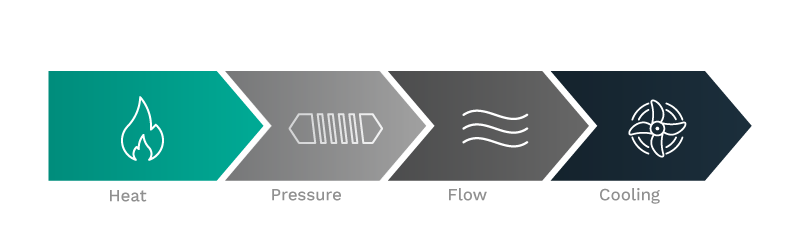
Measuring and recording machine and plastic variations for each of the four cycles over the course of four years led Paulson and his team of researchers to two industry-changing conclusions:
- Physical laws that other materials follow also apply to plastic processing
- The four plastic variables determine the characteristics and properties of molded parts
The scientific approach to molding doesn’t change the molder’s need to understand machine setup or how the machine’s controls are used to affect plastic output and part quality. However, it does help the molder make better decisions about what the control settings and cycle times should be and helps solve part issues if and when they come up.
Steps in Scientific Molding and the Role of Advanced Process Control
At its core, scientific molding focuses on decoupling the essential steps in the molding process. This decoupling ensures precision, accuracy, and control over each phase of the injection molding cycle. Thanks to advances in technology—especially the introduction of the RJG eDart® system—molders can now achieve higher levels of control and consistency.
By using equipment and software measurement tools like the RJG eDart system, each cycle’s variables within the mold are continuously monitored. This real-time monitoring is guided by the unchanging physical laws governing plastics. These laws—covering heat, pressure, flow, and cooling—are meticulously controlled by specially trained engineers, ensuring every component meets the highest standards.
- Initial Shot: The cavity is filled to about 98% of its capacity, with velocity as the key control parameter.
- Fill and Pack: The cavity is filled the rest of the way to full capacity. The material is then compressed or “packed out” within the cavity, maintaining constant pressure. With RJG’s eDart systems, machine control is based on the plastic pressure inside the mold. This focus on plastic pressure control, rather than just machine parameters, offers a more reliable process window.
- Cool and Stabilize: As the molded part cools, it stabilizes. Only once it reaches the desired stability is the part ejected, preparing the machine for the next metered shot.
This decoupled approach, further enhanced by technologies like RJG’s eDart, gives molders better control over part dimensions. More importantly, it ensures consistent quality from one cycle to the next—commonly known as shot-to-shot consistency in the industry. With such advanced process controls, Rosti can guarantee exceptionally consistent product quality to its customers.
Advantages of Scientific Molding
It’s easy to imagine a world without scientific molding principles: product variations caused by wide shifts in temperature, pressure, and viscosity, longer cycle times, reduced machine efficiency, higher costs, more rejects, and lower quality parts for customers.
As stated in our post on the advantages of scientific molding, “Scientific molding practices are essential to achieving outcomes that deliver faster cycles, higher volume, and a more efficient injection molding process.” In addition, “quality control issues can be avoided by having automated containment control and traceability for specific applications.”
Quote Style
“Scientific molding practices are essential to achieving outcomes that deliver faster cycles, higher volume, and a more efficient injection molding process.”
The technology behind scientific molding gives manufacturers the ability to operate more efficiently while creating the opportunity for a global competitive advantage. It also provides OEMs and customers with higher-quality parts and fewer rejects at lower costs.
The principles and technologies involved with scientific molding solve the problem of how to get injection molding machines to make good parts every single time.
The Role of Technology in Scientific Molding
The potential of scientific molding truly unfolds when paired with the latest advancements in injection molding technology. While it is a practice rooted in the laws of physics, its effectiveness greatly depends on technological innovations, particularly in the areas of engineering, equipment, and software.
A prime example of this synergy is Rosti’s embrace of the RJG eDart system of advanced process control. This system, which focuses on controlling and monitoring the plastic pressure inside the mold, has been pivotal in transforming how injection molders approach their processes. It’s no longer just about the machine setup or generic quality control; it’s about utilizing cutting-edge technology to ensure the highest quality while also achieving cost savings.
From the initial machine setup to the intricate details of quality control and everything in between, technology like the RJG eDart system underscores the importance of continuous innovation. Such advancements have made it possible for molders to not only meet but also exceed the demanding standards of their customers. In this context, technology isn’t just an enabler; it’s a game-changer for the overall success of the injection molding process. Let’s dive into this further below.
The Role of Mold Flow Simulation Software in Scientific Molding
Scientific molding principles follow a data-driven approach. And data makes it possible to improve and achieve repeatable results. For example, Rosti uses mold flow simulation software by SOLIDWORKS®. As an up-front design validation tool for plastic injection molders, it provides predictive insight into plastic component design. Some key benefits of using the SOLIDWORKS software technology include:
- A shorter product development cycle and reduced overall time to market through predictive insight into the component design early on.
- Greater insight into plastic part geometry that would otherwise be too difficult or expensive to predict.
- The ability to identify potential problem areas upfront relating to sink marks, weld lines, short shots, as well as other part defects and blemishes.
In short, SOLIDWORKS helps injection manufacturers get the part design right the very first time. By doing so, they’re able to eliminate costly mold rework, improve part quality, and reduce time to market.
The Role of RJG in Scientific Molding
While renowned for its consulting and training services – offering flagship courses like decoupled molding, high-performance molding, and Master Molder 1 & II certification – RJG’s eDart system has proved revolutionary in the molding process at Rosti.
Rosti’s adoption of the RJG eDart process control system has been transformative. Designed to empower molders with critical information, the eDart system is skilled at reducing scrap, ensuring process stability, and delivering repeatable, superior-quality results.
Rosti’s goal has always been to maintain high press utilization rates. Such ambitions required an agile fleet of presses and an unwavering commitment to the principles of scientific molding. The eDart system, with its advanced in-mold pressure sensors, enhanced Rosti’s molding operations, providing unmatched control and flexibility.
The journey began in September 2009 when Rosti, facing unique challenges, integrated the eDart system into two of our presses. This integration proved so beneficial that rapid expansion of the technology soon followed. By 2010, Rosti committed to a two-year initiative to ensure every press was equipped with the eDart system. This pursuit of excellence ensured that our commitment to closed-loop process control was not just a strategy but a defining part of our culture.
One of the pivotal outcomes, as Kurt Behrendt, Rosti’s Director of Engineering, pointed out, was the “transformational change in managing part consistency across various material lots.” This was achieved by the eDart system’s proficiency in monitoring and mitigating in-mold plastic pressure fluctuations. The result? An unprecedented level of consistency in the products Rosti molded.
Key advantages of integrating RJG’s eDart system into our scientific molding process include:
- Historical data recording for every molding shot, facilitating unmatched insights.
- Real-time production monitoring, ensuring timely interventions when needed.
- Significant boosts in quality assurance, leading to more consistent, top-tier parts.
- Drastic reductions in scrap and processing time, driving operational efficiency.
In the world of scientific molding, the combination of mold flow simulation software, process control systems, and technologies like eDart forms the backbone of a robust automation strategy. Our deep dive into automation support is up next.
How Automation Supports Scientific Molding
We’ve discussed the science of molding in terms of the laws of physics, process steps, and the role technology plays in design, engineering, and process control. But scientific molding doesn’t end there—not by a long shot. It also involves and benefits from automation and a highly skilled workforce.
In this section, we’ll discuss the impact of automation on scientific molding, and in the next, the importance of specially-trained engineers and technicians.
The invention and use of automated tools and robotics have positively impacted almost every industry, and the injection molding industry is no exception. Make no mistake: the more a plastic injection molder can automate its operations, the more it can grow its business and gain a globally competitive advantage.
The ultimate mark of a scientific molding operation is a fully automatic production facility, like the one Rosti pioneered starting in 2011 at its Bunsen Drive facility. A fully automatic facility is sometimes also called a “lights out” facility. The manufacturing process at Rosti’s Bunsen Drive facility is so unique that the company was awarded U.S. Patent No. 8,827,674 B1 for the process: A specialized injection molding factory system and associated facility, with machines on the first floor and the resin supply placed on a mezzanine level.
What does it mean to operate lights-out?
Four years ago, we published how a lights-out manufacturing facility has transformed injection molding. In it, we described the lights-out process as follows:
“Lights-out manufacturing describes the process in which factories and production facilities are equipped with innovative and automated machinery to conduct tasks that would normally need a human to be present. Essentially, the production facility can run ‘lights-out’—or without substantial assistance from human labor, lights, heat, and other costly factors for a business. Lights-out manufacturing processes also allow companies to keep facilities running 24 hours a day, 7 days a week without the need for multiple workforce shifts.”
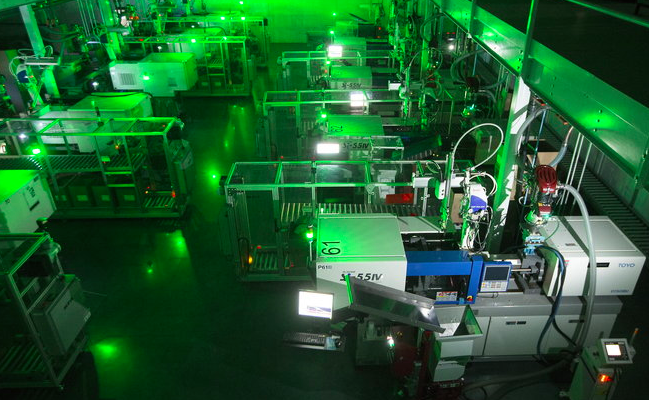
In this article, we also noted that “Not only has it allowed businesses to improve in the areas of cost and turnaround time, it has also allowed plastic part producers to lower the likelihood of defects and increase the overall quality of products created.” We noted a number of ways in which a lights-out facility has transformed injection molding, namely:
- U.S. manufacturers are able to gain a globally competitive advantage.
- Large orders can be completed quickly without the higher costs of adding more shifts.
- Quality control, delivery, and cost containment requirements can be achieved.
- It requires a highly trained and dedicated workforce to manage and maintain state-of-the-art automation equipment and processes.
Yes, scientific molding includes the technologies of mold fill simulation software, RJG eDart process control, state-of-the-art material handling systems, part conveyance systems, robotics, and a fully automated, lights-out facility.
Quote Style
“Lights-out manufacturing describes the process in which factories and production facilities are equipped with innovative and automated machinery to conduct tasks that would normally need a human [to be] present.”
Even so, these ever-evolving technologies and lights-out methodology do not allow a business to run completely hands-free. In fact, without knowledgeable and highly trained personnel, all of this simply wouldn’t be possible.
Rosti’s mix of experienced veterans and highly motivated young professionals is vital to its automation-focused and growth-oriented global business model. Up next, we’ll delve into the important role specialty-trained engineers and technicians play in scientific molding.
The Crucial Role of Specialized Engineers and Technicians in Scientific Molding
While understanding the intricacies of physics and technology isn’t mandatory for recognizing the transformative impact of scientific molding on the injection molding process, it’s undeniably essential to have specialized engineers and technicians at the helm. Their expertise ensures that science-backed injection molding systems are operated with precision and efficiency.
Rosti’s Comprehensive Approach to Molding Education and Training
Rosti places a premium on molding expertise. The company’s strategic hiring and training reflect an unwavering commitment to fostering excellence, including:
- Internship Pipeline: Each summer, Rosti welcomes between two to four interns. This proactive approach ensures a steady stream of potential talent, preparing for anticipated staffing needs.
- Targeted Recruitment: Rosti specifically hires engineers from educational institutions where students are exposed to both theoretical and hands-on scientific molding training. This ensures that the new hires are well-versed with the nuances of the industry from day one.
- Continuous In-plant Training: Partnering with industry experts like RJG, Rosti’s staff receive regular training on advanced concepts like decoupled II and III molding principles, pressure sensor specifications, the interpretation of eDart system outputs, and much more.
- Four-level Curriculum: To further solidify its commitment to excellence, Rosti has devised a comprehensive four-stage curriculum. This program is meticulously designed to elevate a beginner in molding to a level where they’re primed to undertake an RJG Master Molder course. The blend of on-site training and invaluable mentoring from in-house Master Molders paves the way for Rosti to cultivate its next generation of team members.
Understanding Decoupled II and Decoupled III Molding
Decoupled II Molding:
This process involves filling the mold up to a specified position. Following this, the packing and holding phases are combined, where the second-stage pressure is employed to fully pack out the mold. This continues until the gate is sealed.
Decoupled III Molding:
In this method, the mold is initially filled to a specific position. A secondary filling phase or machine packing is then used to pack the mold up to a predetermined cavity pressure. Once achieved, the process is maintained, holding until the gate seal is established.
RJG’s eDart process control system is tailored to support decoupled molding processes. It aids molders in monitoring critical data, controlling variables in real-time, and ensuring consistency shot-to-shot. By integrating technologies like in-mold pressure sensors, the eDart system provides insights and controls necessary for the precise, step-by-step procedures of decoupled molding.
Rosti Engineers Involved Throughout Entire Process Window
Rosti engineers are closely involved throughout the entire scientific molding process. It begins early in the design specification phase, with engineers working to design both the part to be molded and the tool that will be used in the process. From there, the engineer is able to specify how to incorporate pressure sensors in all of the new molds.
Once the sensors are in place, the tool is ready for testing under the direction and observation of engineers. Testing is conducted to identify any variables and the parameters required for consistent and optimal production.
With feedback from Rosti’s senior process technicians, our engineers approve the selection of decoupled II or decoupled III processes for each mold and confirm this process template for PPAP (Production Part Approval Process) and ongoing production. Once production is ramped up, engineers will continue to monitor readings and outputs to maintain and optimize the process for the best possible outcomes.
Where does design for manufacturing fit into the scientific molding process?
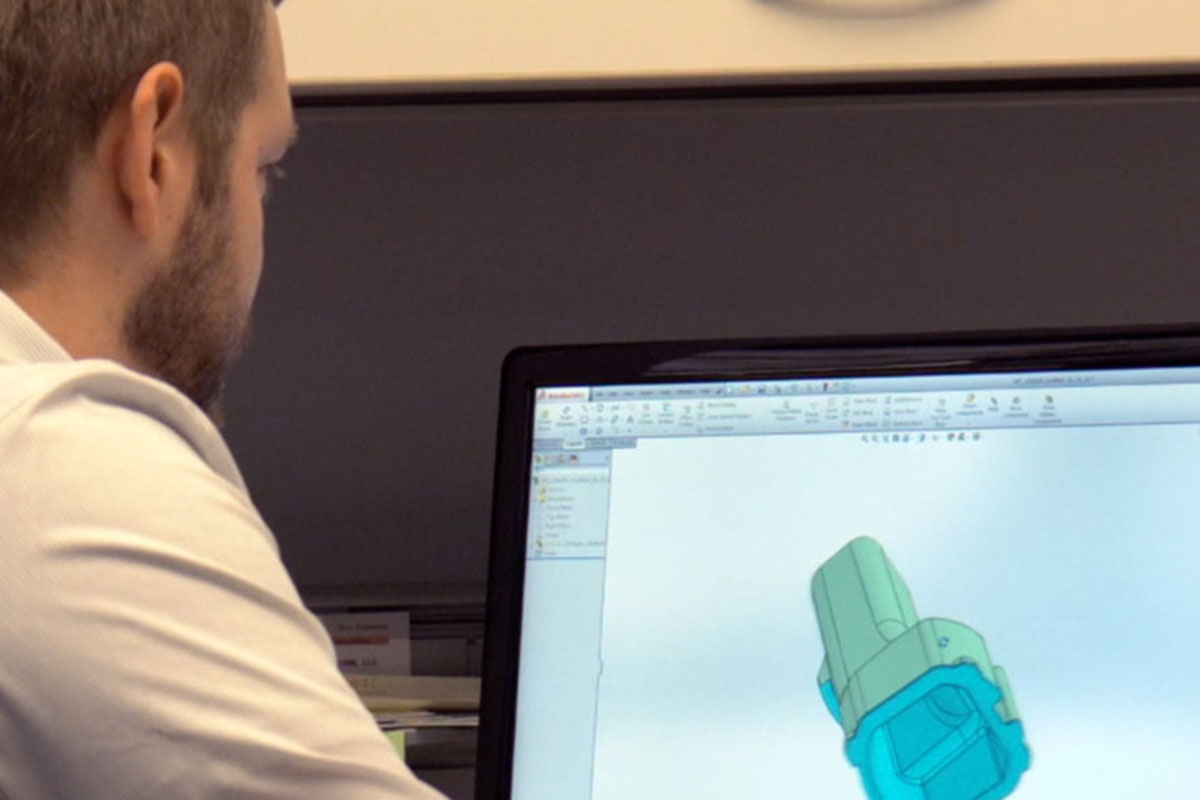
Design for manufacturing is a key factor in reducing costs in scientific molding. The first company to commercialize design for manufacture and assembly (DFMA), Boothroyd Dewhurst, Inc., discovered that 80% of the cost of a new product is directly related to its design.
According to John Gilligan, President of Boothroyd Dewhurst, Inc., “The use of DFMA to help choose the right structures, materials, processes, and labor has become critical, given that companies get few second chances in today’s global markets.”
Therefore, the best time for a toolmaker or injection molder to get involved in the design process is early in the development cycle. Doing so helps fully understand customer objectives and avoid unexpected surprises.
In Rosti’s comprehensive guide to design for manufacturing in plastic injection molding, we’ve outlined a four-part approach to design optimization. They are as follows:
Design for Manufacturing
Design for Manufacturing (DFM) refers to the process of designing or engineering a product to reduce its manufacturing costs, allowing potential problems to be resolved during the design phase, which is the least expensive stage to address them.
Design for Functionality
Throughout the plastic part design process, it’s vital to keep a focus on the functional requirements of the part. Experienced design engineers should make recommendations about modifications that help ensure the part meets its functional requirements, including what elements the part will be exposed to, chemical or corrosive materials it must withstand, functional cosmetic attributes, and more.
Design for Assembly
Design for assembly (DFA) is a process in which products are designed with ease of assembly in mind, with the ultimate goal of reducing assembly time and costs. Major cost benefits of DFA typically stem from reducing the number of parts in an assembly.
Design for Sustainability
Design for sustainability focuses on designing parts with print measurement intent in mind—maintaining tolerances through proper measurement on an ongoing basis.
Why Does Material Selection Play Such an Integral Role in Scientific Molding?
According to Kip Doyle, author of an article on the Top 10 Reasons Why Molders Fail at Scientific Molding, many molders can’t get past a “machine-focused” approach and mold from the plastic’s point of view. He notes that many articles have been written on the four primary plastic variables (plastic temperature, plastic flow, plastic pressure, and plastic cooling rate and time), and that a scientific molder must understand this approach and optimize the process from the plastic’s perspective.
Collaborating with your injection molding partner to select the best resin early in the design for manufacturability process is crucial to the part’s production success. A good starting point is to have a general understanding of the two main types of resins—amorphous and semi-crystalline.
Polymers are made up of structures defined by their crystallinity—that is, how the molecules of the polymer are packed together.
Crystalline structures are, in most cases, highly ordered, which gives the material strength and rigidity. Amorphous polymers are the opposite. Sometimes, the distinction between the two isn’t clear-cut. For most polymers, there’s a mix of both crystalline and amorphous structures. How the polymer is processed determines the exact proportion of each.
In our post on Preparing for Injection Molding Resin Selection, we break down the differences in polymers further.
When considering the intended end use for your injection molded part, understanding these key characteristics is essential to selecting the best resin.
Part Appearance and Geometry
A part’s overall appearance and geometry have a significant impact on molding capability and the type of resin that should be used. Part design, including size, shape, and wall thickness, can make a part prone to defects, while features like snaps, undercuts, bosses, ribs, and more can complicate the molding process.
It’s essential that injection molders use the latest technology to run simulations and optimize mold design specifications and resin selection before a project is finalized for production—this is where SolidWorks Premium plastics flow simulation provides predictive insights in the early stages.
Part Strength and Flexibility
Material selection is also critical for the strength and flexibility of your molded part. Addressing specific needs early in the design process can help you avoid costly changes later. Balancing characteristics like stiffness, durability, toughness, and more is key to achieving optimal part functionality.
Using Additives
When material performance can’t be achieved with available resins, custom blends of materials can be created to enhance the properties of several resins. Reinforcing materials with additives can increase part strength and add stiffness that may reduce warping and shrinkage. Additives like glass or carbon fibers can be used to enhance part performance and improve flow, ejection, and dispersion.
High Heat Materials
We mentioned the importance of design in the injection molding process, which is especially important when high-temperature materials are used to enhance a part’s strength, stability, and other features required for its specific application. Conventional molding techniques are not always effective with high-temperature and exotic resins.
Some characteristics of high-heat and exotic resins are unique and may behave differently depending on the application. To take full advantage of both the design and the material, experienced design engineers and injection molders need to consider several factors. In this post, we’ve outlined a few essential and advanced tips that should be kept in mind when designing parts for injection molding using high-heat or exotic resins.
Calculating Plastic Residence Time
Plastic residence time is the period during which plastic or resin is exposed to heat during manufacturing.
Taking the time to calculate the specific plastic residence time for your manufacturing process will improve the material’s performance and the overall quality of the final product.
Understanding the residence time of material in the first stage of the screw can help you determine the optimal time and temperature for your manufacturing requirements.
What Does Plastic Residence Time Impact?
If plastic residence time is too long, it can affect part quality in several ways:
- General weakness in produced parts
- Color variation
- Degradation not visible to the eye
- An overall compromised product
However, it can also impact machine performance, leading to inconsistency in melt quality and shot weight, as well as in the melt temperature.
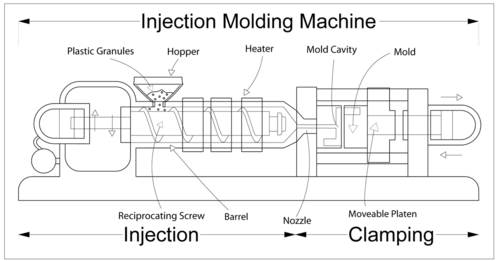
No matter how many shared formulas or calculations exist, plastic residence time should be determined by each individual manufacturer in order to find the ratio that works best for their specific product.
Using scientific molding practices, Rosti uses recorded data to monitor quality control and make necessary tweaks to tooling, improving overall part quality and avoiding the negative effects of incorrectly calculated plastic residence time.
Learn more about why calculating plastic residence time matters here.
Plastic variables require understanding the material to be molded and its preferred molding conditions. When a material’s key characteristics, behavior, and response to processing are understood, scientific molders can optimize the molding process to produce the most consistent parts possible.
What Aspects of Scientific Molding Are Used in Part Design and Tool Optimization?
Creating tools for prototype and production components is one of the most time-consuming and costly phases in new product development. To reduce manufacturing lead times and costs, prototyping and manufacturing processes have rapidly evolved through advances in scientific molding practices.
Scientific molding uses data to develop a process that delivers repeatable results with little to no variation. With resin expertise and testing, the dimensional and mechanical qualities of a molded part can be optimized. This is often achieved through the use of mold fill simulation and process control systems. Predictive insights, process validation, and thorough process documentation are essential to producing demanding parts.
Part Optimization
Design engineers should rely on past experience and expertise to optimize part design for unique applications. Scientific molding elements associated with part design can involve the use of the latest software and technology, including computer-aided engineering, mold flow, and prototype development to validate the part’s end use.
Design considerations may include:
- Radius, draft angle, sink marks, wall thickness, etc.
- Gate location
- Weld line locations
- Environmental / end-use factors
- Part aesthetics
Injection molders need to know how to avoid designing a part, building the tooling, and starting the molding process only to find out the design doesn’t work in production. Prototype tooling is an excellent way to validate and optimize critical mold and scientific molding variables.
Tool Optimization
Scientific molding practices can also be used to optimize tool design or improve poorly designed tools. It’s essential for injection molds to be evaluated for their performance in producing consistent, defect-free parts. Engineers should examine every aspect of a mold’s mechanical functionality using the correct material settings.
Testing can then be applied to check for any imbalances among cavities. When this analysis is complete, a gate seal study can be performed to gather data on where the gates seal completely and at what points in the mold cavities. Recording findings and making recommendations for adjustments in the process or tooling are essential for correcting potential defects.
The Influence of Quality Control in Scientific Molding
Quality control plays a crucial role in refining and perfecting the scientific molding process. The ability to harness and analyze recorded data means that adjustments can be made proactively, enhancing the overall quality of the molded parts. Once these quality benchmarks are achieved, scientific molding principles can significantly streamline the manufacturing flow. This increased efficiency is so substantial that there is less need for operator intervention and machinery oversight.
Leading-edge molders are now adopting groundbreaking “lights-out manufacturing” strategies. In these setups, advanced automated equipment handles operations that traditionally required human intervention, showcasing the potential of technology in modern manufacturing.
The ongoing advancements in scientific molding empower manufacturers with technology-driven processes, creating a strong competitive edge on a global scale.
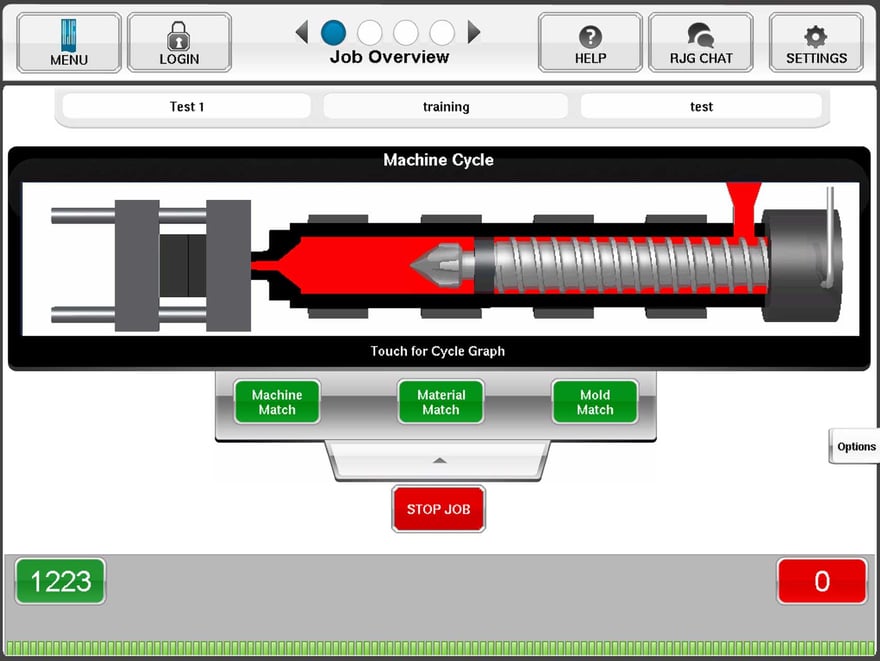
Additionally, RJG offers molders the ability to monitor essential parameters in real-time. By providing insights into critical variables, it enables manufacturers to maintain consistent quality, reduce scrap, and stabilize their molding processes. This system also helps monitor in-mold plastic pressure variations, ensuring that products are consistent in quality across different production runs.
RJG’s in-mold pressure sensors offer an additional layer of monitoring and control. Measuring and managing the pressures within the mold is critical for achieving consistent, high-quality parts.
Its ability to record historical processing data for every shot means that injection molders have a wealth of information at their disposal to analyze and improve their processes. This data-driven approach makes it possible to proactively respond to any quality inconsistencies, resulting in more predictable and reliable outcomes.
How Has Scientific Molding Transformed Injection Molding
The advancements in scientific molding practices have greatly impacted the plastics industry. Not only have they allowed businesses to improve in areas like cost and turnaround time, but they’ve also enabled plastic part producers to lower the chances of defects and increase the overall quality of products. Other examples include:
Competitive Advantage
When designing and producing complex injection molded parts, there are significant advantages to having a partner that uses state-of-the-art processes and is also easily accessible geographically. Many companies are recognizing the benefits of keeping their manufacturing partners close by. The ability to react quickly and make important changes on a tight timeline is a key factor that often comes up when choosing a manufacturer. When production facilities adopt advanced manufacturing processes, including lights-out functions, it shows their partners they are working and producing parts as efficiently as possible.
Faster Turnaround with Lower Cost
When manufacturing processes are set up and monitored in a smart, data-driven way, companies see their production capacities rise and orders are completed much more quickly. While not the best choice for every job, automated molding is ideal for projects that run at medium and high volumes—about 2,000 hours per year or more.
Additionally, the capacity, speed, and labor efficiencies created by scientific molding practices can be passed on to the customer—ultimately lowering overall product costs. When managed appropriately, the process also improves OEM production flexibility.
Highly Trained Workforce
When we talk about automation, lights-out manufacturing, and other scientific molding solutions provided by an injection molder, much of the focus is on the positive results of reducing human labor. While the process can streamline production and allow for fewer people to be involved, not all projects can be run solely by technology. State-of-the-art technology and processes require a highly trained and dedicated workforce that can make smart decisions and maintain equipment.
Protection for Intellectual Property
When product manufacturers depend on innovation and speed to market to stay competitive in their industry, offshoring parts of production can expose designs to patent infringement, counterfeiting, and more. Working with a reputable and knowledgeable partner that keeps everything from design, development, and production under one roof ensures that the manufacturer protects and retains all intellectual property, as well as the knowledge gained throughout the process.
Is It More Costly to Use an Injection Molder That Implements Scientific Molding Processes?
You can save money by partnering with a molder who uses scientific molding processes to intelligently design molds and validate parts. When molds are designed smartly, less material is used and defects are reduced—both of which contribute directly to lower costs.
Additionally, working with an injection molder who can identify opportunities for improvement during a design for manufacturing review will lead to significant savings. Finding issues early on—such as radius, draft angle, wall thickness, gate location, and other moldable features—eliminates financial and cosmetic problems down the line. In fact, as much as 80 percent of manufacturing costs can be determined by design decisions.
Why Choose Rosti For Your Next Scientific Molding Project?
Scientific molding is a systematic and comprehensive approach to creating the efficiency, cost structure, and production capabilities needed for a manufacturer to compete globally.
Implementing scientific molding practices has given Rosti the ability to provide both outstanding quality and cost savings to our customers. By using advanced technology and processes, we can produce parts more efficiently while reducing the number of quality checks needed to ensure good parts. Rosti’s highly trained and knowledgeable team gives our customers confidence that their products will be produced consistently from part one to part 2,000,000 and beyond.
Want to learn more about Rosti’s scientific molding practices? To hear about our approach or to discuss your next project, contact us today!