Environmental Sustainability in Injection Molding

At Rosti, sustainability is more than just a policy—it’s the foundation of how we design, manufacture, and deliver solutions.
As a global injection molder with over 80 years of experience, we help customers turn sustainable product concepts into reality.
Our goal is to be the preferred partner and trusted advisor for companies looking to reduce their environmental impact through design innovation, material selection, and responsible operations.
This guide explores the environmental challenges of plastics, the opportunities for circularity, and how Rosti’s sustainability strategy delivers measurable results across our global network of Innovation and Sustainability Centers in Europe, Asia, and North America.
What is the Environmental Impact of the Plastics Industry?
The plastics industry is essential to modern life but brings a significant environmental burden. In 2024, plastic production contributed millions of tons of CO₂e worldwide, with most emissions tied to raw material sourcing and end-of-life management. At Rosti, we’ve measured our own footprint and found that 73% of emissions come from materials, 14% from energy, and 12% from operations like travel and packaging.
This knowledge allows us to target reductions where they matter most. By reducing emissions through design optimization, material substitution, sourcing energy responsibly, and improving operations, we’re not just molding components—we’re helping shape a more sustainable plastics industry.
Global Sustainability Trends and the Plastics Industry
Worldwide, sustainability is transforming how plastics are produced, used, and recovered. Several key forces are shaping the industry’s future:
- Circular Economy Adoption – Governments, NGOs, and industry groups are pushing to move away from a “take-make-dispose” model. By 2040, circular approaches could reduce plastic leakage into oceans by 80%, according to the Pew Charitable Trusts.
- Policy and Regulation – New frameworks such as the EU Green Deal, the Single-Use Plastics Directive, and Extended Producer Responsibility (EPR) laws are requiring companies to design for recyclability, disclose carbon data, and take responsibility for products after use. In the U.S., disclosure rules from the SEC and state-level packaging mandates are emerging.
- Material Innovation – Advances in biopolymers, chemically recycled resins, and mass-balance approaches are providing alternatives to virgin fossil-based plastics. These solutions are still scaling but are expected to become mainstream in the next decade.
- Consumer Demand and Brand Commitments – Surveys consistently show that consumers prefer products with sustainable packaging and transparent supply chains. Major global brands have pledged ambitious targets—for example, making all packaging recyclable or compostable by 2025.
- Transparency and Digitalization – Technologies such as lifecycle assessments (LCAs), digital product passports, and supply chain traceability tools are helping companies measure and reduce environmental impact with greater accuracy.
These changes mean sustainability is no longer optional—it’s becoming the baseline expectation in the plastics industry.
Companies like Rosti are a part of this global shift, working with customers to keep up with these trends. By validating recycled and renewable materials, testing designs for recyclability, and providing CO₂ data to drive decisions, we’re aligning our practices with the same forces driving progress across the industry.
Why is Sustainability Important in Plastic Injection Molding?
Plastic injection molding is one of the most widely used manufacturing processes in the world, making everything from medical devices and food packaging to automotive and consumer goods. Because of its scale, it’s also a crucial tool for improving sustainability.
Why injection molding matters:
- Design determines impact. Studies show that over 80% of a product’s CO₂ footprint is determined at the design stage. Decisions about wall thickness, geometry, and assembly complexity set long-term material use, energy demand, and recyclability.
- Material is destiny. The resin type used has a direct impact on carbon footprint. Switching from virgin plastics to recycled or biobased alternatives can slash emissions—for example, replacing virgin ABS with PCR ABS can cut CO₂ by more than 50%.
- Scale amplifies outcomes. Even a small efficiency gain, like reducing weight by 5%, can add up to major carbon and cost savings when multiplied over millions of molded parts.
Industry-wide implications:
This means injection molders have a unique responsibility—and opportunity—to contribute to global sustainability goals. The ability to design for recyclability, validate new materials, and optimize production efficiency impacts not only direct customers but also entire downstream industries.
Rosti’s role in the bigger picture:

As part of this global shift, Rosti:
- Validates and qualifies recycled and renewable materials through our Innovation Centers in Poland, China, and the U.S.
- Incorporates design for recyclability into customer projects to ensure products fit into circular systems.
- Uses lifecycle assessments and CO₂e data to help customers make informed decisions, rather than relying on assumptions.
By combining these efforts, injection molding moves beyond simply making parts—it becomes a driver of measurable, system-wide sustainability outcomes.
Rosti’s Sustainability Strategy for Plastic Injection Molding
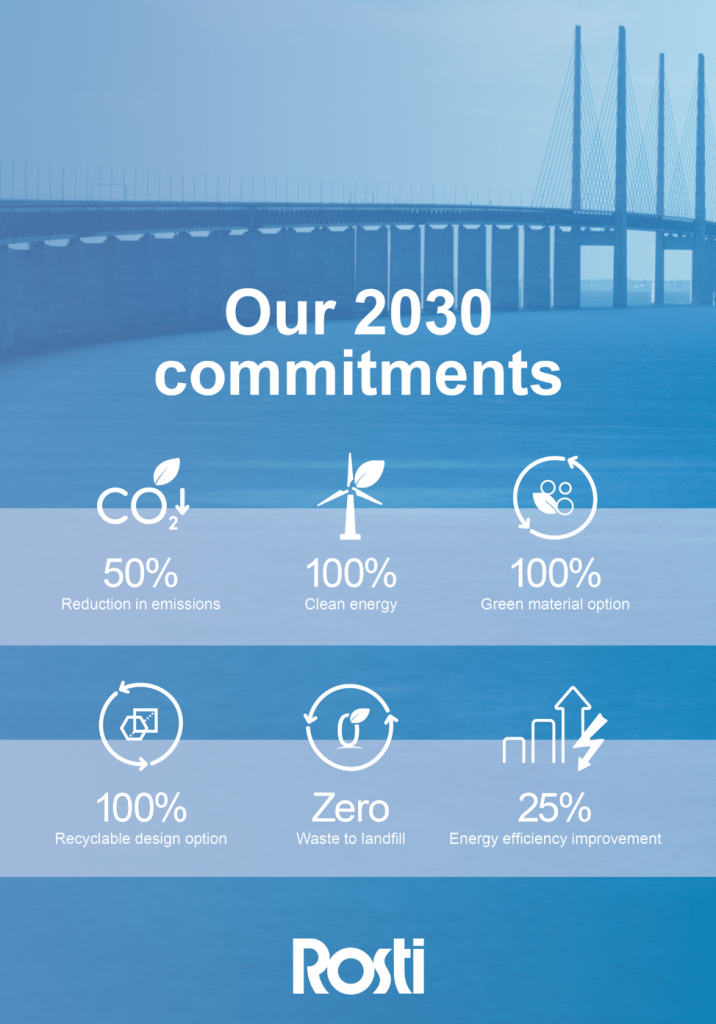
Rosti’s 2030 roadmap is anchored in six commitments:
Clean Energy – 100% clean energy across sites.
- 2025: 86% clean energy (85% renewable, 1% nuclear)
- Transitioned Sweden operations from nuclear to 100% renewable.
Emission Reduction – Cut Scope 1 & 2 by 50%.
- 2024: Achieved 5% reduction from 2023 baseline
- Biggest lever: material and design collaboration with customers.
Green Materials – Always offer renewable/recycled alternatives.
- Database of 70+ green resins, 19 qualified, 8 in mass production
- Applications: food packaging (bio-based PE), appliances (PCR ABS), EV charging (mass-balanced PC).
Sustainable/Recyclable Design – Recyclable option for every customer.
- Life Cycle Analysis tools prove design impact.
Lightweighting and simplification reduce footprint by up to 20–30%.
Energy Efficiency – 25% improvement by 2030.
- 2024 delivered 4.9% improvement through waste removal, process optimization, and intelligent powering. Site Energy Leaders and Communities of Practice drive continuous progress.
Zero Waste to Landfill – All sites by 2030.
- 2023 baseline: 14% waste to landfill.
- Four sites have already achieved Zero Waste.
- Roadmap: 6 sites (2025), 8 sites (2027), 11 sites (2030).
These commitments ensure 100% of emissions sources are addressed, giving customers confidence that Rosti is a partner for the long term.
Pathways to Reducing Customers’ Carbon Footprint

Reducing the carbon footprint of plastics is one of the industry’s biggest challenges. Studies consistently show that most emissions come from three sources: materials, energy, and design choices, with operational factors making up the rest. To truly have an impact, manufacturers need to take action across all of these areas—not just focus on one.
Key drivers for emissions reduction across the industry:
- Product Design – Optimizing shape, wall thickness, and part complexity can deliver immediate savings. Even modest changes, like making packaging 10% lighter, can reduce both resin consumption and transportation emissions by double digits.
- Material Selection and Validation – Switching from virgin to recycled or bio-based polymers often creates the greatest single impact on lifecycle emissions. Industry databases of qualified resins are expanding, but ongoing testing and performance validation remain critical for adoption.
- Energy Sourcing and Efficiency – Transitioning from fossil-based electricity to renewables is the most direct way to reduce operational emissions. Paired with smarter factory systems, this lowers the energy intensity of molding.
- Operational Practices – From redesigning packaging and logistics to eliminating waste on the production floor, operational tweaks can add up across global supply chains.
Rosti’s contributions within this framework:
- Design: We work with customers on lightweighting and modularity, using lifecycle assessments to demonstrate potential CO₂ savings.
- Materials: Our Innovation Centers in Poland, China, and the U.S. rigorously test and qualify PCR and biobased resins, with more than 70 materials in our database and 19 already validated for production.
- Energy: In 2024, Rosti used 77 GWh of energy, 56% of which came from clean sources. Several sites already run on 100% renewables, bringing us closer to our 2030 clean-energy goal.
- Operations: We are piloting initiatives like including carbon footprint estimates alongside price in customer quotes, helping procurement teams make sustainability a part of their purchasing decisions.
By aligning these actions with the same drivers recognized throughout the plastics industry, Rosti ensures our customers can see—and measure—real reductions in the footprint of their products.
Collaborative Partnership for Sustainability in Injection Molding
Our biggest impact happens with customers, not just for them. Collaboration means:
- Running design workshops to explore low-carbon options.
- Providing carbon footprint comparisons between material/design alternatives.
- Sharing insights from cross-industry projects, so customers benefit from proven solutions used elsewhere.
- Acting as a preferred supplier for sustainable design, not just molding.

Example: For a leading appliance brand, Rosti validated PCR PP (95%) that is now in mass production, showing recyclability while maintaining performance.
What is Sustainable Injection Molding Design?

Across the plastics industry, design is consistently recognized as the single most powerful tool for reducing environmental impact. As mentioned above, research shows that over 80% of a product’s carbon footprint is determined at the design stage, before any part is molded. Decisions made at this stage—regarding weight, geometry, material, and assembly—can lock in decades of emissions or unlock opportunities for circularity.
Best practices emerging across the industry include:
- Material Reduction – Using advanced engineering methods such as finite element analysis to minimize wall thickness and weight without sacrificing strength. Lighter parts not only use less resin but also reduce transportation emissions.
- Simplification – Designing components with fewer parts or connection points to make recycling and disassembly at end-of-life easier.
- Recyclability by Design – Choosing polymers and additives that are compatible with current recycling streams and avoiding unnecessary multi-material combinations.
- Circularity Strategies – Developing products that can be reused, remanufactured, or used in closed-loop systems, decreasing the need for new plastic.
- Lifecycle Analysis (LCA) – Measuring environmental impact from raw material extraction through production, use, and end-of-life, so that design choices are based on data instead of assumptions.
How Rosti contributes:
Rosti incorporates these principles in customer projects by offering lifecycle analysis, validating new materials, and designing for recyclability. Our Sustainability and Innovation Centers in Europe, Asia, and North America provide the tools to simulate, test, and prove sustainability benefits before production starts.
By following these globally recognized design strategies, injection molding can go from contributing to environmental challenges to driving measurable, system-wide sustainability improvements.
Recycling of Plastic Scrap in Injection Molding
The goal is to achieve zero waste to landfill, and scrap recycling is a key tool:
- Recovery & Reuse: Reintroducing in-process scrap into new parts without sacrificing quality.
- Circular Partnerships: Connecting customers with recyclers to close the loop.
- Innovation in Waste Handling: Separating streams, monitoring yields, and maximizing recovery.

Operation Clean Sweep strengthens this by preventing resin pellet loss—installing steel mesh screens on drains, training employees, and tracking compliance.
EU and U.S. Sustainability Standards Impacting Plastics Manufacturing and Injection Molding
Throughout the plastics industry, regulatory frameworks are changing quickly, and manufacturers are under more pressure to prove sustainability in both product design and operations. These rules are changing how companies source materials, disclose emissions, and handle products at the end of their life.
Key regulatory drivers include:
- EU Green Deal & Corporate Sustainability Reporting Directive (CSRD): Companies doing business in Europe must provide transparent carbon disclosures and include eco-design principles in their products.
- Microplastics Regulations: New requirements, such as mandatory washing machine filters in the EU, are intended to reduce the release of microplastics into the environment.
- Extended Producer Responsibility (EPR): Packaging and product manufacturers are increasingly responsible for collection, recycling, and disposal once items leave their facilities.
- U.S. SEC Climate Disclosure Rules: Public companies are preparing to report Scope 1–3 emissions, increasing the need for verifiable data across the supply chain.
For manufacturers, these frameworks mark an important shift: sustainability is no longer optional—it’s a compliance requirement.
Rosti takes regulatory requirements into account when validating materials and designing parts, making sure they’re compatible with recycling systems, supported by CO₂e data, and up to date with changing standards. By factoring these regulations in from the design stage, we help customers not only meet current rules but also prepare for future ones.
Education and Training for Responsible Handling of Plastic Resins
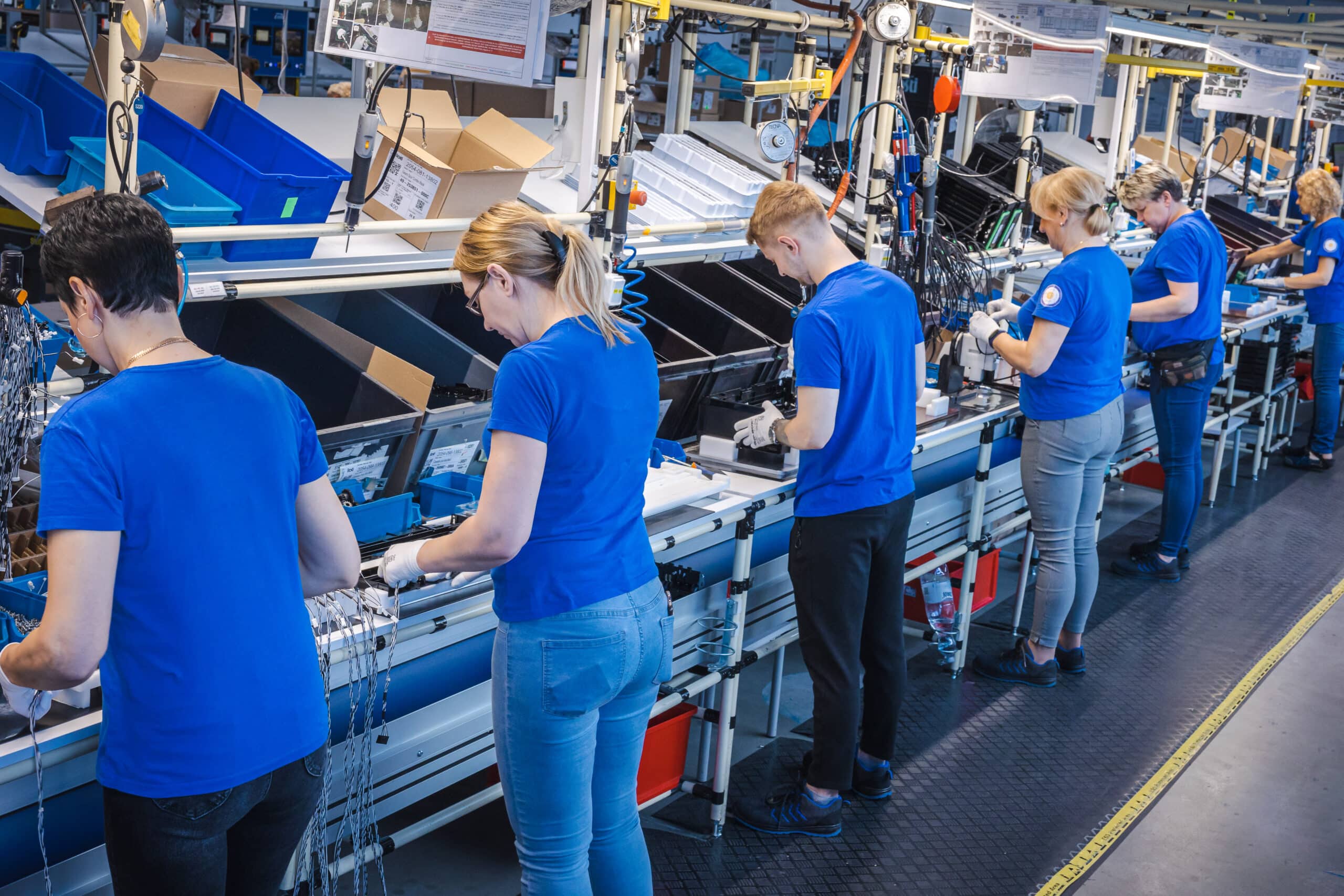
Technology alone isn’t enough—it’s people who make sustainability real. Rosti invests in:
- Employee Training: Including resin handling, energy efficiency, and CO₂ reporting.
- Contractor Education: Making sure suppliers and partners meet our standards.
- Communities of Practice: Cross-site groups focused on energy efficiency, design for recyclability, and emissions reduction
This learning culture ensures sustainability is integrated into every role, from engineers to operators.
Positive Impact on Communities and the Environment
Across industries, sustainability is increasingly recognized as extending beyond emissions and energy use. Companies are expected to contribute to the well-being of the communities where they operate, building trust and fostering shared responsibility for environmental and social outcomes.
Common approaches include:
- Education and Awareness – Partnering with schools, universities, and NGOs to promote environmental literacy and inspire future innovators.
- Local Initiatives – Supporting community programs focused on waste reduction, recycling, and circular economy practices at a grassroots level.
- Employee Engagement – Encouraging staff to participate in activities such as clean-up efforts, volunteer work, and sustainability awareness campaigns that strengthen local connections.
How Rosti contributes to this broader movement:
Rosti partners with regional schools and NGOs to raise awareness about sustainable practices, supports recycling and waste-reduction programs in our communities, and involves employees in initiatives that reinforce our culture of responsibility. These efforts complement our operational goals and reflect the broader expectation that manufacturers should play a positive role not only in reducing their environmental footprint but also in supporting the communities where they work and live.
Environmental Initiatives Across Rosti’s Global Sites

Rosti’s global sites serve as test beds for sustainability innovation:
- Poland, China, USA Innovation Centers: Testing and validating >70 green resins.
- Sweden (GIS): Shifted from nuclear to 100% renewable energy in 2024.
- Germany (Dresden): Pioneering Zero Waste to Landfill with successful pilot projects.
- Malaysia & Turkey: Expanding local recycling partnerships to handle regional scrap streams.
Each site has Sustainability Champions and Energy Leaders who drive continuous progress and share best practices globally
With clear commitments, measurable results, and deep expertise, Rosti is redefining what it means to be a global injection molder.
- We measure.
- We act.
We partner.
Rosti stands as a leader in sustainability in the plastic injection molding industry. Our dedication to environmental stewardship and our role as a trusted advisor in sustainable practices are at the core of our operations. We are committed to delivering high-quality, innovative solutions that meet and exceed industry sustainability standards. By integrating advanced technologies, sustainable materials, and responsible practices, Rosti ensures we contribute positively to our environment and communities while leading the way in sustainable manufacturing.
Together, we’re not just making parts. We’re bringing sustainability from concept to reality—for our customers, our communities, and our planet.
See how Rosti is helping shape a more sustainable future for plastics manufacturing—one design, one material, and one partnership at a time