Metal to Plastic Conversion Guide
Comprehensive Guide to Metal-to-Plastic Conversion
This guide will help you understand the metal-to-plastic conversion process, its benefits, and how to work with your injection molder on all aspects of design for manufacturability.
What is metal-to-plastic conversion?
Metal-to-plastic conversion is just what it sounds like: It’s the process of taking parts originally made from metal and reproducing or re-engineering them to be made out of plastic.
Plastic components—and the injection molding process that made them so dynamic—were first developed in the late 19th century. These parts and processes became extremely popular during World War II, as the war created a huge, urgent need for affordable, reliable, and mass-produced products. Injection-molded plastic parts replaced many metal parts as a result, and the benefits those manufacturers experienced are still increasing today as plastic technology continues to evolve.
As engineering-grade resins and plastic materials were improved in the 1950s, many parts that were previously made from metal were replaced by injection-molded parts.
“Today, on average, companies report an overall cost savings of 25-50% by converting to plastic parts, yet some manufacturers have resisted making the change.”
Why are manufacturers hesitant to convert metal parts to plastic parts?
From perceived design challenges and concerns about strength, to resistance to change—there are many reasons why some manufacturers haven’t yet considered the metal-to-plastic conversion process. When product manufacturers haven’t explored replacing metal with plastic, it’s often because they’re unaware of the complex qualities plastic offers. Others simply prefer the predictability of using the same material as in the part’s original design, rather than considering plastic alternatives that could match or even exceed the performance of the current material. Fortunately, nearly any barrier can be overcome with the right expertise, and the overwhelming benefits of plastic conversion can be realized by almost any OEM or product manufacturer that uses metal parts.
“If you are beginning to explore the metal to plastic conversion process, the issues and options may initially seem overwhelming.”
Throughout this post, we’ll answer the most frequently asked questions and provide the essential information you need for a successful metal-to-plastic conversion, including:
- What are the advantages of metal-to-plastic conversion?
- What attributes can be achieved with plastic?
- What are the steps in metal-to-plastic conversion?
- What questions should be considered before switching to plastic components?
- What role does design for manufacturing (DFM) play in metal-to-plastic conversion?
- What plastic materials should be used to convert metal parts?
- Which industries benefit most from metal-to-plastic conversion?
- What are the costs involved in converting parts to plastic?
- Review of a metal-to-plastic case study
- Why is Rosti the right partner for your metal-to-plastic conversion project?
From cost savings and product design improvements to streamlining your manufacturing process, there are many reasons to convert metal parts to plastic. Keep reading to discover more—from the key attributes of plastic components to a case study with real-world details.
What are the advantages of metal-to-plastic conversion?
If the metal parts you’re currently using are working well for you, converting may not seem like a top priority. However, there are significant advantages to exploring metal-to-plastic conversion. Here are six ways a metal-to-plastic conversion can impact nearly every part of your business.
- Design Quality and Freedom: Plastic can be stronger, lighter, and offer more aesthetic options than metal. As a production material, plastic blends can be tailored to meet specific environmental, structural, and operational needs. The right design and material choice can create a plastic component that outperforms metal. Reinforcing features like ribs and gussets can be molded directly into plastic to boost strength and durability, while also reducing production time. When additives are blended into plastic, they can enhance specific properties and result in a highly customized material. These additives improve plastic performance in impact and tensile strength, friction, scratch and flame resistance. Additives make plastics lighter, safer for food distribution and medical supply use, and more eco-friendly. The qualities and freedom provided by plastic are ideal for applications in plumbing, appliances, filtration, and engine components where preventing leaks is critical. Plus, modern plastic injection molding produces parts with highly precise tolerances, ready for use without secondary machining. A final key design consideration is looks. Plastic component design features include:
- With the latest software and technology, injection molders can test a range of materials during the design phase—allowing for predictive adjustments and better performance outcomes.
- Ability to integrate complex shapes and geometries, as well as consolidate parts.
- Weight reduction and enhanced structural limits.
- Since plastics come in a wide array of colors and can offer surface finishes and textures that are often more attractive than metals, plastic injection-molded parts usually surpass their metal counterparts. In addition, plastic parts make it easier to add decoration or labeling directly in the mold, further improving their visual appeal.
- These are just a few of the features that help unlock new design and performance possibilities for your products.
- Cost Savings: Switching from metal to plastic parts results in an average overall cost savings of 25-50%, with these savings found in many areas, including manufacturing, lead times, and logistics.
- A Faster Process: A metal to plastic conversion allows for much faster manufacturing cycles and higher throughput. The accuracy of injection molding also removes the need for time-consuming, multi-step processes like grinding and reworking your final parts.
- Greater Manufacturing Efficiency: With the aesthetic advantages mentioned above, you can add final colors and finish options directly into the molding process, eliminating the need for separate painting, laser etching, and other finishing steps. Additional features include:
- Freedom from maintenance – Unlike metal parts, plastic components don’t require coating or painting for protection, making them virtually maintenance-free.
- Longer tooling life – While tooling costs for metal and plastic parts are usually quite similar, the manufacturing rate for metals is often slower. Another key point: the tooling life for plastic parts is typically ten times longer than the life expectancy of a cast aluminum tool.
- Easier changes – It’s basically impossible to switch to a less expensive metal without a complete redesign. However, resin costs don’t usually affect the mold, offering greater flexibility with material quality and cost.
- Plastic components can be produced more rapidly than their metal counterparts by using cyclical and highly repeatable processes with fewer steps overall. Unlike metal production, plastic part manufacturing is often automated, mechanized, and requires minimal supervision.
- Plastic injection molds can eliminate the need for secondary assembly by producing complex and geometrically varied components in a single step. Metal fabrication after production often requires welding several pieces together, attaching additional parts like bearings, and applying protective coatings. Plastic injection molds produce a single, ready-to-use component, able to combine multiple design pieces, integrate supporting elements, and blend protective coatings directly into the material.
- Improved Part Performance: Compared to metal parts, plastic parts are usually up to 50% lighter and offer performance features that metals just can’t match, including:
- Reduced size, weight, and thickness – When you consider the tight space limitations involved in making small appliances, engines, medical devices, and tech equipment, the fact that injection molded parts can be made smaller, thinner, and lighter than metal parts is a real advantage.
- Increased strength and durability – Today’s engineered plastics can handle significant stress, and plastic parts made from them hold tight tolerances, making them just as tough and reliable as metal parts.
- Resistance to impact, corrosion, and heat – With over 25,000 engineered plastic materials available, including new blends and hybrids, injection molded parts can be tailored to meet very specific performance demands. Some blends are perfect for applications needing impact absorption and resistance to corrosive elements and heat.
- Material Costs: Plastic is usually a much more affordable material than sheet metal, with a much steadier market price. The injection molding process is also highly repeatable and generates less scrap. Plus, because of lower melt temperatures and eliminating extra machining steps, injection molding takes less energy than producing metal parts.
- Packaging and Shipping Costs: The lightweight nature of plastic not only provides obvious benefits in engineering and performance, but can also lead to substantial savings in your packaging, freight, and storage costs.
What are the MAIN attributes that can be achieved with plastic?
Besides the design freedom and cost savings of switching from metal to plastic parts, plastic offers many advantageous features that metal can’t provide. There are more than 25,000 engineered plastic materials available today, and they can be customized for nearly any manufacturing need. Plus, new custom blends can be created to meet nearly any specific performance requirement you have. Here are a few ways these customizable plastics can help your products perform better:
Weight: Plastic parts are typically at least 50% lighter than comparable metal parts. They can also be made smaller and thinner, which is extremely beneficial when manufacturing engines, appliances, auto parts, or any other product where space is limited.
Strength: Modern injection molded plastics are just as reliable as metal parts when it comes to handling stress, and their tensile strength can actually surpass that of metal parts. Also, by using a single molded plastic piece instead of multiple metal components, there’s no need for welding, which can weaken overall strength at the weld areas.
Maintenance: Compared to metal, plastic parts need almost no maintenance, since they don’t require any initial or periodic coating or painting for protection. Plus, they’re better able to withstand impact, movement, heat, and corrosive elements than many metal parts.
Innovation: With the flexibility that plastic part manufacturing gives you, your engineers can easily solve complex challenges. Whether you’re dealing with harsh environments, complicated shapes and processes, structural or weight limitations, or just product aesthetics, moving to plastic gives you the freedom to find creative and effective solutions.
What are the steps for converting from metal to plastic?
One of the most important first steps in a metal-to-plastic conversion project is fully understanding the scope of what you want to achieve. While there are many cost-saving benefits, such as eliminating manufacturing steps, consolidating components, reducing material usage, and cutting down part weight, there’s also an opportunity to add value by incorporating text, surface finishes, or features that might be hard to achieve through metal fabrication. Scheduling a visit or online meeting with an experienced injection molder is a great way to identify both opportunities and any potential challenges.
You can expect a step-by-step process similar to this:
- Closely review part design intent and part identification: What makes a metal part a good candidate to be replaced by plastic?
- High-volume production parts
- Parts with complex shapes, assemblies, or secondary operations that can be eliminated or reduced
- Parts that require lower weight and more versatile design options
- Define part requirements: Support a successful production run by determining key requirements at the outset, such as:
- Environmental exposures including temperature, ultraviolet (UV), chemicals, and moisture
- Structural performance needs including strength, stiffness, and impact resistance
- Review any special considerations: Are there specific requirements or attributes the part must meet, such as:
- Regulatory requirements
- Unique characteristics (wear, conductivity, color, flame retardancy)
These considerations will influence the type of plastic material selected and how the plastic material is processed.
- Conduct a cost analysis: Producing plastic components can significantly lower costs compared to metals when considering all factors, such as reducing:
- Raw material costs and density
- Tooling and processing
- Cycle times
- Assembly steps and labor
- Secondary operations
- Review project design and support needs: It’s important to work through each step to fully understand the feasibility of converting from metal to plastic. Rosti’s process includes reviewing 3D models of the target component(s) and systems. This allows Rosti engineers to participate in design for manufacturing (DFM) discussions about molding, function, assembly, and sustainability. This is an iterative process as the design continues to evolve and mature.
- Assess prototype molding needs and part validation: Rosti can help with material molding trials to ensure the part is ready for production. This process can include:
- Prototyping
- Reviews of parts, tooling, process, and design
- SOLIDWORKS simulation and design validation
- Transition to plastic component production: Production molding processes should be optimized to ensure a smooth transition from part validation to production runs. Interested in stepping back to learn more about the injection molding process from design to production? View and download our comprehensive
“Metal-to-plastic conversions often net customers a significant per-unit cost reduction, so it is prudent to take the time to verify the merits of the final design state.”
What questions should you consider before converting to plastic components?
As manufacturers consider transitioning from metal to plastic and evaluate each part of the process, many questions come up—from qualifying different material properties to design changes, part validation, and more. Don’t hesitate to ask these questions as you move through the process, and make sure you keep your project goals front and center to achieve a successful outcome. Are you trying to reduce part weight? Improve quality or consistency? Are the functional and visual attributes of your plastic part important, and how will the new material affect them? Asking these questions early on will help keep your project on track.
It’s recommended to thoroughly work through the following questions, along with any others that come up during the process, with a trusted and experienced injection molder who can guide you through every aspect of your unique project.
What features and/or quality requirements make this part challenging for tooling or injection molding, and how easily will the design transfer?
With optimized design, most components can be injection molded. However, it’s crucial to balance what can physically be molded with which materials will deliver the best performance for the part. Quality requirements, the intended use of the part, and potential exposure to different environmental conditions should all be discussed with your molding partner.
Specifically, designing a plastic part for manufacturability (DFM) involves key factors touching on aspects of plastic part design, tooling, material selection, and production. When plastic part designers take a collaborative approach and involve mold makers early in the design process, it brings many advantages.
In fact, research has shown that 70–80 percent of the cost of a new product depends on design, and manufacturers now rank plastics design consultation among the top factors in cutting overall manufacturing costs. The sharp divide that once existed between development and production is changing, with manufacturers now turning to injection molding design specialists for input much earlier than in the past.
We’ll dig a bit deeper into this question in the DFM section below, but some key elements of design optimization and features that should be considered early in design transfer or development include:
-
- Draft
- Wall thickness
- Radii on edges
- Ribs
- Draft angle
- Finishing elements
Why is it so important to focus on wall thickness in a plastic part?
Uniform wall thickness is crucial in designing an injection molded part. Non-uniform wall thickness leads to dimensional control issues, warping, and other part integrity problems as the molten material cools.
If areas of different thickness are necessary, design engineers recommend making the transitions as smooth as possible to allow the material to flow more evenly throughout the cavity. This helps ensure the entire mold is fully filled and ultimately decreases the risk of defects. Rounding or tapering the transitions in wall thickness will reduce molded-in stresses and stress concentrations that come from sudden changes in thickness.
Choosing the correct wall thickness for your part can have a significant impact on manufacturing cost and production speed. The minimum wall thickness that can be used depends on the part’s size and geometry, structural needs, and the flow characteristics of the resin. Most injection molded parts have wall thickness between 2mm – 4mm (0.080″ – 0.160″). Thin wall injection molding can create walls as thin as 0.5mm (0.020″). Work with your injection molder and design engineer to ensure the appropriate wall thickness is used for your part’s design and chosen material.
Where is the optimum location to gate this part?
While high-quality injection molded plastic parts should have uniform wall thickness, sometimes the intended use of the part requires both thick and thin sections. If that’s the case for your metal to plastic conversion project, it’s recommended to gate into the thickest section, and avoid gating into thin sections. Plastics Technology explains that failing to do so can result in voids or sink marks. Packing pressure is used to fully compress the plastic as it cools and shrinks inside the mold. Adjusting the packing pressure controls how much the melt compresses along its flow path.
The best packing happens at the gate, and you’ll need the best packing at thick sections to avoid defects. Gate location also impacts the orientation of the polymer molecules and the part’s shrinkage. Shrinkage is the contraction of the part as it cools after injection. All materials have different shrink rates depending on resin family (amorphous vs. crystalline), mold design, and processing conditions. We’ll cover more about materials and their properties below.
Besides considering the best gate location, it’s important to include proper draft angles or tapers on product features like walls, ribs, posts, and bosses that are parallel to the direction the part is ejected from the mold, making removal easier.
Want to learn more about how shrinkage affects the contraction of a molded part as it cools after injection? Download Rosti’s Plastic Injection Molding Material Shrink Rate Guide.
Are there additional materials or processes that we could consider to bring additional value to the part?
When standard resins can’t deliver the desired material performance, custom material blends can be developed to enhance the properties of several resins. Reinforcing plastics with additives helps build strength into parts and adds stiffness, which can reduce warping and shrinkage. Additives like glass or carbon fibers are often used to boost part performance and improve flow, ejection, and dispersion.
When additives are mixed directly into plastic, they target specific properties and create a specialized material. These additives can improve plastics in areas such as impact and tensile strength, resistance to friction, scratches, and flames. Additives also make plastics lighter, safer for food distribution and medical use, and more environmentally friendly.
In certain situations, high-temperature and specialty resins may be selected. These materials cost more initially compared to commodity-grade resins, but they can provide significant durability and enhanced performance, lowering total production costs in the long run.
Some features that add value go beyond just injection molding, further improving your part’s functionality. Secondary processes, assemblies, and post-molding services can help streamline your workflow and drive further efficiency and cost savings. These services may include hot stamping, inserting, heat staking, and more.
What testing can be facilitated to validate our decision and the performance of a part?
Injection molders who use innovative and scientific manufacturing approaches consistently produce better results.
Plastic Prototyping: Rosti ensures injection mold tools are built to specification, giving customers total confidence that their prototype part is ready to be tested, marketed, or even used for short-term or low-volume production. This is achieved through collaboration with plastic prototype molding partners to create custom tools and components with a production-focused mindset. Fast turnaround and cost-effective pricing make it possible for customers to order prototype components that closely match the design of a production part.
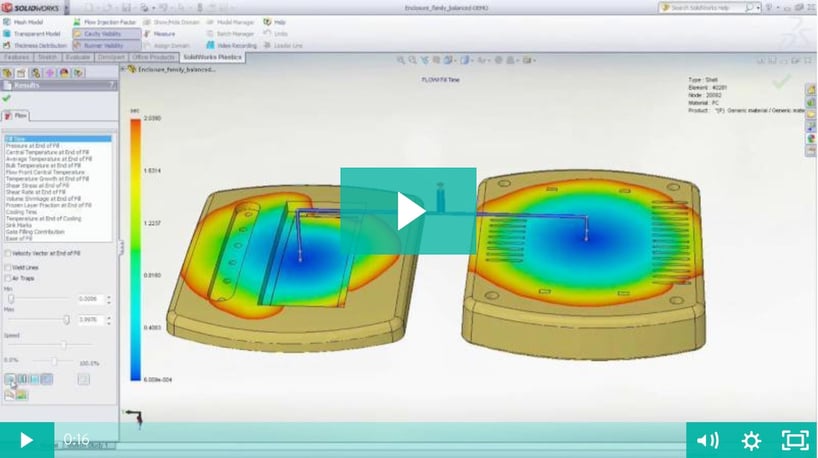
SOLIDWORKS: Rosti continues to expand the resources it offers to support its engineers with plastic part design, injection mold design, and material flow simulation. With the SOLIDWORKS® Plastics Premium predictive II simulation software, Rosti’s engineering team can provide deeper predictive insight into plastic component design early on, cutting overall time to market by streamlining new product development. SolidWorks Plastics Premium is an early-stage design validation tool offering insights into plastic part geometry that would be hard, costly, or impossible to verify using traditional methods.
Plastic Residence Time: Calculating the exact plastic residence time for your specific process will improve the material’s performance and the end product quality.
Material is quickly affected by both time and exposure to temperature. According to the Injection Molding Handbook, some polymers are “hydrolytically degradable and may suffer undesirable depolymerization effects due to chemical reaction of moisture with the polymer prior to devolatilization.” Knowing the residence time of your material helps you determine the ideal time and temperature for your process.
Part Validation: Part validation is essential since designing for molding can be quite different than designing for metal forming. This means the part design will be new and different. What approach will you use to validate and make sure a new design meets your requirements? Rosti engineers recommend building a single cavity pilot or prototype tool in steel to validate all assumptions. This step not only validates the part design, but it also verifies the tooling and process conditions that will deliver success.
“Compiling and walking through a robust list of questions with your injection molder will help you evaluate all of the challenges and benefits associated with a metal to plastic conversion project. Working through these questions will help you decide if the process will be first and foremost, attainable, and advantageous from a cost and benefits standpoint. Focusing on the functionality of your part and getting a knowledgeable injection molder involved early will help you answer not only these questions but many others along the way.”
What role does design for manufacturing (DFM) play in metal to plastic conversion?
The design for manufacturing process (DFM) is a key part of any metal-to-plastic conversion. After the project scope is defined, DFM creates a framework for injection molding engineers to work together on part design for tooling, molding, function, and sustainability. Rosti has extensive experience suggesting design changes to make parts lighter and stronger, with a sharp focus on plastic design details like nominal wall thickness, draft angles, intersecting ribs, assembly features, and more. Rosti’s design engineers typically mold tight tolerance features, ensuring better control and the ability to achieve extremely high levels of process repeatability. The ultimate goal is to make sure a plastic component can be molded with optimal features and quality throughout the program’s lifespan.
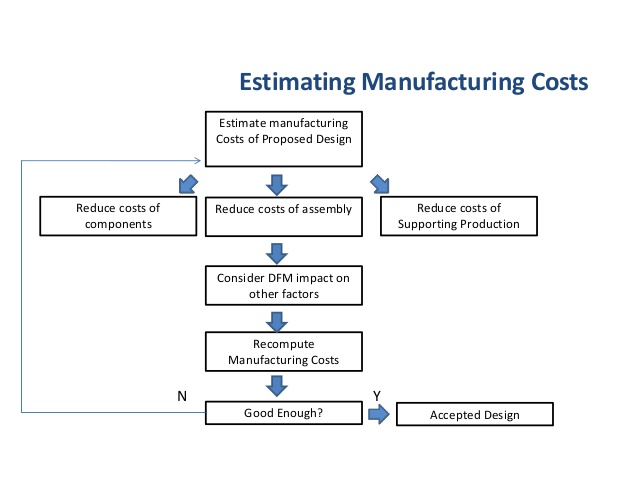
Design for Manufacturing (DFM) means designing a product to optimize manufacturing efficiency for the equipment or process used during production, so you achieve the lowest possible unit cost at the highest possible quality. The main reason to integrate DFM into plastic injection molded product manufacturing is that, as mentioned above, 70 – 80 percent of manufacturing costs are determined by design decisions.
DFM calls for selecting the right manufacturing process for a part or product, investing in various technologies, applying state-of-the-art design principles, and choosing the best materials with the ideal properties to deliver the consistency and quality your customers and prospects expect.
It’s also a key part of reducing manufacturing and assembly costs. The basics are outlined below, but a complete DFM plan should be a focused engineering document that finds just the right balance between quality and cost.
13 DFM Guidelines for Reducing the Costs and Challenges Associated with Manufacturing a Plastic Component
- Start DFM early in the design process, before tooling begins
- Bring together engineers, designers, the contract manufacturer, the mold builder, and the material supplier to challenge the design
- Design to reduce the total number of parts
- Use a modular design
- Limit the number of machine operations required
- Use standard components
- Design parts to be multifunctional
- Design parts for reuse
- Design for ease of fabrication
- Avoid separate fasteners
- Minimize assembly directions
- Maximize compliance
- Minimize handling and think about how your design affects the packaging and shipping of parts
“To learn more about the role DFM plays in injection molding, download Rosti’s Comprehensive Guide to Design for Manufacturing in Injection Molding.”
What plastic materials are used for converting metal to plastic components?
Is plastic really as tough and durable as steel? Many manufacturers aren’t aware that, when properly designed and engineered, plastics can often match the tight tolerances of metal parts—with even better performance in some cases. Plastic materials can be expertly formulated into high-performance blends that exceed performance standards for strength, flexibility, temperature, corrosion resistance, and more.
for your unique application can take time, and needs to involve an experienced injection molder who can leverage strategic relationships with resin experts to thoroughly review your project and the intended end use of the part. Rosti molds over 150 different resins each year and specializes in the following:
- PPS (Polyphenylene Sulfide)
- PPSU (Polyphenylsulfone)
- PSU (Polysulfone)
- Acetal
- PPO (Polyphenylene Oxide)
- TPV (Thermoplastic Vulcanizates)
- TPE (Thermoplastic Elastomer)
- PP (Polypropylene)
- HDPE (High-Density Polyethylene)
- LDPE (Low-Density Polyethylene)
- High-temperature resins
- Highly-filled resins (glass, mineral, talc)
- All engineering-grade Nylons
According to the American Society of Mechanical Engineers, one of the biggest advantages of plastics is the availability of over 25,000 engineered materials for manufacturing applications. Key considerations for types of plastic include:
- Crystalline vs. amorphous: Resins used in injection molding are made up of structures defined by crystallinity—or how the polymer molecules are packed together. Crystalline structures are generally very ordered, which gives the material strength and rigidity. Amorphous polymers are the opposite.
- Additives: Additives can impact strength, stiffness, temperature performance, appearance, packaging requirements, and cost.
- Carbon and stainless steel fillers enhance conductive and/or shielding properties.
- Lubricant fillers improve wear and friction properties.
- Mineral fillers improve electrical performance, give a weighted feel, enhance sound dampening, increase specific gravity, and improve dimensional stability.
- Impact modifiers improve toughness.
When considering the intended end use of an injection molded part, understanding key characteristics is essential to picking the best plastic material. Review these main differences among some of the most commonly used resins.
ABS (acrylonitrile butadiene styrene) is a widely used injection molding material that can be easily sourced and molded at an affordable price point. It’s a strong, tough plastic that offers good impact resistance, is easy to machine, and meets many aesthetic requirements. However, ABS is not ideal for parts exposed to sustained intense heat, as it can warp or melt above or around 200 degrees Fahrenheit.
Polycarbonates are a premium class of thermoplastics that are easy to mold and often increase shatter resistance. Naturally transparent, polycarbonate is perfect for high-strength, glass-like applications (such as safety goggles, medical lab uses, and more). Polycarbonate is not suitable for applications needing more flexibility or specific colors for appearance.
Glass-filled nylon is a reinforced thermoplastic where glass fibers are added to nylon resin for extra strength and heat resistance. This resin is also more non-conductive to electricity than many others, but despite its high melting point, it is more prone to burning than other materials.
Polypropylene is a flexible thermoplastic suitable for both industrial and consumer uses. It’s known for being very pliable, allowing it to be manipulated in many ways without losing its original form. Polypropylene is also resistant to solvents, chemicals, and UV rays.
Acetal is well-known for great friction resistance and is a very rigid material. It can be easily colored or dyed during molding; however, it doesn’t provide outstanding heat resistance.
Addressing specific needs early in the design process can help you avoid costly changes down the line. Balancing characteristics like stiffness, durability, toughness, and others is key to achieving optimal part performance. The importance of early design consultation in the injection molding process is emphasized throughout this page. However, it’s especially critical when using high-temperature materials to boost a part’s strength, stability, and other essential features for its unique application. In fact, standard molding techniques aren’t always effective with high-temperature and specialized resins.
Which industries benefit most from metal-to-plastic conversion?
Many of the markets that Rosti serves take advantage of the benefits that metal-to-plastic conversion offers. Applications typically focus on metal components that are heavy or require multiple manufacturing steps to achieve desired features.
For example, the automotive and aviation industries have adopted metal-to-plastic conversion to reduce weight and improve fuel efficiency (replacing a metal component with plastic typically results in about a 50-percent reduction in weight). In addition to weight savings, components made from engineered plastics can be just as durable, heat-resistant, and chemical-resistant as metal parts, making them appropriate for harsh environmental or operating conditions.
The trend of converting metal to plastic is also increasing in the medical device industry. Tools and instruments that were once made from metal are now manufactured from plastic to reduce weight while still providing high strength and stiffness. When high-temperature plastics are used, components can withstand more rigorous disinfectant and sterilization requirements.
Other industries where metal to plastic conversion is growing include agriculture, construction equipment, industrial pumps, fluid power applications, heavy machinery, appliances, and many consumer products.
What are the costs associated with metal to plastic conversion?
Most often, developing a new plastic part requires tooling. Plastic injection mold tooling must withstand repeated temperature cycling, cavity pressures above 30,000 psi, steel temperatures over 300 degrees Fahrenheit, and plastic temperatures over 700 degrees Fahrenheit. Highly filled resins are also extremely abrasive on traditional mold steels. As a result, injection mold tooling is more expensive compared to tooling for many other processes. Although per-unit savings from injection molding typically offset these tooling costs, tooling remains an important factor to include in your budget.
There’s no question that injection molding requires an upfront investment in tooling. However, due to the cycle time of injection molding, it’s very likely that a plastic version of your part will be significantly less expensive.
 Source: Design for Manufacturing and Assembly, D. Havel, https://www.slideshare.net/dhaval6693/dfma-57014998
Why choose Rosti for metal to plastic conversion?
Plastics manufacturing is a highly competitive global industry where businesses face both time and cost pressures. Preventing delays and minimizing the risk of expensive design changes means your product will get to market faster and stay within budget.
Over the years, best practices for tooling and part manufacturing have changed significantly. While production checklists remain critical parts of the process, the steps taken earlier in the development cycle drive real efficiencies. Working with an experienced and knowledgeable injection molder that keeps DFM and scientific molding at the forefront of your project, and has diverse experience and access to resin experts, ensures your objectives are met and unexpected problems are avoided.
Every metal to plastic conversion project at Rosti involves our engineering team, who work closely with you to understand all part requirements. From there, we collaborate on all aspects of design for manufacturability, including part design, material selection, mold design, and process engineering.
If you’re considering converting a metal part to plastic, we recommend discussing your options with one of our experienced engineers to see if such a transition makes sense for your product.
We’re happy to share examples of metal to plastic conversion that are relevant to your industry and specific application.