One site, fewer suppliers: Rosti Poland’s multi-technology advantage
Every complex product tells the same story before it reaches a customer’s hands—housing is provided by your plastic injection molding supplier, labels or decorative finishes get applied at another, before final assembly happens somewhere else entirely.
By the time the finished part ships, it has passed through three, sometimes four, different suppliers and every one of those handoffs is a place where quality can slip, lead times can stretch, and nobody is fully accountable when something goes wrong.
I’ve spent my career in manufacturing and if there’s one thing I’ve learned, it’s that the biggest risks in a supply chain rarely happen inside a single factory. They occur in the gaps in your supply chain.
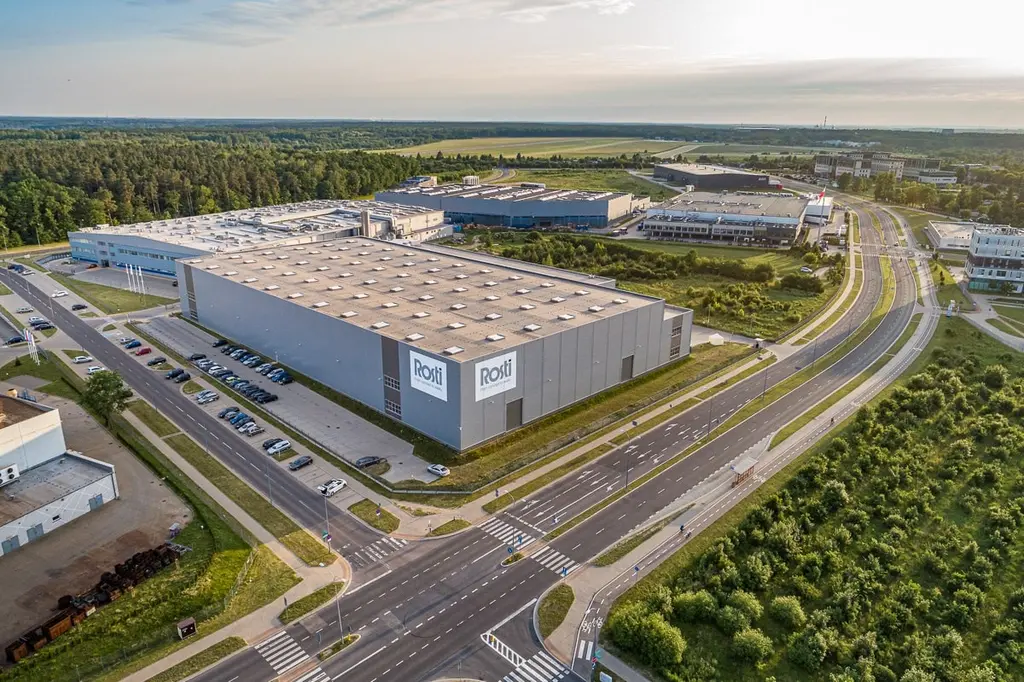
This is the problem we eliminate at Rosti Poland.
What does running every process on one site look like
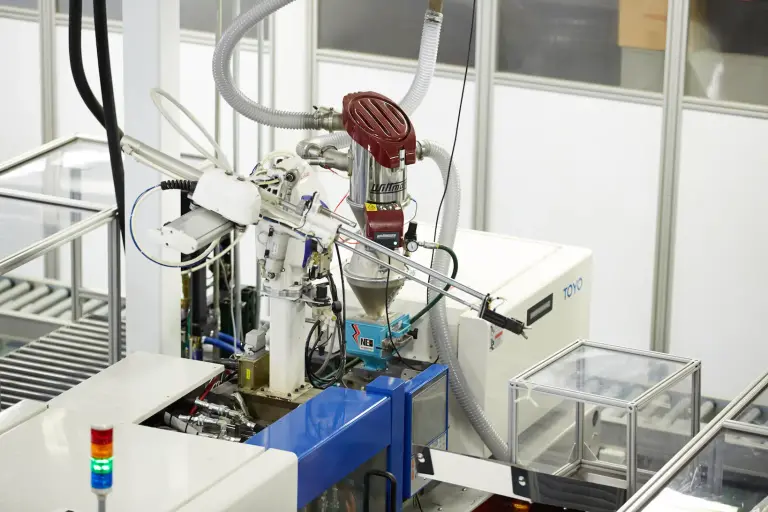
Rosti Poland isn’t a single-technology plant. On the same site, under the same quality system, we run:
- 2K and 3K multi-shot molding, combining multiple materials or colors in a single molding cycle
- Liquid silicone rubber (LSR) injection molding, for parts that need flexibility, softness, or biocompatibility alongside a rigid substrate
- Injection blow molding, for hollow parts and containers
- In-mold labeling (IML) and in-mold decoration (IMD), so branding and finish are built into the part rather than applied afterward
- Ultrasonic welding and gas injection molding, for joining components and producing complex hollow structures
- Full product assembly, so parts leave our site ready to ship, not ready for another supplier’s line
None of these technologies is unusual on its own. What’s unusual is having all of them, plus the tooling, engineering, and quality teams that support them under one roof, one management system, and one point of contact.
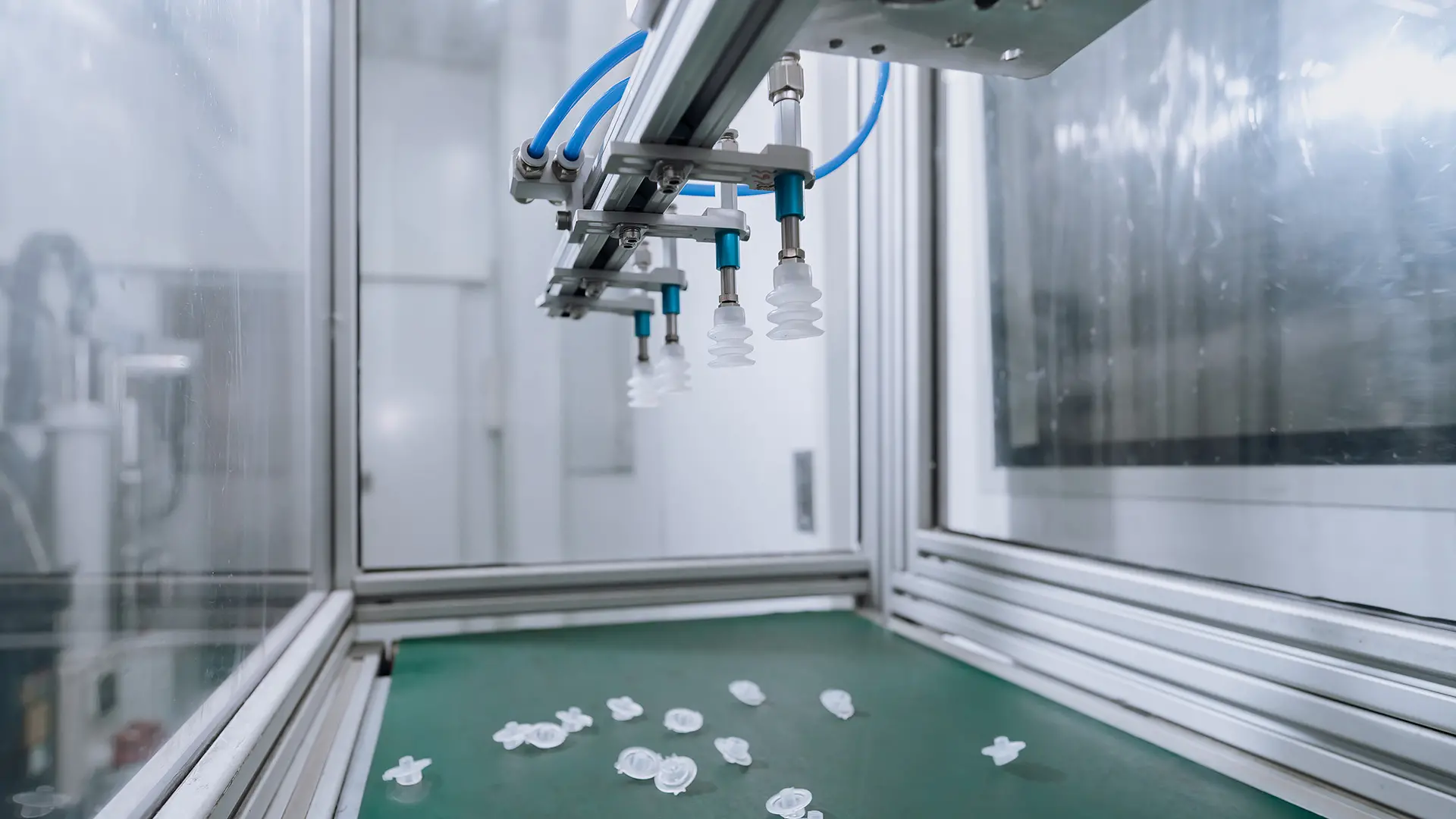
Why that matters more than it sounds like it should
When I talk to customers evaluating a contract manufacturing partner, price and lead time are always the first two questions. But the conversation that changes their decision is usually about risk.
A multi-process product built across separate suppliers means separate quality systems, separate schedules, and separate points of failure. If the molded housing is a day late, the labeling supplier’s schedule slips too and so does final assembly. If a tolerance issue shows up at final assembly, tracing it back to the source supplier can take weeks. Every one of those handoffs is a place where cost, time, and accountability quietly leak out of the program.
Consolidating those processes onto a single site doesn’t just save money on logistics, although it does that too. One engineering team owns the part from first shot to final assembly. One quality system, one set of validation records, one point of contact when something needs to change.
For a customer developing a new product, that also means faster iteration—a design tweak doesn’t need to be shipped between suppliers to test whether it still fits, seals, or assembles correctly. It gets tested on the same site, often the same day.
Where this capability offering is most valuable
This approach isn’t for every product. A single simple component with no decoration or assembly requirement doesn’t need six technologies under one roof. But for the products we see growing fastest with our customers, such as multi-material housings, labeled and decorated consumer devices, and assemblies that combine rigid structures with soft-touch or sealing elements, process consolidation is becoming less of a nice-to-have and more of an expectation.
We are seeing this most clearly in consumer electronics, home automation devices, and industrial enclosures, where the finished part increasingly needs to arrive fully built and branded, not as a component waiting for its next stop.
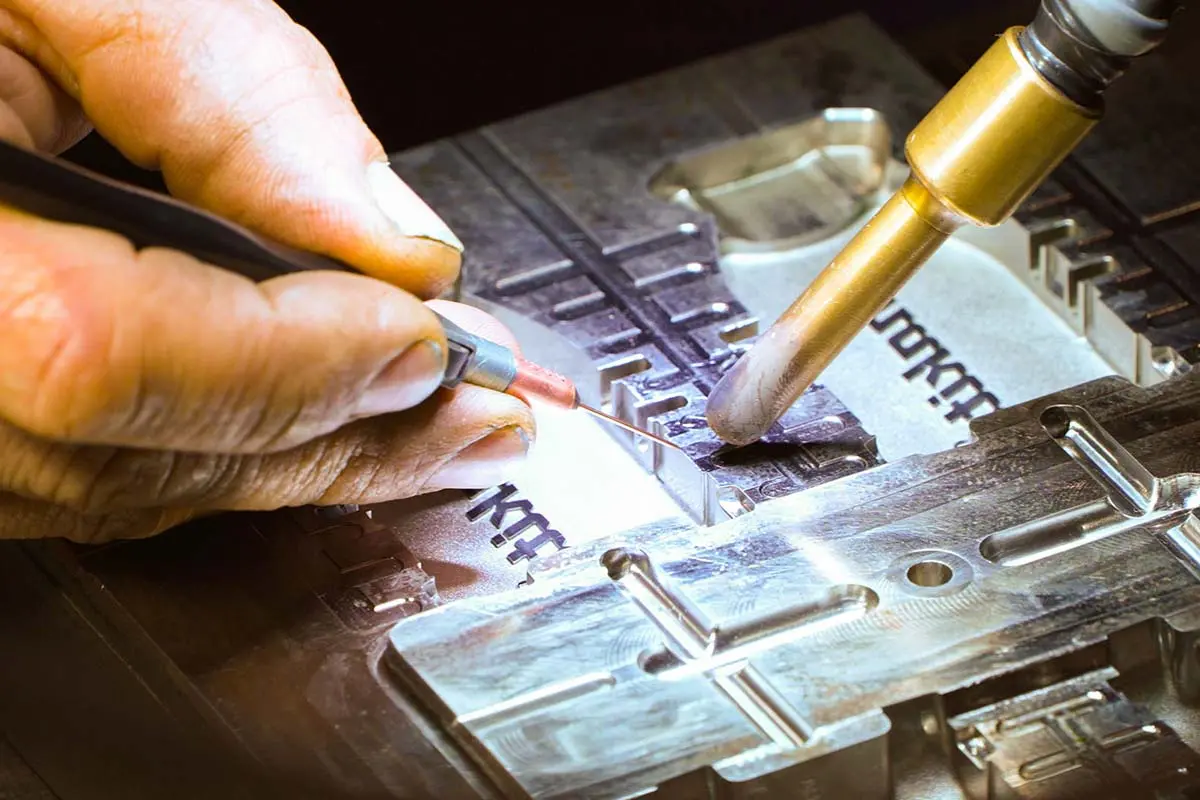
What our customers at Rosti Poland gain by doing more with one supplier
It would be easy to write this as a capability list, a tour of everything our Poland site can technically do, but that misses the point. The value isn’t the list of technologies; it’s what a customer gets to stop worrying about: fewer suppliers to manage, fewer handoffs to audit, fewer places for a schedule or a quality issue to hide.
If you are currently managing a multi-process product across several vendors, that’s exactly the conversation worth having with our team—not about what we can mold, but about what you could stop coordinating.
Let’s look at your current supply chain and see what could be brought under one roof.