Designing for Recyclability: Creating Circular Solutions in Plastic Injection Contract Manufacturing
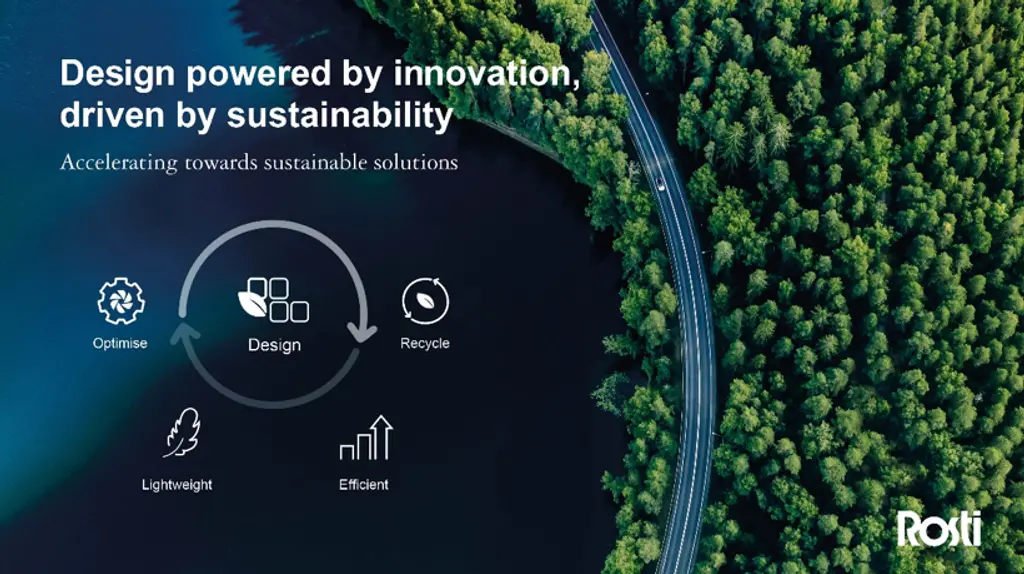
Why This Matters Now
As sustainability expectations continue to grow across industries, manufacturers are facing increasing pressure to take responsibility not just for how products are made, but also for what happens when those products reach the end of their life. Customers are expected to demonstrate circularity, minimize waste, and comply with changing regulatory frameworks—all while maintaining product performance, quality, and cost efficiency.
Recyclability is no longer an optional consideration to be added late in development. It needs to be built into products from the very start. At Rosti, we believe that designing for recyclability is a crucial step toward truly sustainable solutions, helping customers shift from linear production models to a more circular future.
Our 2030 Commitment
As part of our 2030 sustainability goals, Rosti is committed to always offering a recyclable design option. This means that for every project, customers are provided with design solutions that enable recyclability at end of life, without sacrificing functionality, safety, or reliability.
This commitment shows our belief that responsible design choices made early in the value chain have the greatest impact on long-term sustainability outcomes.

Why It Matters to Our Customers

Designing products with recyclability in mind creates clear, tangible value for customers across industries. A recyclable design option helps customers to:
- Support circular economy goals and reduce environmental impact
- Meet increasing regulatory and compliance requirements
- Minimize waste and improve end-of-life management
- Strengthen sustainability credentials with end users and stakeholders
- Future-proof products against evolving sustainability expectations
By addressing recyclability in the design stage, customers gain greater control over both sustainability performance and the long-term viability of their products.
How We Turn Ambition Into Action
Recyclable design starts with informed engineering decisions. At Rosti, our teams work closely with customers from the earliest concept phase to assess how materials, geometry, and manufacturing processes impact recyclability.
Our approach includes:
- Selecting materials that work with current recycling streams
- Avoiding unnecessary material combinations that make separation and reuse difficult
- Optimizing part geometry to reduce material usage without sacrificing strength
- Designing components for easy disassembly where needed
- Aligning material selection, tooling, and process parameters to support circularity
By embedding recyclability into the design process, we ensure that sustainable options are technically robust, scalable in manufacturing, and commercially viable.
An Integrated Approach Across the Value Chain
Designing for recyclability doesn’t stand alone. It’s closely tied to material selection, energy efficiency, waste reduction, and emissions management. At Rosti, we use an integrated value chain approach to ensure that recyclable design solutions work seamlessly alongside green material options, optimized manufacturing processes, and efficient global production.
This holistic perspective empowers customers to make informed sustainability choices at every stage—from concept to reality—while maintaining consistent quality and performance across regions and markets.
Creating Long-Term Value Through Partnership
Recyclability isn’t achieved with a single design decision—it takes collaboration, expertise, and long-term vision. As a trusted manufacturing partner, Rosti helps customers navigate complex sustainability challenges by combining engineering excellence with practical, scalable solutions.
By offering recyclable design options as part of our 2030 commitments, we help customers move confidently toward more circular products, making a sustainable impact today and building resilience for the future.
Want to learn more?
Read the latest piece on our Sustainability goals here: