EV manufacturing expertise: From Romania to the Global Market
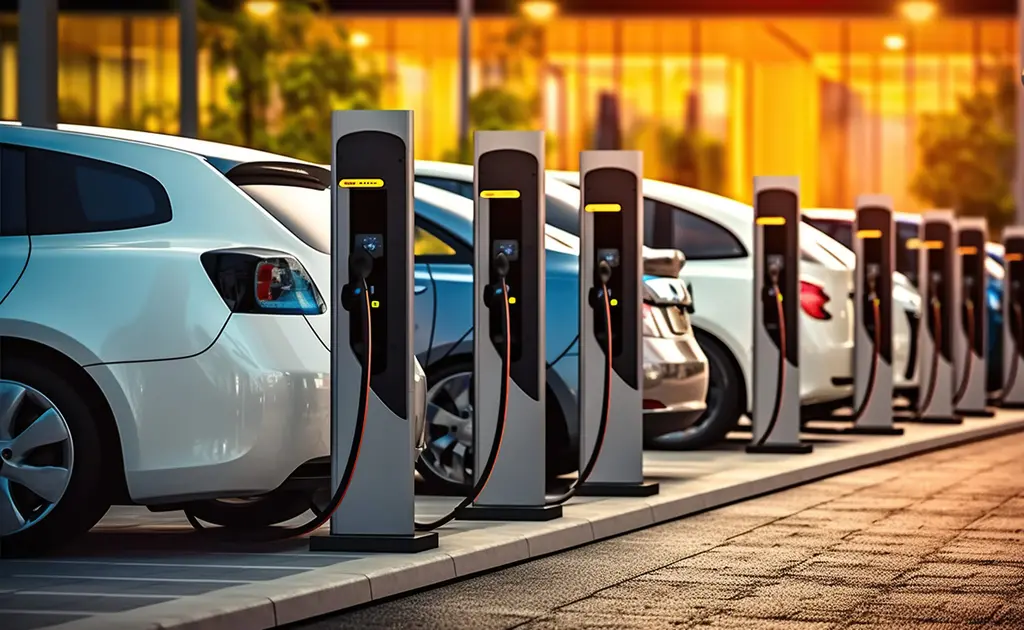
An EV charger might look like a simple box mounted on a wall, but manufacturing one is far from simple. Behind the housing sit power electronics, connectors, cable assemblies, communications modules and increasingly sophisticated energy-management systems. The enclosure must protect those components from ingress, UV exposure and temperature extremes, fit within a tightly constrained envelope and meet demanding electrical and mechanical requirements, all while looking good on a customer’s wall.
Getting that balance right takes more than production capacity. It takes a team that understands how product design, material behaviour and moulding process interact and at Rosti that team is in Romania, backed by extensive injection moulding capability across machines ranging from 200 to 1,500 tonnes. Technical teams there have more than eight years’ hands-on experience across EV charging and battery applications for e-mobility customers and because the skills sit in the people and the process rather than in one building, they can be taken wherever a customer needs to manufacture.
Where an EV charger becomes an engineering challenge
Rosti has supported EV charger development from the earliest stages of product design, helping customers evaluate the materials, dimensions and manufacturing requirements of the housing and all internal carrier parts e.g. PCB compartment inside the housing, alongside the technology it must contain. A wall-mounted unit must be compact enough to accommodate the electronics and a range of cable configurations, yet robust enough for outdoor use, with the sealing and impact resistance that implies.
Components and materials must also cope with wide swings in operating temperature while performing reliably and the charger needs to communicate its status, potentially through integrated light guides or other visual features, without compromising the overall design.
Each of these requirements feeds directly into manufacturing. Material choice influences dielectric performance, flame retardancy, durability and surface finish, while part geometry determines how the component can be moulded and assembled. Size and shape drive tooling complexity, cycle time with every added feature must work within the limits of the finished product. Production means understanding how the product, the material and the process work together, which is the know-how our Romanian teams bring to each project.
Designing for manufacture from the start
The same principle applies to battery products, where scale and complexity can be considerably greater. Rosti has worked with customers developing battery systems for material-handling equipment and heavy commercial vehicles. In one project, the customer’s original concept had to be developed into something practical to manufacture.
Rather than discovering the necessary changes during production, Rosti worked with the customer to move the design towards a manufacturable product from the outset. This included managing draft angles to ensure reliable part release from the tool and maintain the required cycle times, as well as optimising material thickness within the tool to achieve a uniform pattern without the need for costly secondary processes.
By addressing these considerations at the design stage, Rosti helps reduce manufacturing risk while keeping the focus on quality, efficiency and repeatability.
This is the value of design for manufacture (DFM . An engineering team can create a product that meets its technical requirements, but a manufacturing partner must ask a different set of questions:
- Can the part be produced consistently and repeatably?
- Are the materials suited to the moulding process?
- Can the required tolerances be held across volume production?
- Can the product be assembled efficiently?
- Can production be scaled?
- Can the manufacturing solution be replicated in another market?
Answering these early helps prevent costly production problems, which matters most as EV and battery products move from prototype into volume production.
Why materials matter in EV manufacturing
An EV charging housing or battery-related component may need to combine electrical insulation properties, thermal resistance, mechanical durability, appearance and processability and no single requirement decides the answer. The material must suit the moulding process and the design of the finished product, which is why the collaboration between manufacturer, customer and material supplier is so valuable.
Rosti has worked with material specialists on EV charging applications, including a collaboration involving KEBA and Covestro that combined material science with product development and manufacturing knowledge. Working this way turns material selection from a specification exercise into part of the wider development process.
Romania: where the EV skill set lives
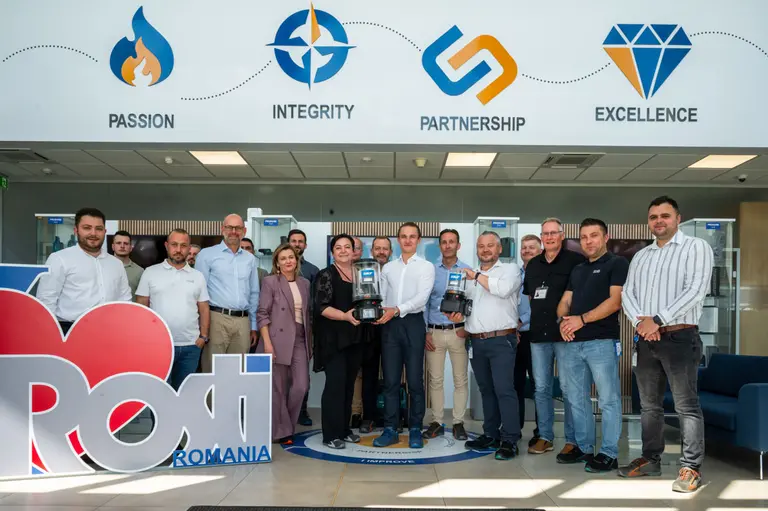
Rosti Romania has become the home of the group’s EV moulding and assembly know-how, built through projects across charging and battery-related applications. Its technical teams work closely with customers on the practical challenges of taking a product from design into production and that hands-on experience matters because EV technology is moving quickly.
Charging products incorporate increasing levels of electronics and connectivity, while home chargers are becoming more integrated with energy-management systems that combine solar generation, battery storage and time-of-use electricity tariffs. As more functionality is packed into the same product, the enclosure must accommodate it without growing, which puts pressure on wall thickness, thermal management and assembly design. A partner that only understands injection moulding will struggle here. A partner that understands the application can design around it.
A skill set that travels
The know how sits in the teams and the process, it does not have to stay in Romania. A customer may develop an EV product in one European market and later need to manufacture it elsewhere, whether to add capacity, move production closer to end customers, establish a second source for supply-chain resilience or enter North America. The challenge is to transfer the knowledge, processes and manufacturing solution without starting from scratch.
Rosti’s global manufacturing network is built for exactly that. Rosti’s Poland facility, for example, has experience in specialist battery manufacturing for heavy commercial vehicles and in one project, Rosti worked with a customer from product design through to manufacturing and then supported the duplication of the manufacturing solution in North America.
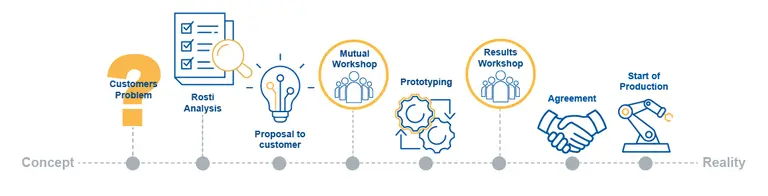
When duplicating production, Rosti uses approved tooling suppliers with on-site tooling management to ensure an exact copy of the proven tooling solution is achieved. This is supported by the One Rosti Global NPI (New Production Introduction) eight-step process, providing a consistent and controlled approach to transferring a manufacturing solution between locations. That is the model the Romanian skill set is designed to follow: develop the solution once, prove it in production and deploy it wherever the customer needs it.
Supporting customers as their markets grow
A company may start with a manufacturing partner for one specific product, but requirements change as the product matures. The housing may need to be redesigned, a new material may be required, extra functionality may need to be integrated, volumes may rise, legislation may change or supply may need to be established in another region. A partner with experience across the product lifecycle is better placed to manage those changes.
That is where Rosti’s combination of injection moulding, design for manufacture, material knowledge, assembly and global capability comes together. The aim is to understand what the customer needs and apply the right capabilities across the network, rather than forcing every product into the same location.
Sustainability is part of the supply-chain conversation
Companies developing EVs, charging infrastructure and battery technologies are increasingly conscious of the sustainability performance of the partners they work with. At Rosti Romania, that includes on-site renewable energy generation alongside work to improve manufacturing efficiency, reduce energy consumption and manage waste, from higher-efficiency equipment and motors to improved lighting and process optimisation. These efforts are underpinned by formal environmental and energy management systems, including ISO 14001 Environmental Management and ISO 50001 Energy Management, alongside Rosti’s EcoVadis Silver rating for global sustainability. For customers in the EV market, these details matter, because the footprint of a product is shaped by the supply chain behind it.
Talk to the Rosti team
E-mobility is creating manufacturing challenges that cross borders and EV charging equipment, battery systems and other electrification products need to become more sophisticated while staying practical to build at scale. The skills to do that already exist in Rosti Romania and can be applied across Rosti’s network, from Europe to North America and beyond.
If you are developing EV charging equipment, battery systems or other e-mobility products and want to talk about design for manufacture, material selection or moving production between regions, contact the Rosti team to start the conversation.